
Uncategorized
Talaria MX5 Top Speed: Five Myths About the Competizione Builds
May
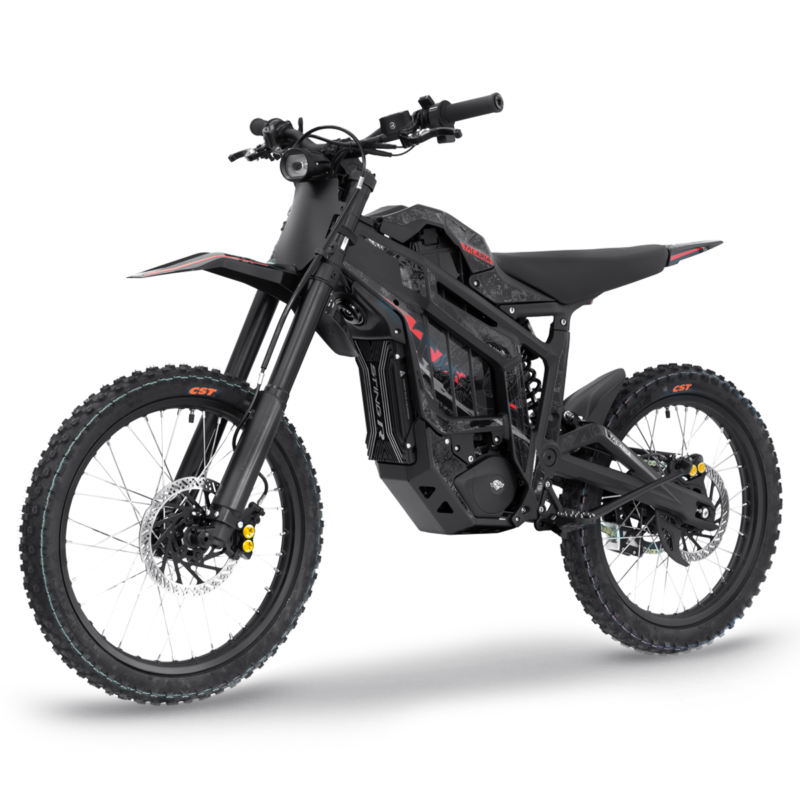
Talaria MX5 top speed is the most misquoted number in the UK electric dirt bike scene, because three different bikes share one name: the Sting MX5 Pro as Talaria ships it, the same bike with its delivery limiter lifted for private land, and the two Competizione builds with an 82V battery and an EBMX X-9000 controller. This guide separates them, quotes only what the specification sheets say, and knocks down five claims that keep circulating.
What the MX5 sheet actually prints
Before any Talaria MX5 top speed myth can be tested it helps to know what Talaria itself commits to paper. The Sting MX5 Pro specification carries a Power section with four lines: nominal voltage 72V DC, maximum speed factory limited to 32 km/h (20 mph), rated power 5.5 kW unrestricted, peak power 13.4 kW unrestricted. The word “unrestricted” sits beside the power figures, not beside the speed figure, and that asymmetry is the root of almost every argument about Talaria MX5 top speed.
The only speed line is a limited one
The one Talaria MX5 top speed printed for the MX5 Pro is 32 km/h, which is 20 mph, described as a factory limit. That is the state the bike arrives in. Anyone who tells you the manufacturer quotes 60 mph or 70 mph for a standard MX5 is quoting something other than the document that comes with the bike.
What the sheet does confirm
The sheet is generous elsewhere: a 72V 40Ah pack of Samsung 50S cells at 2,880 Wh, a 45 percent power increase over the 60V models, 500 Nm at the rear wheel through a 428 chain and 48T sprocket, 220 mm by 3 mm discs with four piston calipers, three ride modes including Hyper, four levels of regen, and 76 kg with the battery fitted. Those figures are safe to quote. The 20 mph line is the only Talaria MX5 top speed you can attribute to the manufacturer.
Myth one: the stock MX5 is a 70 mph bike
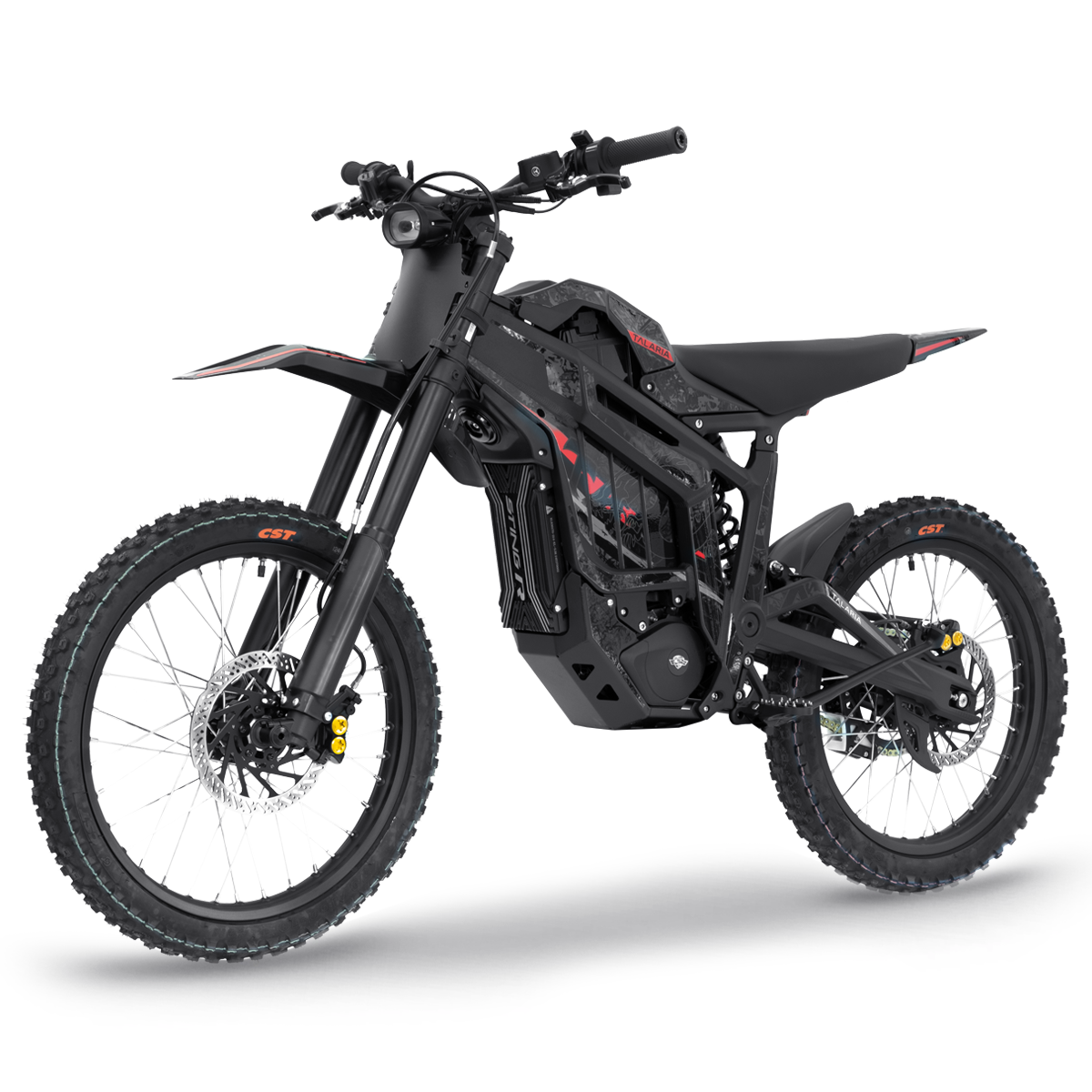
This is the Talaria MX5 top speed claim you will see most often, and it comes from reading a Competizione listing and assuming the number applies to every MX5. The 70 mph figure belongs to the two Competizione builds, and even there it is hedged as “circa 70 mph, weight depending”. A standard MX5 Pro carries a 72V battery and a 13.4 kW peak controller; the Competizione carries an 81.4V battery and a 22 kW continuous controller. They are not the same machine.
Why the 72V bike has a lower ceiling
Talaria MX5 top speed, like motor speed on any permanent magnet machine, scales with the voltage the controller can put across the windings. Talaria moved the MX5 from 60V to 72V and that is why the sheet promises more speed than the 53 mph Sting R MX4, but 72V is still 72V. The Competizione’s 22 cell series pack sits at 81.4V nominal, which is where the extra headroom above a stock MX5 comes from, and that pack is not something a standard bike has.
Myth two: Competizione is just a controller swap
The second myth runs the other way. Riders who know the EBMX X9000 kit assume a Competizione is a stock MX5 with that controller bolted on, and therefore that they could copy it at home with the X9000 power kit. The controller is only one of three changes, and it is the battery that does most of the work on Talaria MX5 top speed.
The 82V battery is the real change
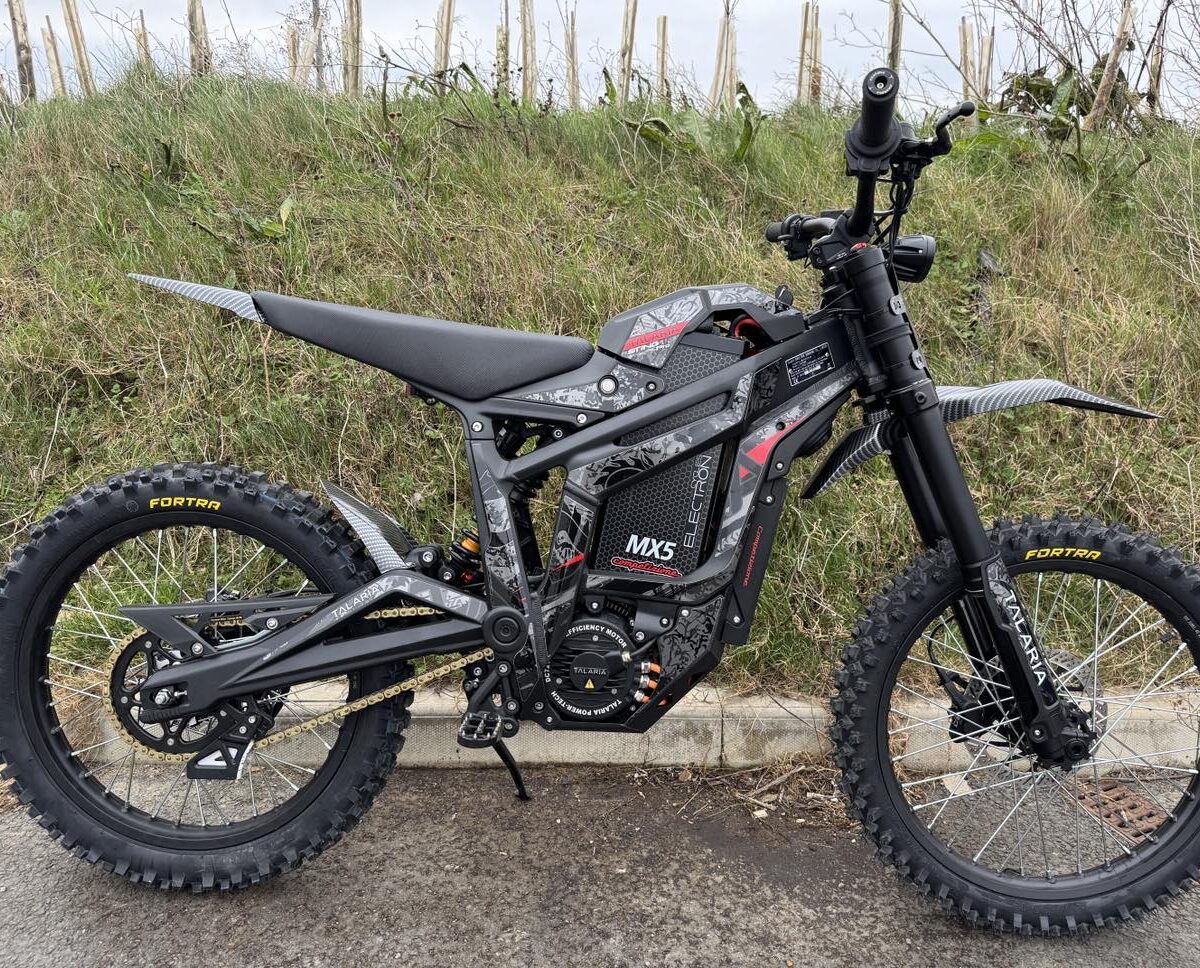
Voltage, not current, is what lifts Talaria MX5 top speed, and both Competizione listings replace the OEM 72V pack with an 81.4V 22s pack of 220 cells in a sealed stainless steel box weighing 19.2 kg. The Competizione 50s uses Samsung 50S cells for 4,060 Wh with the BMS set to 400 A peak. The Competizione 45B uses Molicel P45B cells, the BMS set to 450 A peak, and gives up about 10 percent of range for an extra 2 kW.
The controller and the hardware around it
The X9000 V2 is rated at 22 kW continuous with a 48V to 93V working range, 1,000 A continuous phase current and IP67 sealing. The builds add a SW102 display with custom firmware, a thumb throttle, an air cooled heatsink and a 6 A charger for the 22s pack, and the tune is locked by the builder with no app access supplied. A home controller swap on a 72V pack delivers none of the voltage gain, and so none of the Talaria MX5 top speed gain either.
Myth three: more kilowatts always means more speed
The Competizione power figures, 21 kW on the 50s and 23 kW on the 45B, are so far above the stock 13.4 kW that people assume the bike must be faster in every mode. Read the performance settings and the builder deliberately trades Talaria MX5 top speed for acceleration in half of the six presets, so the label tells you little about the mode you are actually in.
Road mode is where the ceiling lives
The EBMX firmware gives two modes, Road and Race, each with three levels. Road level 3 is described as the maximum top speed setting at 22 kW, with the advice to hold it fully open for no more than 60 seconds at a time and to use it with the pack above 81V. Road level 2 is the range compromise the builder uses for green lanes, and Road level 1 is a 6 kW get you home setting. The “circa 70 mph” Talaria MX5 top speed figure applies to Road level 3 only.
Race mode is capped at 60 mph on purpose
Race mode has the same 22 kW available but is capped at 60 mph so the phase current goes into corner exit acceleration. A Competizione in Race level 3 therefore has a lower ceiling than in Road level 3, despite an identical power figure. Compare a Race run with a Road run and you get a 10 mph disagreement about Talaria MX5 top speed that has nothing to do with the bike.
Myth four: there is an official Talaria MX5 0 60 time
Search for Talaria MX5 0 60 and you will find confident figures on social media, usually in the four to five second bracket. None of them come from Talaria. The Sting MX5 Pro specification does not list an acceleration time, and neither Competizione listing prints one either. The builder describes the launch as wheel lifting and tells riders to lean forward from a standstill, which is a qualitative description, not a measured result.
Why the number is hard to pin down
Acceleration on a 76 kg bike depends on rider weight, grip, tyre choice, mode and how close the pack is to full voltage, far more than on a petrol machine twice its weight. Any 0 to 60 mph claim that does not state the rider, the surface and the state of charge is no more comparable than a Talaria MX5 top speed quoted without its mode.
What can be said instead
The 45B, with its 450 A BMS and 23 kW, will reach any given speed sooner than the 50s, and both will reach it sooner than a stock bike. That ordering is defensible. A stopwatch figure is not, until Talaria publishes one.
Myth five: a road legal MX5 can be derestricted
The MX5 Pro is listed in two versions, the TL5500 off road and the TL5500 road legal. The fifth myth is that the road legal one can be treated like the off road one once it has a plate, with the full Talaria MX5 top speed available to it. It cannot. Road legal Stings are approved under the L category rules in EU Regulation 168/2013, and that approval assumes the restriction stays as homologated.
What the road legal classes mean
An L1e B moped class Talaria is limited to 45 km/h, can be ridden at 16 with a CBT and a provisional licence, and needs registration, a plate, insurance and a helmet. An L3e A1 125 equivalent needs age 17 with a CBT or an A1, A2 or A licence, plus registration, insurance and an MOT when due. The gov.uk guide to riding a motorcycle or moped sets out each step. Lifting the limiter on either class means the bike no longer matches its approval or its insurance.
Where derestricted speed is allowed
Full Talaria MX5 top speed is for off road use only, on private land, with the landowner’s permission. An off road MX5 Pro or a Competizione cannot be ridden on public roads, byways, bridleways, footpaths or pavements in the UK. Green lanes are public highways, as the Trail Riders Fellowship explains, so for lanes buy from the road legal Talaria range and leave the limit in place.
Talaria MX5 top speed by build
The table below puts the Talaria MX5 top speed of the three builds side by side using only the figures printed in their listings. Where a listing gives no figure the cell says so, because a blank is more useful than a guess when you are deciding what to buy.
| Item | Sting MX5 Pro (stock) | Competizione 50s | Competizione 45B |
|---|---|---|---|
| Nominal voltage | 72V | 81.4V (22s) | 81.4V (22s) |
| Battery | 40Ah Samsung 50S, 2,880 Wh | 220 Samsung 50S cells, 4,060 Wh | 220 Molicel P45B cells, about 10 percent less range than the 50s |
| BMS peak | Not stated | 400 A | 450 A |
| Controller | Talaria MX5 controller | EBMX X9000 V2 | EBMX X9000 V2 |
| Peak power | 13.4 kW unrestricted | 21 kW | 23 kW |
| Speed as delivered | Factory limited to 32 km/h (20 mph) | Road mode circa 70 mph, Race mode capped at 60 mph | Road mode circa 70 mph, Race mode capped at 60 mph |
| Published 0 to 60 mph | None | None | None |
| Battery weight | Not stated on the sheet | 19.2 kg | 19.2 kg |
| Bike weight with battery | 76 kg | Not stated | Not stated |
| Where it can be ridden | Off road version: private land only. Road legal version: public roads at the homologated limit | Private land only | Private land only |
Which build the table points to
The Talaria Sting MX5 top speed you can attribute to the manufacturer is the 20 mph delivery limit and nothing else. A rider who wants the strongest lightweight Talaria within factory specification should buy the stock MX5 Pro. A rider who wants the highest Talaria MX5 top speed from a built and tuned bike should look at the 50s for range or the 45B for outright power, both off road only. Compare the wider family in our Sting R versus MX5 guide.
How fast does the MX5 Talaria go on a real day
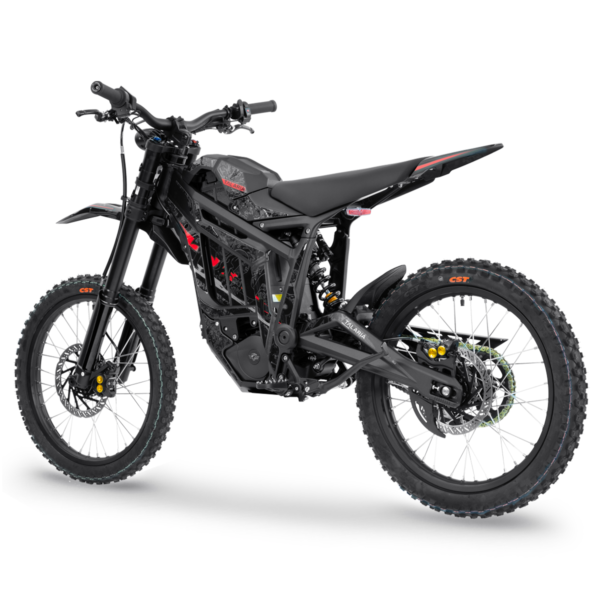
How fast does the MX5 Talaria go once it leaves the spreadsheet and meets a field in Wiltshire in November? Slower than any headline number. The reasons are consistent enough to list, and none of them are faults; they are the physics of a 76 kg bike with a 2,880 Wh pack and 19 inch wheels, and they apply to Talaria MX5 top speed on every build.
Pack voltage drops as you ride
A 72V pack starts a ride above nominal and finishes below it, and the motor’s maximum rpm follows that voltage down. The Competizione builder makes the same point by recommending the top power level only above 81V, about half charge on the 22s pack. Expect the last third of any battery to give a lower Talaria MX5 top speed than the first.
Tyres, sprockets and surfaces
The stock MX5 Pro runs 70/100 19 front and 80/100 19 rear off road tyres with a 48T rear sprocket. Knobbly tyres scrub Talaria MX5 top speed on hard ground and the 48T is chosen for climbing and corner exit, not for a long straight. Wet grass or a rutted track takes a large slice off whatever the bike can do on firm dry ground, which is exactly why the Competizione’s Race mode is capped at 60 mph.
Rider weight and mode
The sheet gives a maximum recommended load of 100 kg, and the Competizione listing hedges its 70 mph with “weight depending” for the same reason. Two identical bikes under a 65 kg and a 95 kg rider will show a different Talaria MX5 top speed on the same day. Mode matters as much: only Hyper releases the stock bike’s full 13.4 kW, so an Eco run tells you nothing about the ceiling.
Frequently asked questions
What is the Talaria MX5 top speed as delivered?
The Sting MX5 Pro specification lists a maximum speed factory limited to 32 km/h, which is 20 mph, and that is how the bike ships. Talaria prints no unrestricted figure. The 45 percent power increase over 60V models makes it quicker than a Sting R once unlocked on private land, but the manufacturer attaches no number to that state.
How fast does the MX5 Talaria go with the Competizione upgrades?
Both Competizione listings quote a Talaria MX5 top speed of circa 70 mph in Road mode, weight depending, and a deliberate 60 mph cap in Race mode. The figure comes from the 81.4V 22s battery and the EBMX X9000 V2 controller together, rated at 21 kW on the 50s and 23 kW on the 45B. These are off road only builds for private land with landowner permission.
Is there an official Talaria MX5 0 60 figure?
No. Neither the Sting MX5 Pro sheet nor either Competizione listing publishes an acceleration time. Figures you see online are rider estimates that depend on weight, grip, mode and state of charge, exactly as Talaria MX5 top speed does, so they cannot be compared with one another. This site will not quote a 0 to 60 mph time until Talaria publishes one.
Does fitting an X9000 controller to a stock MX5 give Competizione speed?
Not on its own. The controller raises available current, but Talaria MX5 top speed on a permanent magnet motor is set by pack voltage, and a stock MX5 keeps its 72V battery. The Competizione builds pair the X9000 V2 with an 81.4V pack, a higher current BMS, a matching 22s charger and a locked tune. Changing one part of that package does not reproduce the whole result.
Can I remove the limiter on a road legal MX5 for the road?
No, and Talaria MX5 top speed is not something a plated bike is entitled to. A road legal Talaria is approved in a specific L category with its restriction as part of the approval. Lifting it means the bike no longer matches its registration or its insurance. Derestriction is for the off road version on private land only. Riders who want to use public roads and green lanes should choose a road legal model and keep it as homologated.
Next steps
Pick the build that matches the Talaria MX5 top speed you actually need. The stock Sting MX5 Pro is available in off road and road legal versions, with UK mainland delivery, timescales confirmed at checkout. If you want the built and tuned bike, compare the Competizione 50s and the Competizione 45B, and see our Talaria finance page for spreading the cost.
