
Electric Motorbikes UK Buying Guide: Law, Licences and Road Legal Models
The electric motorbikes UK law will actually let you register and ride on the public highway are defined by a type approval category, not by how quick they feel or how much they weigh. That single fact trips up more first time buyers than anything else in this market. This guide sets out what separates an electric bike from an electric moped and from a full electric motorcycle, explains the L1e and L3e classes in plain terms, shows where the road legal Talaria Sting sits inside them, and covers licences, CBT, registration, insurance and how the running costs compare with a petrol 125.
What counts as one of the electric motorbikes UK law recognises
The term electric motorbikes UK searchers type into Google covers at least four different legal animals, and only two of them can lawfully carry a number plate. British law does not classify a machine by its badge, its power output on paper or the way a seller describes it. It classifies it by the type approval certificate the manufacturer obtained before the vehicle was placed on the market.
Type approval is a document. Either a model has one for a given category or it does not, and no amount of bolting on mirrors creates one after the fact. That is why two bikes which look almost identical in photographs can have completely different legal status, and why the electric motorbikes UK dealers list should always carry their category.
Why the paperwork matters more than the specification
Riders coming from petrol often assume power decides the class. It does not. A 3000W machine with the right certificate is a legal road vehicle while an 8000W machine without one is off road equipment in the eyes of the law. Checking the category before the specification is the single most useful habit electric motorbikes UK buyers can build.
Electric bike, electric moped and electric motorbike compared
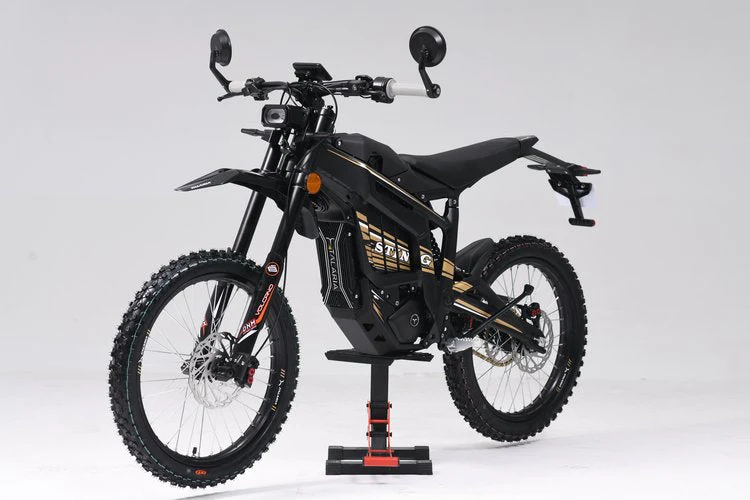
Start with the machine that is not a motor vehicle at all. An electrically assisted pedal cycle, the legal name for what most people call an electric bike, has working pedals, a motor of 250W or less and assistance that cuts out at 15.5 mph. It needs no licence, registration, insurance or helmet. Nothing with a throttle and no pedals belongs in that category.
An electric moped is the next step up. It is a motor vehicle, restricted to 45 km/h, and it needs registration, a plate, insurance and a helmet. In practice this is the 50cc equivalent slot. Above that sit the true electric motorbikes UK riders think of when they picture a road machine, the class equivalent to a petrol 125 and upwards, with no 45 km/h restriction and a genuine motorcycle licence requirement.
The fourth category is the one that causes the most trouble, and it is not among the electric motorbikes UK law will register. An off road electric dirt bike has no type approval at all. It is sold as equipment for private land and cannot be ridden on a road, a byway, a bridleway, a footpath, a pavement, a park or a beach. Our electric dirt bike guide covers that class in detail, and our electric moped page covers the 45 km/h class.
The L1e and L3e categories explained
The category letters come from EU Regulation 168/2013, which the UK retained after leaving the European Union. The full text is published by legislation.gov.uk and it is the document that decides what the electric motorbikes UK sellers offer are actually permitted to do.
L1e-B, the moped class
An L1e-B vehicle is a two wheeled moped. Design speed cannot exceed 45 km/h, roughly 28 mph, and continuous rated power is capped at 4 kW. A rider can use one from age 16 on a provisional licence with a valid CBT, or on a car licence obtained before 1 February 2001. It must be registered, plated, insured and ridden with a helmet.
L3e-A1, the 125 equivalent class
An L3e-A1 vehicle is a motorcycle. Continuous rated power is capped at 11 kW and there is no design speed restriction written into the category, so this is where the electric motorbikes UK law treats as motorcycles live. The minimum age is 17. A provisional licence plus CBT allows you to ride one with L plates and no pillion, and a full A1 test removes those conditions. An A2 or A licence covers it outright.
What the categories do not do
Neither category says anything about where you can ride off road. A registered L1e or L3e machine is a road vehicle and is therefore subject to all the usual rules about riding on land without permission. Type approval opens the road to you, it does not open private woodland.
Electric motorbikes UK category comparison table
The table below is the quickest way to see how the four classes differ. Use it to work out which column your intended purchase sits in before you look at any specification sheet, because the electric motorbikes UK registration offices will accept appear in one of the two middle columns.
| Point of difference | Electric bike (EAPC) | Electric moped (L1e-B) | Electric motorbike (L3e-A1) | Off road electric dirt bike |
|---|---|---|---|---|
| Legal status | Pedal cycle | Motor vehicle | Motor vehicle | No type approval |
| Pedals required | Yes | No | No | No |
| Speed limit by design | 15.5 mph assistance | 45 km/h | Not capped by category | Not applicable |
| Continuous power cap | 250W | 4 kW | 11 kW | Not applicable |
| Minimum age | 14 | 16 | 17 | Landowner discretion |
| Licence needed | None | Provisional plus CBT | Provisional plus CBT, or A1 | None on private land |
| Registration and plate | No | Yes | Yes | Not possible |
| Insurance | Not required | Required | Required | Not available for road use |
| Where you can ride | Roads and cycle paths | Roads | Roads | Private land with permission |
Where the road legal Talaria Sting fits the electric motorbikes UK rules
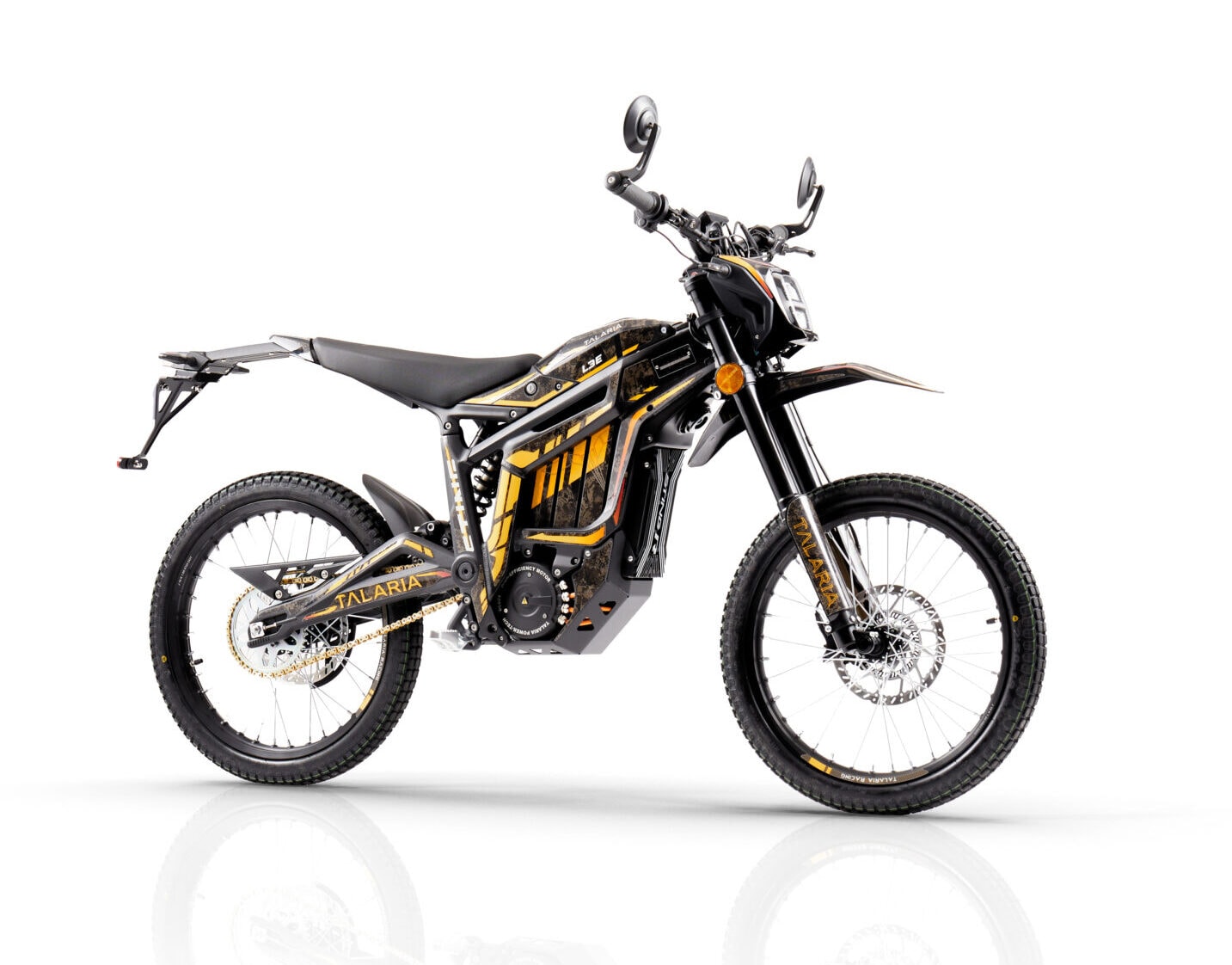
Talaria builds two homologated versions of the Sting and between them they cover both road categories, so this is where the electric motorbikes UK conversation gets practical. Everything else in the range is off road equipment. If you want one of the electric motorbikes UK plates can legally be fitted to, these are the two machines to look at, and both sit in our road legal Talaria category.
Talaria Sting Road Legal L1e
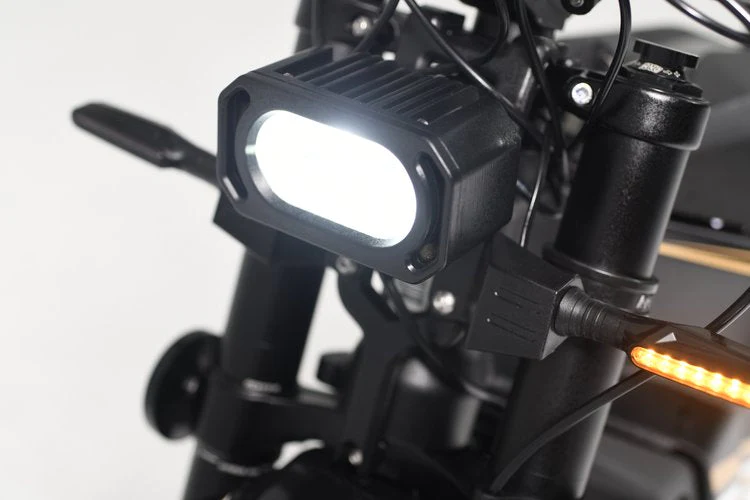
The Sting Road Legal L1e is homologated to the moped class. It runs a 60V 38.4Ah LG 21700 pack, a permanent magnet synchronous motor rated at 3000W, four piston hydraulic brakes and an IP67 rating, with an OLED multifunction display, road legal headlight, reactive brake light, mirrors, indicators and a tail tidy plate holder as standard. Charging takes around 3.5 hours and the bike weighs 58 kg with its battery.
Talaria Sting L3E Road Legal
Of the electric motorbikes UK riders can register, the Sting L3E is aimed squarely at the 125 rider market. It carries a 60V 45Ah LG pack, an air cooled interior permanent magnet motor rated at 3500W, 34 Nm of motor torque and 375 Nm at the rear wheel, a 44 tooth rear sprocket, a 310mm ground clearance and a 71 kg kerb weight. Rated range is 53 miles at 25 mph and it charges in about 3.5 hours.
The Dragon in L1e form
The Talaria Dragon 2025 is offered in two versions, one optimised for off road use and one street legal build with horn and indicators. It is the largest machine Talaria offers with a road option, so it is worth a look if you want one of the few electric motorbikes UK roads will take that still have full size 21 inch and 18 inch wheels.
Licence, CBT and minimum age
Compulsory Basic Training is the gateway for almost every new rider. It is a one day course, not a test, and it ends with a certificate valid for two years. The government CBT guidance explains the five elements and where to book. Without it, a provisional licence holder cannot ride on the road at all.
At 16 you can ride an L1e moped on a provisional licence with CBT, L plates and no pillion passenger. At 17 the L3e class opens up on the same provisional plus CBT basis. Passing the A1 practical test lets you drop the L plates and carry a passenger. Riders who passed a car test before 1 February 2001 hold moped entitlement automatically, which is a quirk worth checking on your licence before booking anything.
Which route suits which rider
- Age 16, wants to commute now: CBT plus the L1e Sting, accepting the 45 km/h restriction.
- Age 17 or over, wants usable road speed: CBT plus the L3E Sting, then an A1 test when convenient.
- Age 24 or over, wants the widest options later: direct access to A2 or A, which covers all the electric motorbikes UK dealers currently sell.
- Any age, private land only: no licence needed, and the off road models become the sensible choice.
Our guide to Talaria for 16 year olds and CBT walks through the paperwork in order, and are Talarias legal in the UK answers the question most people ask first.
Registration, number plates and insurance
A homologated machine arrives with a Certificate of Conformity, and that document allows first registration with the DVLA. The process follows the standard vehicle registration route, after which a V5C is issued and a plate made up. Road tax on electric motorbikes UK owners register is charged at the published rate for the class.
Insurance is compulsory from the moment the vehicle is on a public road. Cover for electric motorbikes UK owners register is widely available, though a smaller pool of insurers quote for them than for petrol equivalents, so shop early rather than on collection day. The government guidance on vehicle insurance explains the continuous insurance requirement and what happens if a registered vehicle is left uninsured without a SORN.
MOT and ongoing obligations
An L3e machine needs an MOT once it reaches three years old, and an L1e moped follows the same rule. Neither has an engine to emissions test, so the inspection covers brakes, steering, lights, tyres, frame and plate. Keep the CBT certificate valid if you are still on a provisional, because an expired certificate makes the ride illegal even on electric motorbikes UK law has fully approved.
Running costs against a petrol 125
This is where the case for electric motorbikes UK commuters can actually use becomes straightforward. A 60V 45Ah pack stores roughly 2.7 kWh. Charged at a domestic tariff, a full charge costs the price of a couple of loads of washing, and it delivers a rated 53 miles at a steady 25 mph. A petrol 125 doing the same distance burns fuel bought at forecourt prices, and the gap widens every time the pump price rises.
Servicing tells a similar story. There is no oil filter, spark plug, air filter, valve clearance or exhaust to replace. The Sting uses a gearbox primary drive rather than a belt, so the list comes down to gearbox oil at the manual interval, chain care, pads, tyres and chassis checks. Four level regenerative braking also slows pad wear.
What electric does not save you
Be honest about the limits. Insurance is not cheaper by default. Tyres and chains wear at the usual rate, and instant torque can wear a rear tyre faster. Charging takes hours rather than the two minutes a petrol fill takes, so a long day needs planning or a spare battery.
Even allowing for all of that, the weekly cost of running the electric motorbikes UK riders take along side streets and B roads is markedly lower than the petrol equivalent, and the Motorcycle Industry Association tracks how quickly registrations of electric two wheelers are growing as a result.
Frequently asked questions
Are electric motorbikes UK legal without a licence?
No. Any machine outside the 250W pedal assisted electric bike class is a motor vehicle, and riding one on a public road requires at least a provisional licence with a valid CBT certificate, plus registration, a number plate and insurance. The only place a licence is not needed is private land with the landowner’s permission, and an off road model cannot be used anywhere else.
What is the difference between an electric motorbike and an electric motorcycle?
Nothing in law. Electric motorbike and electric motorcycle describe the same thing in two registers, one informal and one formal. The DVLA and the legislation say motorcycle. Riders say motorbike. What matters is the category letter, L1e or L3e, because that decides age, licence and restrictions.
Can I convert an off road Talaria into a road legal electric motorbike?
No, and this is worth stating plainly. Road legality on the electric motorbikes UK buyers own comes from a type approval certificate issued before the model reached the market. Adding mirrors, indicators and a plate bracket to an MX model creates the appearance of legality without the substance. Buy the homologated L1e or L3E version from the start.
How fast can a road legal electric motorbike go in the UK?
An L1e moped is limited by its category to 45 km/h, roughly 28 mph. An L3e machine has no design speed cap in the category itself, so the manufacturer specification decides. The Talaria Sting L3E is rated at 53 mph. Whatever the machine will do, national speed limits still apply and a restricted licence carries its own conditions.
Do electric motorbikes need road tax and an MOT?
Electric motorbikes UK owners register are taxed like any other vehicle in their class, with rates published by the DVLA, and they need an MOT from three years old. Because there is no engine, the emissions element of the test does not apply, but brakes, lights, steering, tyres and structure are checked exactly as they are on a petrol machine.
Are electric motorbikes for adults suitable for a complete beginner?
They suit beginners well. There is no clutch, no gear selection and no stalling, so a new rider can concentrate on road position, observation and braking instead of managing an engine. The L1e class is a forgiving place to start. Book the CBT first, because the training itself tells you a great deal.
Next steps
If the road is the priority, the two homologated machines in the road legal Talaria range are the only electric motorbikes UK options we stock, so pick the category that matches your age and licence. If the riding will be on private land, the Talaria Sting range gives you far more power for the money without any of the registration work. Spreading the cost is covered on our Talaria finance page, and every machine ships with UK mainland delivery, timescales confirmed at checkout.