
Uncategorized
Talaria vs Surron: An Honest UK Comparison of Two Electric Dirt Bike Families
Jul
The talaria vs surron question is the one we are asked more than any other, and it deserves a straight answer rather than a sales pitch. Both brands build light, quiet, full suspension electric dirt bikes with road legal versions and deep aftermarket support. This guide sets out where the two families genuinely differ, using Talaria figures from our own spec sheets and only well established public facts about the Sur Ron Light Bee.
Two families, not two bikes
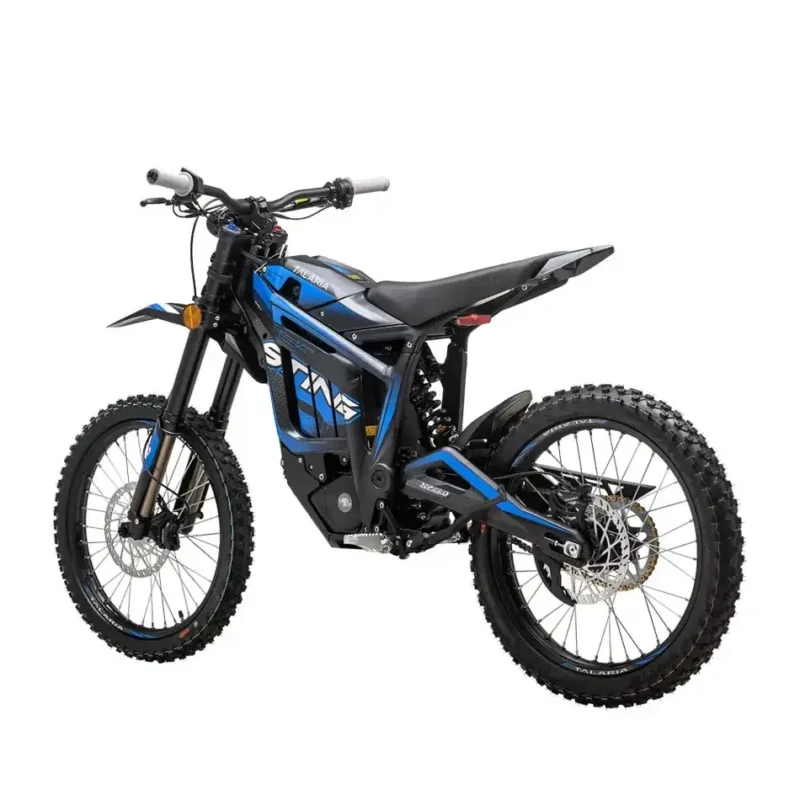
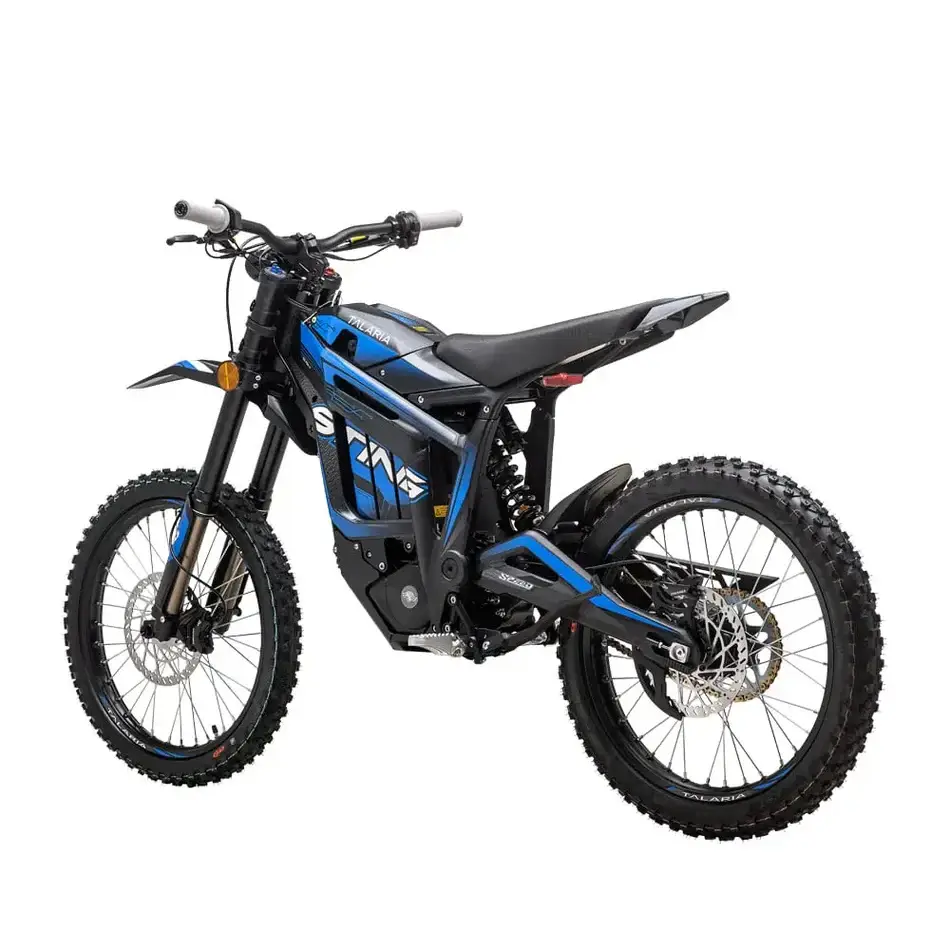
The first thing to understand about talaria vs surron is that neither name refers to a single machine. Sur Ron’s core product is the Light Bee, sold in an off road X form and a road legal L1e form, with the larger and considerably heavier Ultra Bee above it. Talaria’s equivalent is the Sting platform, which now spans the entry level Sting MX3, the Sting R MX4, the 72V Sting MX5 Pro, plus the smaller belt driven XXX and X3 range and the far larger Komodo and Dragon.
So when riders type surron talaria into a search box, they usually mean the Light Bee against a Sting. That is the fair Talaria vs Surron comparison, because the two share a footprint, a seat height around 840 mm, 19 inch spoked wheels and a target rider. The Ultra Bee, Komodo and Dragon belong to a heavier class and sit outside this guide.
Sur Ron arrived first and effectively created the category. Talaria followed with a bike built to the same brief but with one decisive engineering difference, the primary drive, and that single choice explains most of what follows in this talaria surron comparison.
Drivetrain: gearbox versus belt
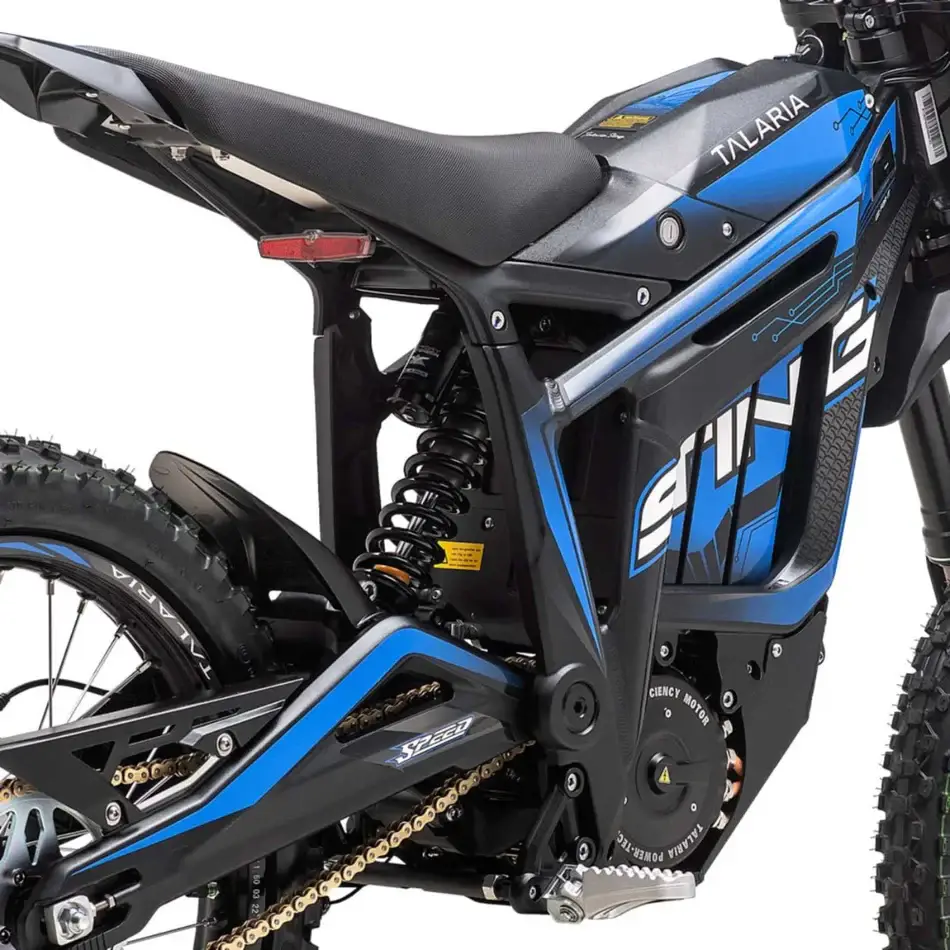
The clearest mechanical split in talaria vs surron is the primary drive. The Light Bee uses a toothed belt as its primary reduction between the motor and a jackshaft, then a conventional chain to the rear wheel. Talaria’s Sting range replaces that belt with a sealed, oil bathed gearbox as the primary reduction, again followed by a chain final drive. The Sting R MX4 runs a primary gear ratio of 8.35 with the 44 tooth rear sprocket or 9.18 with the 48 tooth sprocket.
What the belt does well
A belt is light, cheap to replace and forgiving of misalignment. It gives the Sur Ron its characteristic soft throttle feel at low speed, which many riders find easy to modulate on slippery roots. Belt wear is a consumable cost, not a design flaw. Ridden hard in grit, however, belts can shed teeth, and a snapped belt ends the ride there and then.
What the gearbox changes
In Talaria vs Surron terms the Talaria gearbox removes the belt entirely. Maintenance becomes an oil change rather than a tension check, covered in our Talaria oil change guide. The gearbox is also notably quiet, so a Sting at trail speed is mostly tyre noise. The trade off is a firmer, more direct throttle connection.
Battery capacity and real world range
Battery size is where the talaria vs surron comparison tilts most clearly on paper. The Sur Ron Light Bee X ships with a 60V pack that is well known in the community for its Panasonic cells and its removable, quick release design. It is a good pack, but it is a mid thirties amp hour class pack at most in stock form.
Talaria’s side of the talaria vs surron ledger is easier to state exactly. The Sting R MX4 carries a 60V 45Ah pack built from LG 21700 cells rated at 5000 mAh each, which works out at 2700 watt hours. The pack weighs 12.85 kg and measures 170 mm by 140 mm by 380 mm. Even the entry level Sting MX3 runs 60V 38.4Ah, or 2280 watt hours, and the MX5 Pro steps up to 72V 40Ah with Samsung 50S cells for 2880 watt hours.
Range figures you can actually use
Talaria quotes the Sting R MX4 at up to 120 km at a constant 25 km/h, which is a laboratory style number, and a more realistic 53 miles of mixed use. The MX3 is rated at 100 km at 32 km/h. Stock Light Bee range is lower simply because the pack is smaller, which is the clearest Talaria vs Surron difference on paper, though real world range on either bike depends far more on rider weight, terrain and throttle discipline. Our Talaria range guide explains how to read those numbers honestly.
The Sting R MX4 charges from empty to full in around 3 hours with its supplied charger. Both brands in the talaria vs surron pairing support swapping to a spare pack, and the Sur Ron pack is slightly quicker to lift out because the Light Bee frame was designed around that from day one.
Power, torque and weight
Stock for stock, a Sting R MX4 produces 4000W continuous and 8000W peak from its interior permanent magnet motor, with 45 Nm of nominal motor torque and a rated top speed of 53 mph (85 km/h). The Sting MX3 produces 3000W continuous and 6000W peak with 34 Nm peak motor torque and a 47 mph top speed. The Light Bee X in standard form sits in the same broad power class as the MX3, which is why the sur ron vs talaria debate is usually framed as Light Bee against Sting R rather than against the MX3.
Motor design
Talaria’s IPM motor uses a magnetic encoder instead of hall sensors, weighs 7 kg and is air cooled with a quoted peak efficiency of 92 to 94 percent depending on model year. Sur Ron’s PMSM motor is a proven unit the aftermarket knows inside out, so talaria vs surron on motors is a choice between a newer design and a better known one.
Weight
Here Talaria vs Surron goes the other way, because the Sur Ron has a genuine advantage. The Light Bee is widely quoted at around 47 kg, and it feels that light when you lift the back end out of a rut. The Sting R MX4 weighs 66 kg including its battery, the MX5 Pro 76 kg and the road legal Sting L1e 58 kg. That difference is mostly battery and gearbox, and it buys range and power, but you notice it on a steep push or loading into a van.
Suspension, brakes and chassis
Talaria vs Surron on chassis is close, because both families use a forged aluminium frame. Talaria’s is 6061 T4 and T6 alloy forged under 6000 tonnes of pressure, with a 1250 mm wheelbase and 300 mm of ground clearance on the Sting R MX4. The Light Bee is similarly compact and stiff, and both share a seat height of roughly 840 mm.
Forks and shocks
Stock Light Bees have long used DNM suspension, adequate for trails and the first thing most owners upgrade. Talaria fits Fastace or Talaria factory suspension on the Sting R MX4, DNM on the MX3, and on the MX5 Pro an adjustable air and dual spring fork with 220 mm of travel matched to an 85 mm stroke linkage shock. For the best out of the box front end in the Talaria vs Surron field, the Sting R MX4 Expert ships with a Manitou Dorado Expert fork and Magura MT5 brakes.
Brakes
Braking is the quietest part of talaria vs surron and one of the most decisive. Talaria fits 220 mm rotors and four piston calipers front and rear on the Sting R, with 2.3 mm rotors on the MX4 and 3 mm rotors on the MX5 Pro, plus four levels of regenerative braking. Sur Ron’s stock brakes are competent but smaller, and an upgrade is common on a Light Bee ridden at Sting R speeds.
Talaria vs Surron comparison table
The Talaria vs Surron figures below come from our own spec sheets on the Talaria side. Sur Ron entries are deliberately descriptive where the figure varies by year or market, so that nothing is misquoted.
| Feature | Talaria Sting R MX4 | Sur Ron Light Bee family |
|---|---|---|
| Primary drive | Sealed oil bathed gearbox | Toothed belt to jackshaft |
| Final drive | Chain, 44T or 48T rear sprocket | Chain |
| Battery | 60V 45Ah, LG 21700 cells, 2700 Wh | 60V pack, smaller capacity in stock form, quick release |
| Peak power | 8000W (4000W continuous) | Lower in stock form, broadly the Sting MX3 class |
| Top speed | 53 mph (85 km/h) | Similar to the Sting MX3 in stock form |
| Weight with battery | 66 kg | Noticeably lighter, widely quoted in the high forties |
| Brakes | 220 mm rotors, four piston calipers, four level regen | Smaller stock rotors, commonly upgraded |
| Suspension | Fastace or Talaria factory, MX5 Pro air and dual spring | DNM front and rear, commonly upgraded |
| Display | High contrast OLED with CAN bus, TFT on MX5 Pro | Compact digital dash |
| Road legal version | Sting L1e and Sting L3e | Light Bee L1e |
| Aftermarket depth | Growing fast, many Sur Ron parts cross over | Largest in the category |
| Talaria vs Surron summary | More battery, more power, bigger brakes | Lighter bike, deeper aftermarket, bigger used market |
Price positioning in plain words
We will not quote prices for either brand here because they move with exchange rates and model years, and Sur Ron pricing is not ours to publish. In broad Talaria vs Surron terms, the two families sit in the same bracket. A Talaria Sting MX3 tends to be the most accessible full size electric dirt bike of the two brands, a Sting R MX4 sits in line with a Light Bee X, and the 72V MX5 Pro carries a premium that reflects its bigger battery and much higher peak output.
In the talaria vs surron value equation, Talaria generally offers more battery, more power and bigger brakes at each price point, while Sur Ron offers the lighter bike and the deeper second hand market. Our Talaria finance page explains the payment options available through The Talaria UK.
Parts, upgrades and the aftermarket
Sur Ron’s head start gives it the biggest aftermarket in the category, and it is the strongest Talaria vs Surron argument in its favour, and that ecosystem is a genuine reason to buy a Light Bee if you enjoy modifying as much as riding.
How much crosses over
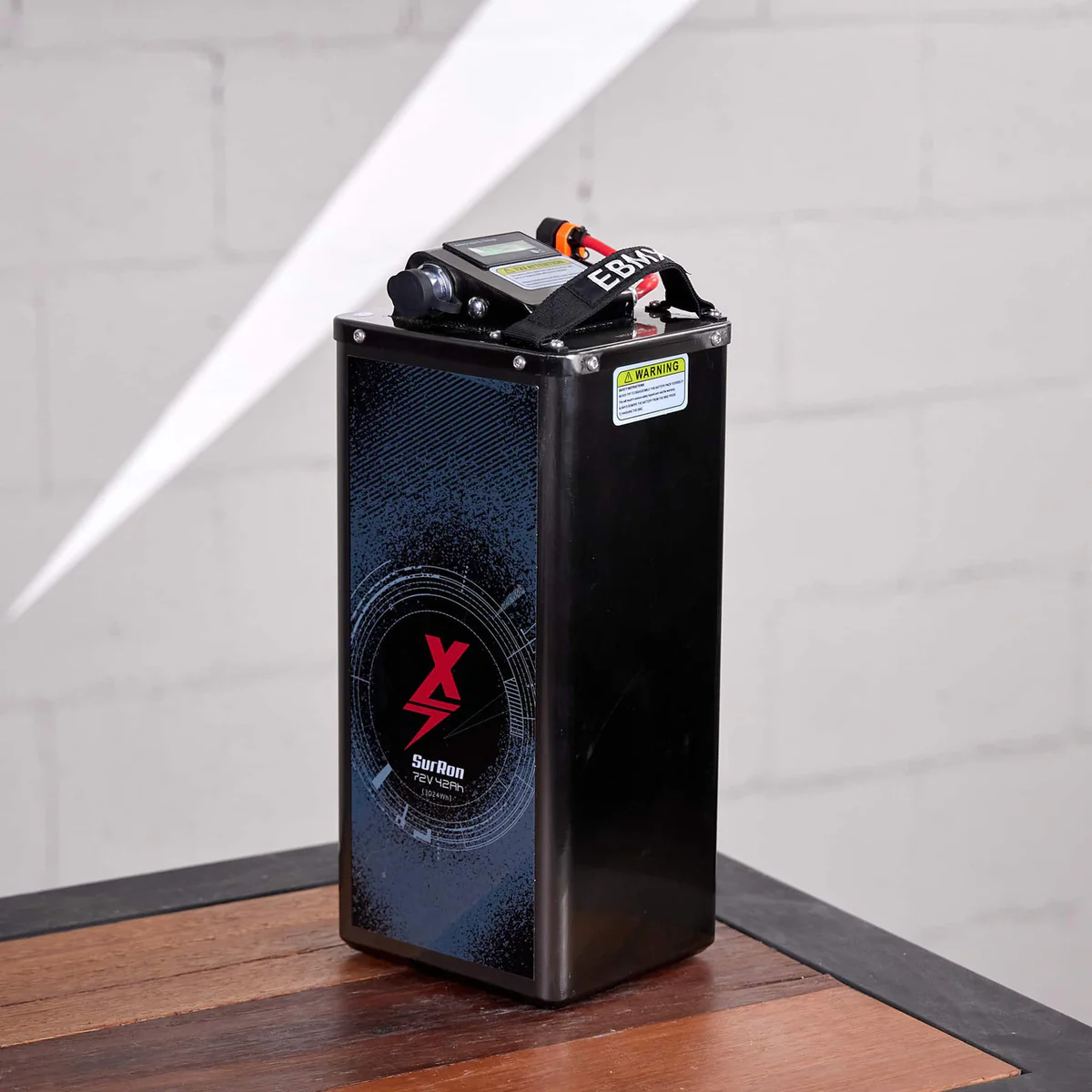
A large share of that ecosystem fits both bikes. The EBMX X9000 controller kit ships with harnesses for the Light Bee and the Talaria MX3 and MX4, and batteries such as the EBMX 72V 42Ah pack for the Light Bee sit alongside Talaria specific packs in our batteries and chargers category. Wheel sets, brake upgrades and handlebar parts are often shared or available in both fitments.
Gearbox internals, motors, displays and the 60V 45Ah pack are Talaria items, all stocked in our Talaria parts category. The surron talaria overlap is wide enough that you will rarely be stuck, but it pays to buy from a specialist who knows which parts are shared.
Road legal versions in the UK
Both brands offer a bike that can be registered for UK roads, and Talaria vs Surron makes no difference here, because the rules are set by vehicle category rather than by brand. An L1e-B moped class bike is limited to 45 km/h and can be ridden from 16 with a CBT, a provisional licence, registration, a number plate, insurance and a helmet. Talaria’s Sting Road Legal L1e is that bike, with a 60V 38.4Ah pack, mirrors, indicators and a plate holder, at 58 kg. Sur Ron’s Light Bee L1e sits in exactly the same class.
Where Talaria goes further
Talaria also offers the Sting L3e, a 125 equivalent L3e-A1 machine with the 60V 45Ah battery, a 3500W rated motor, a 53 mph top speed and a 71 kg kerb weight. It needs a rider aged 17 or over with a CBT, or a full A1, A2 or A licence, plus registration, insurance and an MOT when due. In the surron light bee vs talaria sting road legal comparison, that L3e option is the single biggest difference for a UK commuter, because it removes the 45 km/h ceiling.
Off road models
Every MX, R, XXX off road, Komodo and Dragon off road model cannot be ridden on public roads, byways, bridleways, footpaths or pavements in the UK, and may only be used on private land with the landowner’s permission. The official rules for licences and CBT are on GOV.UK, the vehicle categories are defined in Regulation 168/2013, and the Trail Riders Fellowship is the authority on which green lanes are lawfully open to registered motorcycles. Our full explainer on whether a Talaria is legal in the UK is at Are Talarias legal in the UK.
Frequently asked questions
Is a Talaria faster than a Sur Ron?
In stock form the Sting R MX4 is rated at 53 mph with 8000W peak, and the Sting MX3 at 47 mph with 6000W peak. A standard Light Bee X sits in the MX3 class, so a stock Sting R is the quicker bike. Both can be pushed beyond stock with controller and battery upgrades, at which point the talaria vs surron speed gap comes down to the build rather than the badge.
Which is more reliable, the Talaria gearbox or the Sur Ron belt?
In Talaria vs Surron reliability terms, both are sound when maintained. The belt is a consumable that needs tension checks and occasional replacement, and it can fail suddenly in grit. The Talaria gearbox needs periodic oil changes and is sealed against mud. Riders who switch from a Light Bee to a Sting often cite the gearbox as the change they value most.
Do Sur Ron parts fit a Talaria?
Many do, particularly aftermarket controllers, some batteries, handlebar and lever parts, foot pegs and wheel components. Drivetrain parts, motors, displays and the gearbox are Talaria specific. Check fitment with a specialist before ordering, because model years differ within each brand too, and talaria vs surron crossover is never guaranteed by appearance alone.
Can I ride either one on the road in the UK?
Only the road legal versions. The Sting L1e and Light Bee L1e are 45 km/h moped class bikes needing a CBT from 16, registration, a plate, insurance and a helmet. The Sting L3e is a 125 equivalent for riders aged 17 and over with a CBT or a full motorcycle licence. Off road models from either brand cannot be used on any public road, byway or bridleway.
Which should a beginner choose in the talaria vs surron debate?
A beginner who values light weight and a huge second hand market will get on well with a Light Bee. One who wants more range, more braking and no belt to maintain will be better served by a Sting MX3 or Sting R MX4. Either way, make sure the place you ride is private land or a lawful venue.
Next steps
If you have read this far you already know which side of the talaria vs surron line you sit on. Browse the full Talaria Sting range to compare the MX3, MX4 and MX5 Pro, or visit our road legal Talaria category if the bike must earn its keep on the road too. Still undecided? Our contact page connects you with a UK Talaria specialist who will give you a straight answer.
