
Uncategorized
Talaria CBT Guide: What a 16 Year Old Can Ride in the UK
Mar
Every talaria cbt question we receive comes from the same place: a teenager who wants one of these bikes and a parent who wants to know whether that is allowed. The short answer is that a 16 year old can legally ride one specific kind of Talaria on UK roads, the L1e moped class version, and only after passing Compulsory Basic Training. This guide walks through the licence, the Talaria CBT day, the kit and the paperwork, in the order you will actually meet them.
The short answer at 16
Can a 16 year old ride a talaria on the road? Yes, if three things are true at once. The bike must be an L1e homologated model, registered with a number plate. The rider must hold a provisional licence with moped entitlement. And the rider must have completed a Talaria CBT course and be displaying L plates.
That is the whole talaria 16 year old question, and it has no shortcuts. Miss any one of those three and the answer becomes no. An off road MX, R, XXX, Komodo or Dragon model has no type approval, cannot be registered and therefore cannot be ridden anywhere public at any age. A registered L1e ridden without a Talaria CBT certificate is an unlicensed rider on a public road, which is an insurance problem as much as a legal one.
What you can ride at each age
UK entitlement is built in steps, and each step opens a larger class of machine. This table maps the steps onto the Talaria range.
| Age | Licence route | Talaria you can ride | Main restrictions |
|---|---|---|---|
| Under 16 | None required | Off road models only, on private land with the landowner’s permission | No public road, byway, bridleway, footpath or pavement |
| 16 | Provisional licence plus Talaria CBT | Sting Road Legal L1e | Limited to 45 km/h, L plates, no pillion, no motorways |
| 17 | Provisional licence plus CBT | Sting L1e or Sting L3e | L plates, no pillion, no motorways, CBT valid two years |
| 17 with A1 test passed | Full A1 licence | Sting L1e or Sting L3e | No L plates, pillion allowed, no further CBT needed |
| 19 with A2 test passed | Full A2 licence | Any road legal Talaria | Machines up to 35 kW |
| 24, or 21 through progressive access | Full A licence | Any road legal Talaria | No power restriction |
| Car licence passed before February 2001 | Existing moped entitlement | Sting Road Legal L1e | No CBT required, no L plates |
Note the pattern: the talaria cbt requirement disappears only when a full motorcycle test is passed. Until then the certificate has to be renewed every two years.
The L1e moped class explained
L1e is the European vehicle category for mopeds, defined under Regulation 168/2013 and carried into UK law. A machine in this class is restricted to 45 km/h, which is roughly 28 mph, and is treated exactly like a 50cc petrol moped whatever its motor actually is.
What Talaria builds for the class
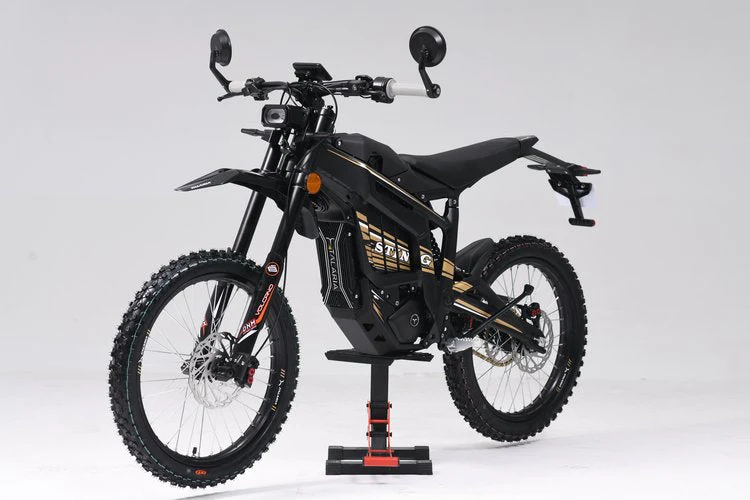
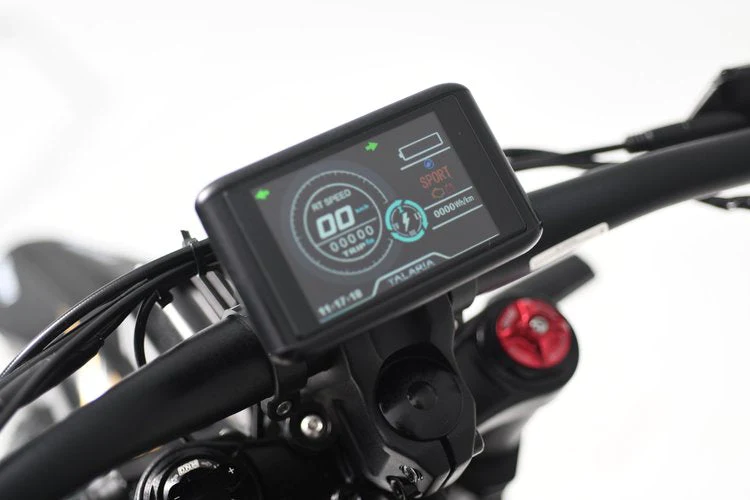
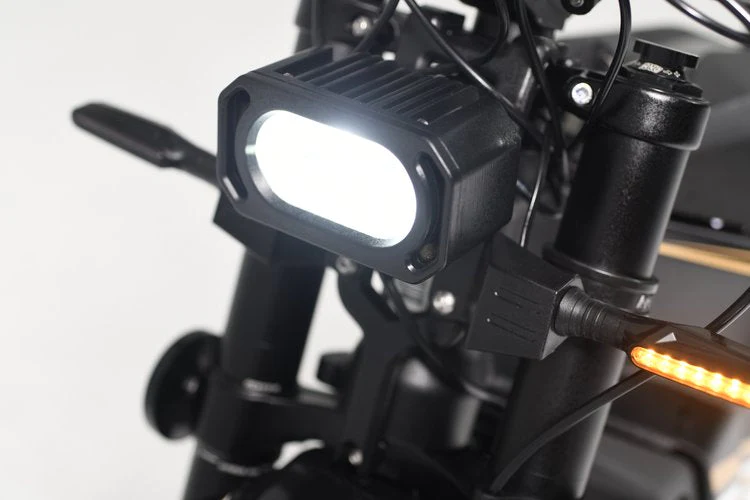
The Sting Road Legal L1e is the bike at the centre of almost every Talaria CBT enquiry we take. It carries the 60V 38.4Ah LG 21700 pack, a motor rated at 3000W with 6000W peak, IP67 sealing, a 58 kg kerb weight and a 100 kg maximum load. For the road it adds a larger OLED display, a homologated headlight, a reactive brake light, mirrors, indicators and a number plate holder as standard.
What the l1e talaria licence actually permits
With an l1e talaria licence in the form of a provisional plus Talaria CBT, a 16 year old may ride on any public road other than a motorway, must display L plates front and rear, and may not carry a passenger. The bike must be taxed, although electric vehicles are currently zero rated, registered, insured and fitted with its plate. Charge it at home like a phone and it costs pennies per ride, which is a large part of why an electric moped for 16 year olds appeals to families.
The talaria cbt day, step by step
A talaria cbt is the same course as any other CBT: it is not a test, and nobody fails it in the way you fail an exam. It is a structured day of instruction that ends when the trainer is satisfied you are safe to ride unaccompanied. Most riders complete it in one day. Some need two.
The Talaria CBT runs through five elements in order, and you only progress when the previous one is solid. The full official description is on the GOV.UK CBT page, and in outline it covers the following.
- An introduction, eyesight check and explanation of the aims of the course
- Practical on site training: controls, stands, wheeling the bike, starting and stopping
- Practical on site riding: slow control, gears if fitted, U turns, emergency stops, rear observation
- Practical on road training: the theory of road position, junctions, hazard awareness and weather
- Practical on road riding: at least two hours out on public roads with the instructor in radio contact
Bring the right bike
Training schools supply a machine, usually a 50cc or 125cc petrol moped. You can take your talaria cbt on your own bike if the school agrees and the machine is registered, insured and taxed, but most 16 year olds train on the school bike and collect their Talaria afterwards. Ask the school in advance, because not every instructor is set up for an electric moped.
After the certificate
You leave the Talaria CBT with a completion certificate that lasts two years. Ride within its terms and it simply expires and is retaken. Pass a full motorcycle test in that window and the certificate becomes irrelevant.
What changes at 17
At 17 the ceiling lifts. A rider may now use an L3e A1 machine, the 125 equivalent class, still on a provisional licence with a valid Talaria CBT and L plates. That is the category the Sting L3e is built for.
The difference in practice is significant. The L3e carries the 60V 45Ah pack, a 3500W rated interior permanent magnet motor, 375 Nm at the rear wheel and a 53 mph top speed at 71 kg. It is not held to the 45 km/h moped ceiling, so it keeps up with urban traffic rather than holding it up. Most riders who start on an L1e at 16 move to an L3e within a year for exactly that reason.
Passing the A1 test
Taking the full A1 test at 17 removes the L plates, allows a pillion passenger and ends the two yearly talaria cbt renewal. It involves a motorcycle theory test followed by two practical modules. For anyone planning to ride for years rather than months, it is the cheaper route in the long run.
Registration, plates and insurance
With the Talaria CBT behind you, the paperwork is next. A road legal Talaria arrives with the documentation needed to register it with the DVLA. Once registered you receive a registration number, and a correctly sized plate must be fitted before the bike is used on a road. Keep the certificate of conformity safe, because insurers ask for it.
Insuring a young rider
We do not quote premiums, because they depend on postcode, storage and the rider. What we can say in general terms is that insuring a 16 year old on a moped class machine is far cheaper than insuring a 17 year old in a car, that third party cover is the legal minimum and comprehensive is usually worth the difference on a new bike, and that a locked garage or shed with a ground anchor reduces the quote noticeably. Declare the bike accurately as an electric moped and declare any modification, because an undeclared controller change can void the policy entirely.
Keep it standard
This matters more on a teenager’s first bike than anywhere else. A road legal Talaria is type approved as a complete vehicle. Fitting an aftermarket controller, a different battery voltage or removing the speed limiter takes the bike outside that approval, which invalidates the insurance and makes the rider uninsured rather than merely modified.
Helmets and riding kit
A helmet is a legal requirement on any road legal Talaria, and no Talaria CBT day starts without one, and it must meet the recognised standards set out on the GOV.UK helmet page. Buy new, buy fitted, and replace it after any impact.
Everything else is a choice, and it is the choice that separates a graze from a hospital visit. For a rider at moped speeds in traffic, the useful order of priority is gloves first, then armoured jacket, then boots that cover the ankle, then trousers with knee protection. Bright or reflective outer layers matter more on a quiet electric bike than on a petrol moped, because drivers hear less warning.
Kit that gets worn
The best gear for a teenager is the gear they will put on for a ten minute ride to college. Textile jackets with removable liners get worn in more weather than leather. A helmet that is too heavy or too loud gets left at home, which is worse than a cheaper one that fits properly.
What parents usually want to know
Parents booking a Talaria CBT ask us three things, in this order: is it safe, is it legal, and what will it cost to run. The talaria 16 year old conversation usually starts with the first and ends with the third.
Speed and control
A 45 km/h moped is slower than the family car and slower than most cyclists on a descent. The Sting L1e delivers its power through a gearbox and a chain with four levels of regenerative braking, and the throttle response is progressive rather than abrupt. The 840 mm seat height is the real consideration: a shorter 16 year old may struggle to flat foot it, and that is worth checking in person before ordering.
Where they will actually ride
Be clear with a new rider that the talaria cbt and L plates cover public roads, not bridleways, byways or the local woods. Off road riding on land you do not own or have permission to use is an offence regardless of licence, and it is the single most common way a teenage rider loses a bike to seizure.
Running costs
Electricity, tyres, brake pads and a chain. There is no fuel, no oil filter and no exhaust. The gearbox takes an oil change at intervals rather than a belt replacement. It is a genuinely cheap machine to keep on the road, which is why a talaria for teenagers often replaces bus fares within a year.
The off road route
Not every young rider wants a number plate. If the riding will be on private land, a track day or a club venue, the off road models are the better machines: no Talaria CBT, no licence and no age requirement beyond what the landowner or venue sets.
What does not change is the permission. Private land means land you own or have explicit permission to use, and forestry tracks, common land and disused quarries are not automatically available. Insurance still matters, because third party cover for off road riding is sold separately and most venues require it.
Frequently asked questions
Can a 16 year old ride a Talaria on the road?
Yes, but only the L1e moped class version, and only with a provisional licence, a completed Talaria CBT, L plates, registration, a number plate and insurance. The bike is limited to 45 km/h and no passenger may be carried. Off road Talaria models cannot be ridden on any public road, byway or bridleway at any age.
How long does a CBT last?
The Talaria CBT completion certificate is valid for two years. If you have not passed a full motorcycle test by then, you retake the course to keep riding on a provisional licence. Many riders take a second talaria cbt at 18 and then book the A1 test, which removes the requirement permanently along with the L plates.
Do I need a CBT if I already hold a car licence?
If you passed your car test before 1 February 2001 you hold moped entitlement and can ride an L1e machine without a CBT or L plates. If you passed after that date you hold provisional moped entitlement only, so a Talaria CBT is required before riding on a road. That rule catches out a lot of parents who assume their licence covers them.
Is a Talaria a good first bike for a teenager?
For road use, once the Talaria CBT is passed, the Sting L1e is a sensible first machine: light at 58 kg, quiet, limited to moped speed and cheap to run. The caution is seat height at 840 mm and the temptation to modify it. A talaria for teenagers works best when the bike stays standard and the riding stays where it is allowed.
Can my 16 year old carry a friend on the back?
No. Riding on a provisional licence with L plates means no pillion passenger, on any machine, at any age. That restriction only lifts when a full A1, A2 or A test is passed. It applies to the electric moped for 16 year olds route exactly as it applies to a petrol scooter.
What happens if the bike is modified?
A modified road legal Talaria is no longer the vehicle that was type approved. The insurance is void, the bike is not road legal, and both rider and registered keeper are exposed. Upgrades belong on off road machines ridden on private land, which is why we separate the two clearly on every product page.
Next steps
If the plan is road riding at 16, the starting point is the road legal Talaria category and a booked talaria cbt date. If your rider turns 17 soon, it is worth looking straight at the L3e rather than buying twice. Our guide to whether Talarias are legal in the UK covers the wider legal picture, the electric mopeds page explains the class in more detail, and our contact page reaches a UK Talaria specialist who can talk through seat height and sizing before you commit.
