
Uncategorized
Talaria Insurance in the UK: What Cover You Need and What Insurers Ask
Apr
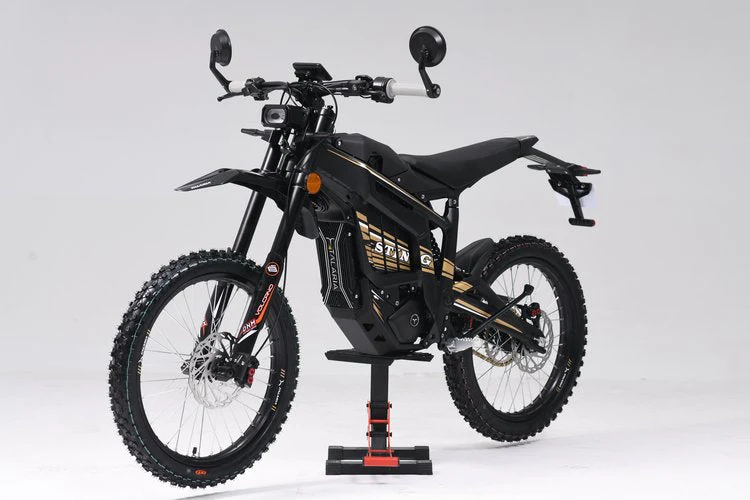
Talaria insurance splits into two completely separate products, and confusing them is the single most common mistake new owners make. A registered road legal Talaria must carry compulsory cover before it moves. An off road Talaria on private land does not have to be insured at all, yet it is the machine most likely to generate a claim, because the biggest risk to it is theft rather than a collision. This guide explains both, what an insurer will ask you, and the declarations that quietly decide whether a claim is paid.
Two different products under one name
When people search for Talaria insurance they are usually thinking of a motorcycle policy, the kind with a certificate and a renewal date. That is only half the picture.
The first Talaria insurance product is road risk cover for a registered vehicle. It is a legal requirement, it names a rider, and it provides at minimum third party liability so that anyone you injure or whose property you damage can be compensated. This is the policy an L1e or L3e Talaria needs.
The second is an off road or leisure Talaria insurance policy covering theft, accidental damage and third party liability while the machine is used away from the road. It is not compulsory, it is not the same contract, and it is sold on very different terms. Most owners of an unregistered Talaria who think they are uninsurable have simply been looking at the wrong counter.
Deciding which you need starts with what you own. The road legal Talaria category lists the homologated models. Everything else in the range is an off road machine.
Why cover is compulsory on a road legal model
Under the Road Traffic Act 1988, a motor vehicle used on a road or other public place must be covered by a policy of insurance that meets the statutory minimum. There is no discretion in it and no grace period, so Talaria insurance stops being optional the day the plate goes on. Once a Talaria is registered and plated, that obligation begins, and the requirement is set out plainly on GOV.UK.
Two details catch Talaria owners out. The first is the phrase other public place, which is wider than most people assume and can include a supermarket car park, a pub car park or an access road on an estate. The second is continuous insurance enforcement: a registered vehicle must generally be insured even while it sits unused, unless it has been formally declared off the road.
What the minimum Talaria insurance actually covers
Third party only cover pays for injury and damage you cause to others. It does nothing for your own machine. Third party fire and theft adds those two perils. Comprehensive adds damage to your own bike. For a machine of this value, Talaria insurance at the statutory minimum leaves a very large hole where the bike used to be.
Off road cover is optional and still worth having
Genuine private land is neither a road nor a public place, so there is no statutory requirement to insure an off road Talaria used there with the landowner’s permission. Our guide to where you can ride an electric dirt bike sets out where that applies.
The absence of a legal requirement is not the same as an absence of risk, and this is where Talaria insurance earns its keep.
Theft is the real exposure for off road Talaria insurance
Light, valuable, quiet to move and easy to lift into a van: an electric dirt bike has a risk profile closer to a high end mountain bike than a motorcycle. Most losses happen from a garage, a shed, a trailer or a van overnight, not on the trail. A policy that covers theft from a named storage address and in transit is the one that matters.
Damage and liability
Accidental damage cover pays when the bike lands badly, and third party liability protects you if you injure another rider or a spectator on private land. You remain legally responsible for that even where no policy is required. Competition use is usually excluded from off road Talaria insurance unless specifically added, so read that clause before your first race.
What an insurer will ask you
Every Talaria insurance quotation, road or off road, is built from the same handful of facts. Having them ready makes the process quick and, more importantly, accurate.
- The exact model and specification, for example a Sting R MX4 with a 60V 45Ah pack, rather than just the word Talaria.
- Whether the machine is registered and homologated, and to which category, L1e or L3e.
- The frame number, and the registration mark if it has one.
- Where it is kept overnight, and whether that building is locked, alarmed or shared.
- What security is fitted: ground anchor, chain, disc lock, tracker, marking.
- Who rides it, their age, licence status and claims history.
- How it is used: private land, licensed venues, competition, commuting.
- Any change from factory specification, however small it seems.
Answer all of them honestly. An inaccurate answer given to save time is the reason most declined claims are declined, and the saving is never worth it.
Controllers, batteries and declaring modifications
This is the part of Talaria insurance that owners of upgraded machines most need to read. Underwriters treat any change that alters performance, value or theft attractiveness as a modification, and it must be declared.
The controller question every Talaria insurance form asks
An aftermarket controller is the clearest example. Fitting a high output unit from our controller upgrade guide changes the peak power the machine can deliver, and an insurer will want to know. An undeclared controller does not simply reduce your cover, it can give the insurer grounds to treat the policy as void, which means no theft payout either.
On a road legal machine the stakes are higher again. A homologated Talaria is type approved at a specific output, so fitting a controller that lifts it above that figure takes the vehicle outside the terms of its approval, and it is no longer the vehicle described on the certificate.
Batteries and other changes
For Talaria insurance purposes a larger or higher voltage pack is a modification too, as are wheel sets, forks such as a Manitou Dorado Expert, and anything that raises the replacement value. Declare them, get the acknowledgement in writing, and keep the receipts. Our battery guide explains which pack belongs with which bike.
Security and storage conditions
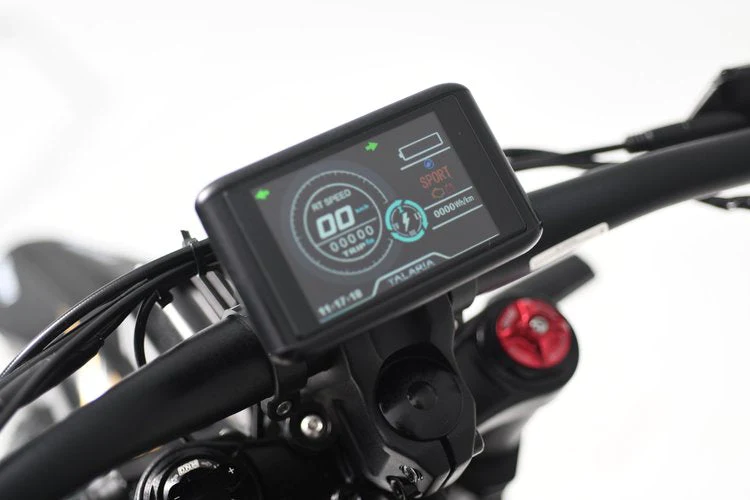
Read the schedule, not the marketing. A Talaria insurance policy will almost always attach conditions to the theft cover, and those conditions are what the insurer will check when you claim.
Typical requirements include a specified minimum standard of chain and lock, use of a ground anchor bolted into concrete rather than a wall plug, storage in a locked building at the address you declared, and an alarm or immobiliser on higher value machines. Some policies require photographic evidence of the security in place at inception.
Practical steps that reduce risk and Talaria insurance disputes
Anchor the bike rather than lock it to itself, because a chain around a wheel simply gets carried out with the bike. Fit a tracker and register it. Photograph the frame number and keep the invoice. Never leave a machine in a van overnight on a driveway, which is where a disproportionate share of losses happen. Take the battery indoors, which also does the pack a favour in winter.
None of this is unique to electric machines, but a Talaria is quieter to steal than a petrol bike and lighter to lift, so the basics matter more.
Talaria insurance by situation: a quick table
Use this to work out which Talaria insurance conversation you need to have before you ring anyone.
| Situation | Cover required by law | Cover worth having | Key point |
|---|---|---|---|
| Registered L1e used on the road | Yes, at least third party | Comprehensive plus theft | Continuous insurance applies unless declared off the road |
| Registered L3e used on the road | Yes, at least third party | Comprehensive plus theft | Higher performance class, declare the licence held |
| Off road model on private land | No | Theft, damage and liability | Landowner permission does not create cover |
| Off road model at a pay and ride venue | No | Theft, damage and liability | Check whether venue use is included or excluded |
| Competition or race event | Event permit conditions apply | Specific competition extension | Standard policies usually exclude racing |
| Bike in storage over winter | Depends on registration status | Theft from the declared address | Security conditions still apply while stored |
| Bike in a van or trailer | No | Transit cover | Overnight in a vehicle is often excluded |
| Machine with an aftermarket controller | As above | Declared modification cover | Undeclared changes can void the policy entirely |
Riders aged 16 and 17
Age drives both eligibility and cost, and Talaria insurance for a young rider needs planning before the bike is bought rather than after.
At 16 a rider may use an L1e moped class Talaria on the road with a provisional licence, a completed CBT, L plates and no pillion, limited to 45 km/h. The Sting Road Legal L1e is that machine. At 17 the L3e class opens up, needing a CBT or a full A1 entitlement. Compulsory basic training is the gateway to both, and our guide for 16 year olds walks through the process.
What parents should know
Young rider Talaria insurance premiums are driven by age, postcode, storage and the machine’s performance class, not by the badge on the tank. Insuring a parent as the policyholder while the young rider is the main user is misrepresentation and will invalidate a claim. If the teenager is the main rider, they must be shown as such. Keeping the machine in a locked garage with an anchor, and choosing the moped class rather than the 125 equivalent, are the two changes that make the most difference.
Agreed value against market value
This is the Talaria insurance clause that decides how much you actually receive, and it is worth understanding before a claim rather than during one.
A market value settlement pays what the insurer judges the machine to be worth on the day of the loss, based on comparable sales. For a model that has been on sale for years this is usually fair enough. For a specialist build, an imported specification or a heavily upgraded machine, market value can fall a long way short of what you spent, because the comparables do not include your bike.
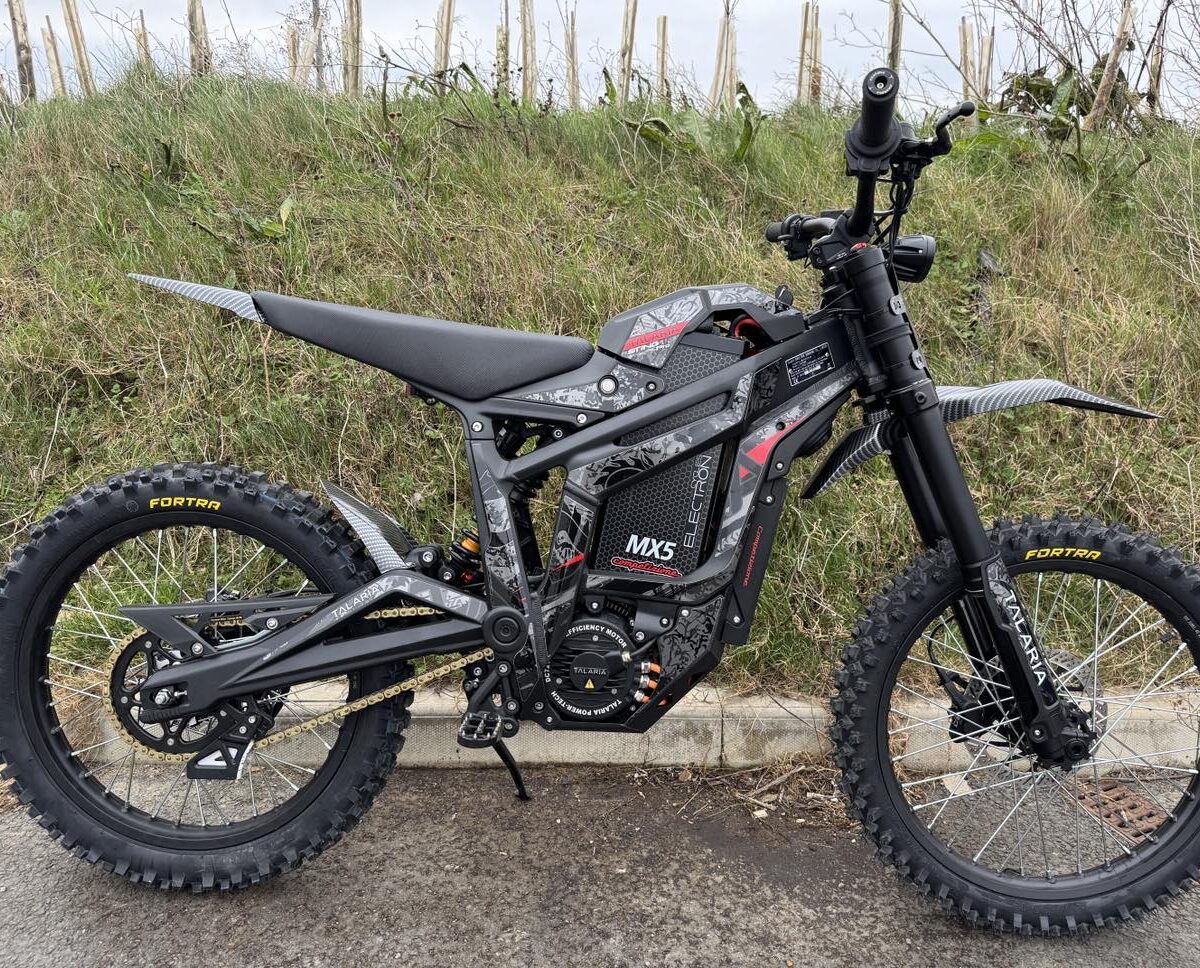
An agreed value policy fixes the settlement figure at inception, normally supported by photographs, an invoice and sometimes an independent valuation. It is the right structure for a machine such as a Sting MX5 Pro Competizione, where the specification is not something an adjuster can look up.
Ask which basis is being offered before you buy any Talaria insurance, and if the answer is market value on a machine you have upgraded, ask what evidence they would accept to move it.
Frequently asked questions
Do I legally need Talaria insurance for an off road model?
Not on genuine private land used with the landowner’s permission, because that is neither a road nor a public place. You do need it the moment the machine touches a road or somewhere the public has access. Even where it is not required, theft and liability cover are strongly advisable on a machine of this value.
Will an insurer cover a Talaria with an upgraded controller?
Often yes, and Talaria insurance underwriters are used to the question, provided you declare it before cover starts and it is recorded on the policy. What is never acceptable is fitting one and saying nothing. An undeclared modification can allow the insurer to void the policy, which removes theft cover as well as accident cover. On a road legal machine it can also take the vehicle outside its type approval.
Can a 16 year old be insured on a Talaria?
Yes, on an L1e moped class machine, with a provisional licence and a completed CBT, riding with L plates and no pillion. The rider must be shown as the main user on the policy. Storage, security and postcode make more difference to the outcome than anything else at that age.
Does a road policy cover me at a motocross track?
Usually not. Most road policies exclude use on a closed circuit, at an organised competition or during timed practice. Some off road policies include venue use and exclude racing. Read the definitions section and, if you intend to compete, ask for a competition extension in writing.
What security will a policy require?
A Talaria insurance policy commonly requires a minimum grade of chain and lock, a ground anchor fixed into concrete, storage in a locked building at the declared address and sometimes an alarm, immobiliser or tracker. These are conditions rather than suggestions, so a theft claim can fail if the bike was not secured as described.
Is agreed value worth paying for?
On a standard model that is widely traded, market value is usually adequate. On an upgraded, imported or specialist build, agreed value is the difference between a settlement that replaces the bike and one that does not. Gather photographs, the invoice and specification details when the machine is new, because assembling that evidence after a theft is very hard.
Next steps
Sort Talaria insurance out before delivery rather than after, because a registered machine needs cover in force from the moment it arrives. Start by confirming which category you are buying in the road legal Talaria category, read our explainer on whether Talarias are legal in the UK, and check vehicle registration requirements if the bike will be plated. A UK Talaria specialist can confirm the exact specification an insurer will ask you to declare.
