
Uncategorized
Where Can I Ride an Electric Dirt Bike in the UK? The Complete Access Guide
Aug
Where can I ride an electric dirt bike is the question that decides whether a new bike gets used every weekend or sits under a sheet in the garage, and it is the one most buyers research after they have bought rather than before. UK access law is not complicated once you see its logic: it asks what the land is, not what the bike is. This guide walks through private land, tracks, clubs and rights of way, explains why a green lane needs a registered machine, and sets out what actually happens if you get it wrong.
The short answer
Where can I ride an electric dirt bike has a three part answer for any machine that has not been homologated and registered: private land where the landowner has given permission, a licensed track or pay and ride venue, and an organised event run under a recognised governing body. That is the whole list.
A road legal electric dirt bike, meaning one that has been type approved into the L1e or L3e category and then registered, plated, taxed and insured, may do all of the above plus use public roads and byways open to all traffic, in the hands of a rider who holds the right licence.
Everything else you may have been told is wrong. Where can I ride an electric dirt bike has no answer that includes a footpath, a bridleway, a park, a pavement, a canal towpath, a beach with public access or a bit of waste ground behind an industrial estate. The law treats a powerful electric bike as a mechanically propelled vehicle, and the absence of an engine note changes nothing.
Private land and written permission
Private land with the landowner’s permission is where the overwhelming majority of UK off road riding happens, and it is the first answer to where can I ride an electric dirt bike for almost everybody.
Where can I ride an electric dirt bike on a farm? Get it in writing
Verbal permission is worth very little when a neighbour complains or a farm changes hands. Ask for a short written note naming you, the land, the machine and the period covered. Landowners are generally happy to provide one, and it protects them as much as you. Keep a copy on your phone.
Permission is not the only hurdle
Two other things catch riders out. Permission answers where can I ride an electric dirt bike only when the land itself is free of other restrictions. Planning rules cap how many days a year a piece of land may be used for motor sport without a specific consent, so a farmer who lets you ride every Sunday may be creating a problem for himself without knowing it. And common land, land with public access rights across it, or land subject to a countryside stewardship agreement can carry restrictions the owner has forgotten about. Ask the question rather than assume.
Ride like a guest
Gates closed, livestock given space, no riding in standing crops, no churning a single line into a bog, and leave when asked. A landowner who trusts you is the most durable answer to where can I ride an electric dirt bike that exists. Access to good private land is the scarcest resource in UK off road riding, and it is almost always lost through behaviour rather than law.
Motocross tracks and pay and ride venues
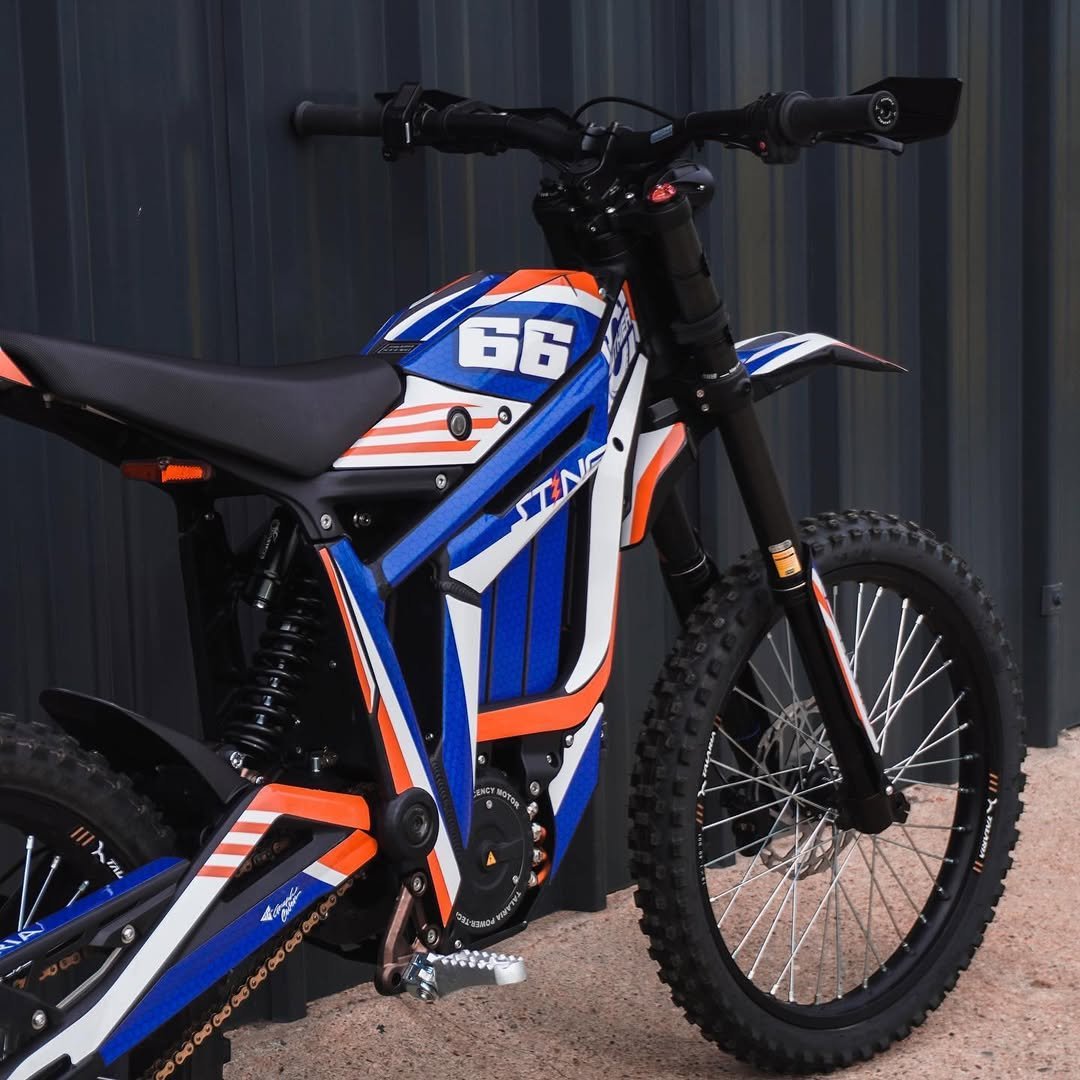
If you have no land of your own, a pay and ride venue is the most reliable answer to where can I ride an electric dirt bike legally and without arguments. These are commercial or club run sites with planning consent for the activity, and they typically operate practice days by booking.
What you can expect: a signing on process, a gate fee, proof of age, a helmet requirement and usually a requirement for boots, gloves and body armour. Many sites now run dedicated electric sessions or allow electric machines in any session, because they are quiet and do not upset neighbours in the way a paddock of two strokes does. That quietness is quietly making electric bikes welcome at venues that have fought planning battles for years.
Where can I ride an electric dirt bike away from a motocross circuit
Beyond motocross circuits, the UK has enduro loops, hard enduro parks, disused quarries run as venues and forestry sites that open for booked days. These suit a trail biased machine such as the Sting R MX4 better than a motocross circuit does. Search for venues near you, ring ahead, and confirm that they accept electric machines and what their charging arrangements are, because not every site has a socket in the paddock.
Clubs, training and organised events
Joining a club changes the answer to where can I ride an electric dirt bike more than any other single step. Clubs hold land, run permitted events and know which venues are open.
Competition and organised off road events in the UK run under permits from a governing body, most commonly the Auto Cycle Union, which licenses clubs, issues rider licences and sets the rules for motocross, enduro, trials and hard enduro. An event run under a permit has insurance, marshals, medical cover and the landowner arrangements already handled, which is a considerable amount of administration you do not have to do yourself.
Training schools are the underrated option. A day of coaching on a venue where the entry, the land and the insurance are all included is often the cheapest way to ride legally, and it will make you faster than a year of riding badly on your own. Ask any instructor where can I ride an electric dirt bike near here and you will get a better list than any search engine returns.
Footpaths, bridleways and byways explained
This is where most of the confusion sits, because riders hear the phrase green lane and assume it means one thing. It does not. The public rights of way network has four categories, and only one of them admits a motor vehicle, so where can I ride an electric dirt bike on the lane network has a very narrow answer.
Footpath
On foot only. No motor vehicle of any kind, ever, regardless of how quiet it is. Riding a dirt bike on a footpath is an offence in itself.
Bridleway
On foot, on horseback and on a pedal cycle. A pedal cycle is not a dirt bike. The presence of cyclists on a bridleway does not extend that right to a machine with a throttle, and this single misunderstanding causes more seizures than any other.
Restricted byway
Adds horse drawn vehicles to the bridleway rights. Still no mechanically propelled vehicles.
Byway open to all traffic
A BOAT carries a public right of way for all traffic including motor vehicles, which is what riders mean when they talk about green laning, and it is the only part of the network that can answer where can I ride an electric dirt bike with a yes. The catch is simple and absolute: a BOAT is a public road for legal purposes, so the vehicle must be registered, plated, taxed where applicable, insured and used by a licensed rider. An off road Talaria cannot use one. A registered Sting L3e can.
Working out which is which is not guesswork. The definitive map held by the local highway authority is the legal record, and the Trail Riders Fellowship exists precisely to help riders establish where lawful vehicular rights exist. Anyone asking where can I ride an electric dirt bike on a green lane should start there rather than with a forum post.
Where can I ride an electric dirt bike: access table
Use this table as the quick reference version of where can I ride an electric dirt bike. Off road means any unregistered machine. Road legal means a registered, insured L1e or L3e machine ridden by someone with the correct entitlement.
| Location | Off road machine | Road legal machine | What you need |
|---|---|---|---|
| Private land, owner’s permission | Yes | Yes | Written permission, planning day limits respected |
| Motocross track or pay and ride venue | Yes | Yes | Booking, gate fee, helmet and protective kit |
| Permitted club event | Yes | Yes | Club membership and the relevant licence |
| Public road | No | Yes | Registration, plate, insurance, licence, helmet |
| Byway open to all traffic | No | Yes | Same as a public road, plus a checked definitive map |
| Restricted byway | No | No | No mechanically propelled vehicles |
| Bridleway | No | No | Foot, horse and pedal cycle only |
| Footpath | No | No | On foot only |
| Pavement, park, towpath | No | No | Not available to motor vehicles |
| Common land or open access land | No | No | Access rights are for walkers, not vehicles |
Noise, neighbours and staying welcome
An electric bike is quiet, and riders assume that ends the conversation. It does not quite. Chain noise, tyre noise and the sound of a suspension bottoming out still carry across a valley on a still Sunday morning, and repeated passes at the same spot are what people notice rather than absolute volume. Where can I ride an electric dirt bike quietly is a social question as much as a legal one.
Local authorities can act where noise amounts to a statutory nuisance, and the assessment is about frequency, duration and time of day as much as decibels. In practice the riders who lose access are the ones who ride a tight loop past the same cottage for two hours. Vary your route, avoid early mornings and evenings, and introduce yourself to the neighbours before they have a reason to look for your number plate.
Electric machines are the best argument the sport has for keeping venues open. Where can I ride an electric dirt bike will have more answers in five years than it does today if riders use that advantage rather than squander it.
Insurance when you ride off road
Compulsory third party insurance under the Road Traffic Act 1988 applies to use on a road or other public place. Genuine private land is neither, so there is no statutory requirement to insure an off road machine used there. That is a much weaker protection than it sounds, and it should not be the deciding factor in where can I ride an electric dirt bike.
Two gaps matter whichever way you settle the question of where can I ride an electric dirt bike. First, an injury you cause to another person on private land is still your liability, and without cover it is your money. Second, the most common claim on an off road bike is not a crash at all, it is theft from a garage or a van. Cover for theft, damage and third party liability is sold separately from road policies and is worth having on a machine of this value. Our guide to Talaria insurance in the UK covers what insurers ask and what they exclude.
A road legal Talaria is different: it must be insured before it moves on a road, and riding one uninsured puts you straight into the enforcement powers described in the next section.
What happens if you ride where you should not
Riders usually imagine the worst case is being told to leave. It is not. Where can I ride an electric dirt bike is a legal question with real consequences attached to the wrong answer.
Riding a mechanically propelled vehicle on a road or public place without insurance or without the right licence gives the police a power to seize the vehicle under section 165A of the Road Traffic Act 1988. Seizure is not a fine you pay later, it is your bike on a recovery truck, with storage charges accruing and a release process that requires you to produce exactly the documents you did not have. Machines are disposed of when they are not reclaimed.
Separately, riding a mechanically propelled vehicle on a footpath, a bridleway or land that is not a road is an offence, and antisocial use gives police a further power to warn and then seize. Insurance is commonly voided by an offence of this kind, and a conviction follows you onto every future insurance proposal form you complete.
The sensible reading
None of this is intended to frighten anyone off the sport. It is to make the point that the three lawful answers to where can I ride an electric dirt bike are genuinely sufficient for a full riding life, and the fourth option is not worth the risk to a bike you have just paid for.
Frequently asked questions
Where can I ride an electric dirt bike if I have no land of my own?
Pay and ride venues and club practice days are the realistic answer to where can I ride an electric dirt bike without land of your own, and there are more of them than most new riders think. Joining a local club is the fastest route to regular riding, because clubs hold land and run permitted events. Training schools also include the venue and the insurance in the day.
Can I ride a Talaria on a green lane?
Only if the lane is a byway open to all traffic and the machine is registered, plated, insured and ridden by someone with the right licence. An off road model cannot use any right of way. Check the definitive map held by the highway authority rather than relying on a signpost or a map app.
Does being electric change the rules at all?
No. Where can I ride an electric dirt bike is answered the same way for every machine, because a powerful electric bike is a mechanically propelled vehicle in law, exactly like a petrol machine. It is not an electrically assisted pedal cycle, because it has a throttle and no functional pedals. Being quiet helps you keep access socially, but it changes nothing legally.
Where can I ride a Talaria that is registered as an L1e?
Anywhere a moped may go: public roads, byways open to all traffic, plus all the private land and venue options. The machine is limited to 45 km/h and a rider aged 16 needs a provisional licence and a completed CBT. Our guide for 16 year olds covers the process.
Is riding on private land really unrestricted?
No. You need the landowner’s permission, planning rules limit how many days a year land can be used for motor sport, and stewardship or common land designations can restrict it further. Get permission in writing and ask the owner whether any of those apply to their land.
What about waste ground, beaches and old airfields?
All of them belong to somebody, and most have public access of some kind, which makes them a public place for insurance purposes. Without the owner’s permission the answer to where can I ride an electric dirt bike does not include any of them, however empty they look on a Tuesday afternoon.
Next steps
Where can I ride an electric dirt bike is a question worth settling before you order. If your riding will be private land and venues, browse the off road machines in the Talaria Sting range and read our best electric dirt bike UK guide to match a model to your ground. If you want byways and roads as well, start with the road legal Talaria category and our explainer on whether Talarias are legal in the UK. Tell a UK Talaria specialist where you plan to ride and you will be pointed at the right category first time.
