
A workshop guide to Talaria batteries and chargers covering voltage, capacity, the OEM Sting pack, the EBMX 60V and 72V packs, charger matching, charging routine and storage.
Talaria Batteries and Chargers
Talaria Batteries and Chargers
Talaria Batteries and Chargers
Talaria Batteries and Chargers
Every one of the Talaria batteries we sell is listed above, and this section of the page is the workshop note we would give a customer who rang to ask which pack to buy. It covers what the voltage and amp hour figures actually mean, the differences between the OEM Sting pack and the two EBMX packs, which controller and charger each one needs, and how to charge, store and look after a lithium ion pack so it lasts.
Reading the numbers on Talaria batteries: volts, amp hours and watt hours
Three figures describe all Talaria batteries. Voltage sets how hard the motor can be pushed and must match the controller. Amp hours describe how much charge the pack holds at that voltage. Multiply the two and you get watt hours, which is the only number that lets you compare range between packs of different voltage. A 60V 45Ah pack stores about 2.7 kWh; a 72V 40Ah pack stores about 2.9 kWh, so the smaller amp hour figure is the bigger battery.
Why cell type matters
Talaria batteries and their EBMX equivalents are built from 21700 format cells, the same cylindrical cell used in electric cars. The OEM Sting packs use LG cells; the MX5 Pro moved to Samsung 50S. Cell choice affects how much current the pack can deliver without heating and how many charge cycles it survives. A pack that can supply high current without sagging is what gives a Talaria its response off the bottom of the throttle.
Nominal against fully charged
The "60V" printed on Talaria batteries is a nominal label for a 16 cell series string that reads a little above 67V when full and falls below 50V when empty. A "72V" pack is 20 cells in series and peaks near 84V. That is why a 72V pack cannot be run on a 60V controller or filled by a 60V charger: the hardware is built around a voltage window, and the wrong pack sits outside it.
The Talaria batteries and charger compared
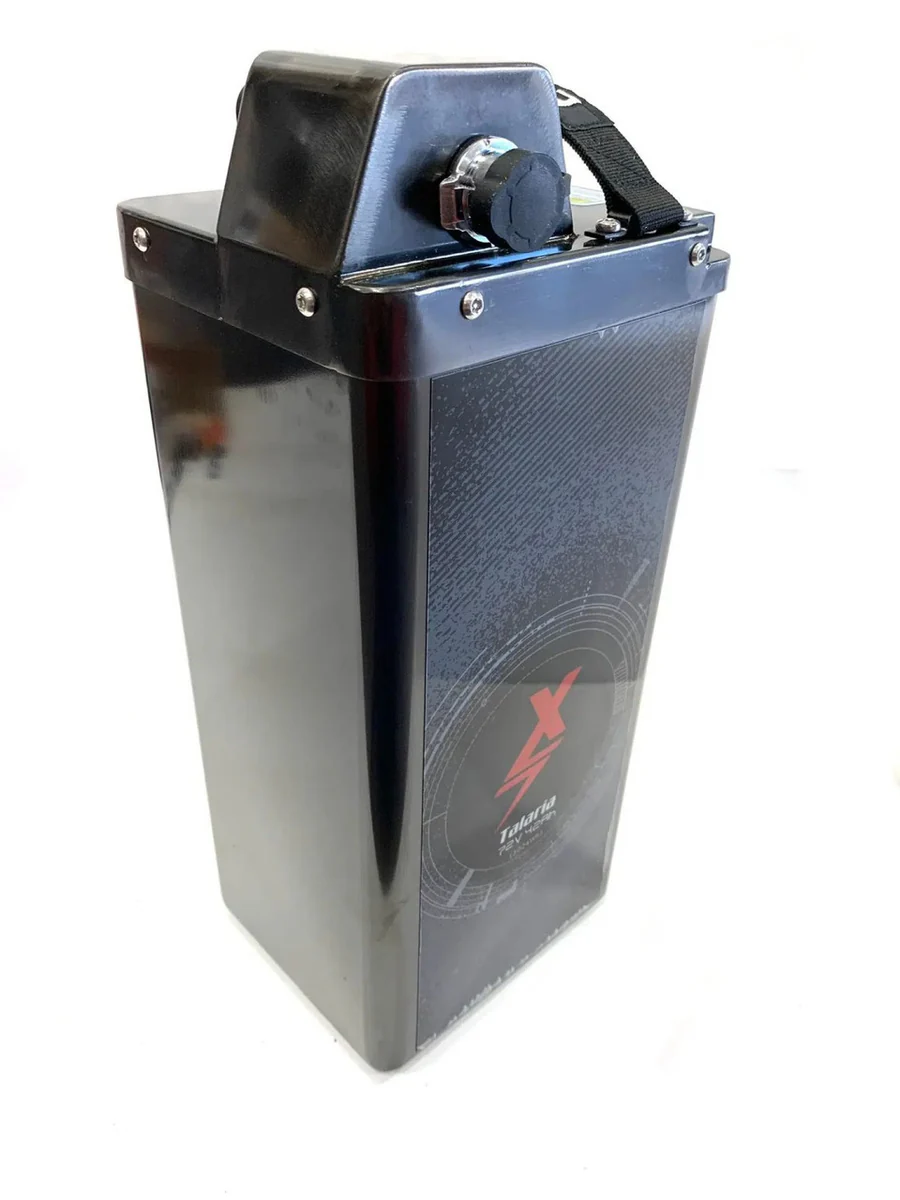
| Talaria batteries and chargers | Nominal voltage | Capacity | Energy (approx) | Fits | Controller needed | Charger needed |
|---|---|---|---|---|---|---|
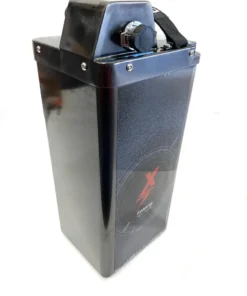
| OEM Talaria battery pack, Sting MX4 | 60V | 43.2Ah | 2.6 kWh | Talaria Sting MX4 battery bay | Stock Talaria controller | As stated on the product page; confirm before ordering |
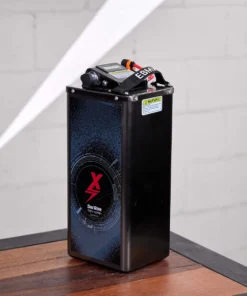
| EBMX 60V 65Ah battery | 60V | 65Ah | 3.9 kWh | Stock Talaria battery compartment | Stock controller, or BAC8000 kit or EBMX X9000 for higher power | 60V charger |
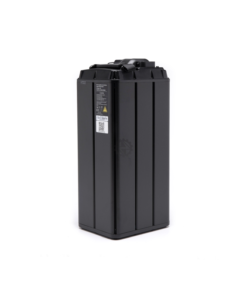
| EBMX 72V 42Ah battery for SurRon LBX | 72V | 42Ah | 3.0 kWh | SurRon Light Bee battery slot (slightly larger than stock) | EBMX controller upgrade required; will not run on the stock 60V controller | 72V charger required |
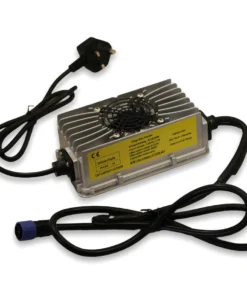
| Sting R MX4 OEM battery charger | 60V output, 12A | Not applicable | Not applicable | Talaria Sting R MX4 60V packs | Not applicable | Specified for a 110V mains supply |
The stock reference points for all Talaria batteries are the 60V 45Ah pack of the Sting R MX4, which weighs 12.85 kg and stores about 2.7 kWh, and the 72V 40Ah pack of the MX5 Pro at about 2.9 kWh. Against those, the EBMX 60V 65Ah is a range upgrade with no controller change, and the 72V SurRon pack is a power upgrade that brings a controller change with it.
The OEM Talaria Sting R battery: 60V 43.2Ah
Of the Talaria batteries on this page, the OEM lithium ion battery pack for the Sting MX4 is the straightforward choice when you want a second Talaria Sting R battery to swap on the trail, or a replacement for a pack that has been damaged. This Talaria battery is a 60V pack at 43.2Ah, so around 2.6 kWh, built to drop into the MX4 battery bay and talk to the stock controller and display over the standard connector.
When a second OEM pack makes sense
Swapping Talaria batteries takes seconds on a Sting and doubles your riding day without touching the electrics. For riders who trailer to a venue and ride for several hours, a spare OEM pack is usually better value than a larger aftermarket one, because the bike stays standard, the charger stays the same, and nothing about the warranty position changes. Keep both Talaria batteries at similar charge levels and rotate them so they age together.
A note on charging this pack
The product page carries a specific note about charger compatibility for this Talaria battery. Read it before you order and, if you are unsure whether your existing charger is suitable, ask us with your bike model and year to hand. Charging Talaria batteries with the wrong charger is the quickest way to shorten their life or trip the battery management system.
EBMX 60V 65Ah: more range on the stock controller
Of the high capacity Talaria batteries we list, the EBMX 60V 65Ah battery is the one for a rider whose problem is distance rather than power. At 65Ah it holds close to double the energy of the stock 60V Talaria battery, about 3.9 kWh against 2.7 kWh, and because it is still a 60V pack it runs on the stock Talaria controller and fits in the standard battery compartment. On a stock bike, that translates directly into more miles per charge with no change in how the bike rides.
Pairing it with a high power controller
This Talaria battery can supply a much higher current than the stock controller asks for. Fitted alongside a BAC8000 kit or the EBMX X9000 controller, EBMX quote up to 15 kW from the bike, roughly three times the 5 to 6 kW a stock Sting draws at full throttle in Sport. That is a different machine, and it comes with two hard caveats.
The caveats
First, a Talaria with an aftermarket controller and a high power tune is an off road vehicle only; the modification takes any homologated version outside its approved class. Second, the stock motor is not designed for sustained 15 kW. EBMX's own guidance is to use full throttle in short bursts of no more than 10 to 15 seconds, avoid repeated full throttle runs, ride in the lowest power mode the terrain needs, and reduce the tune for long rides. Ignore that and the motor pays for it, whatever temperature protection is enabled.
EBMX 72V 42Ah for the SurRon Light Bee
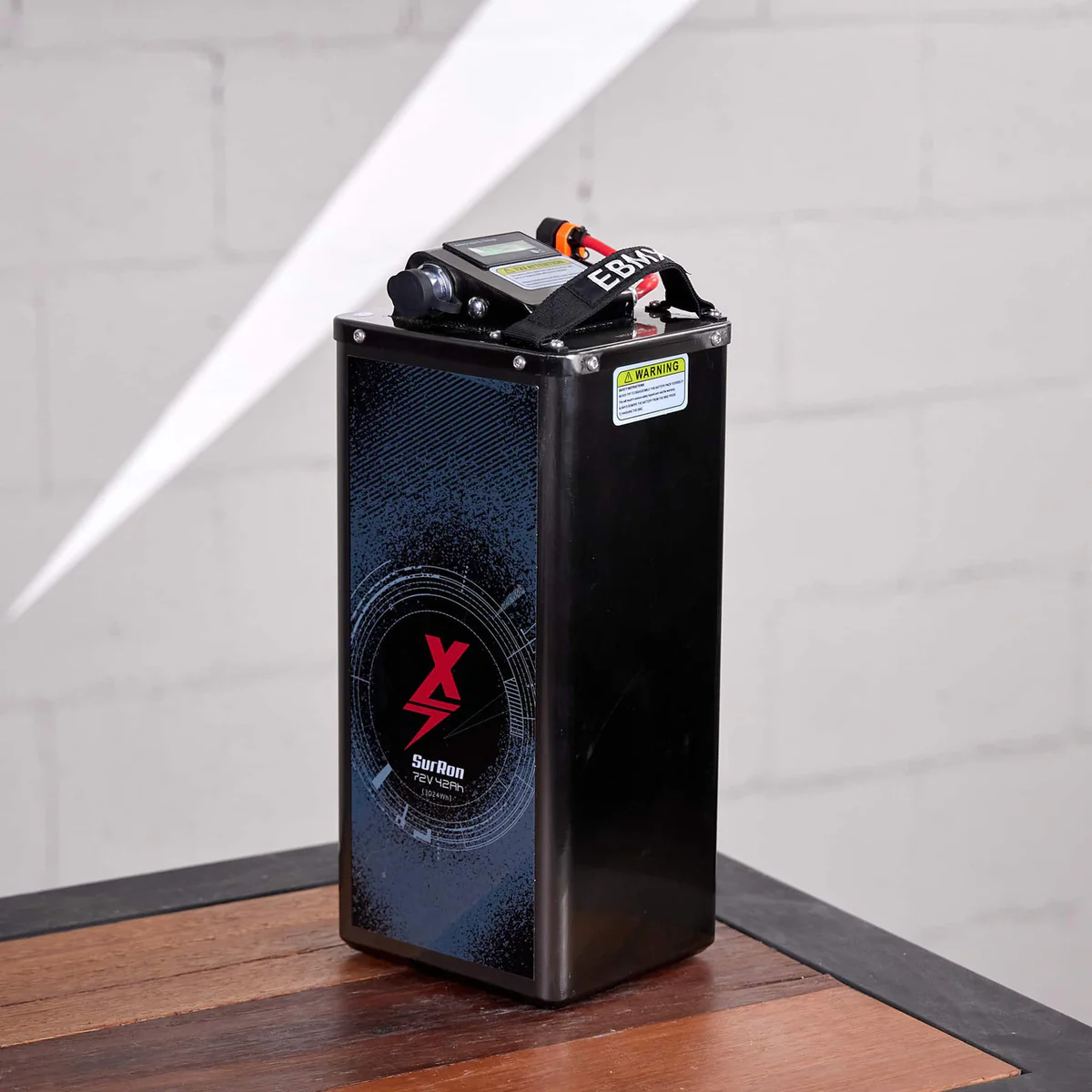
Many Talaria owners also run a SurRon, which is why the range of Talaria batteries here includes the EBMX 72V 42Ah battery, the 72V SurRon pack we stock for the Light Bee X. It fits the stock SurRon battery slot as a plug and play unit, but it is slightly larger than the stock pack, which can interfere with some aftermarket seats. If you have changed the seat, ask us about fitment before you order.
What it needs to run
This is a 72V battery, so it will not run on the stock 60V SurRon controller and needs an EBMX controller upgrade. It also cannot be charged by a 60V charger; a 72V charger is required. Budget for both when you cost the upgrade. The reward is a pack that delivers far more current than stock, with about 3.0 kWh on board, and the sharper throttle response that a higher system voltage brings.
Why 72V rather than more amp hours
At the same current, a 72V system delivers 20 percent more power than a 60V one, and it does so with less heat in the cables and connectors. That is why Talaria moved the MX5 Pro to 72V. If your goal is a faster, harder hitting bike, voltage is the lever; if your goal is a longer day, amp hours are. The two EBMX packs here are the clearest example of that choice.
Choosing a Talaria charger
A Talaria charger has to match Talaria batteries on two counts: output voltage and connector. Charge current is the third variable, and it decides how long a full charge takes. The Sting R MX4 OEM battery charger is the stock 60V 12A unit, which is the charger that gives the MX4 its quoted charge time of about three hours from empty on the 45Ah pack.
Check the mains rating before you order
This particular OEM charger is specified for a 110V mains supply, as used in North America, rather than the 230V supply in UK homes. It is the right unit for riders who charge from a 110V source or who run a suitable step down transformer, and it is not a plug straight into a UK wall socket item. If you need a 230V Talaria Sting charger, contact us with your bike model and we will confirm the correct unit and lead time.
Fast charging and cell life
A higher current charger fills Talaria batteries faster but pushes more heat into the cells. For a pack you rely on for years, a standard rate charge is kinder, and a fast charge is something to use at a venue between sessions rather than every night. Never exceed the charge current the pack's battery management system is rated for, and never use a charger whose output voltage does not match the pack exactly.
A charging routine that protects the cells
Lithium ion cells are happiest in the middle of their range and least happy sitting full or empty for long periods. A simple routine keeps Talaria batteries healthy for hundreds of cycles.
- Let a hot pack cool for 20 to 30 minutes after a hard ride before plugging in.
- Charge on a hard, dry, non flammable surface in a ventilated space, and stay in the building while it charges.
- Unplug when the charger shows full rather than leaving the pack on charge for days.
- If the bike will sit for more than a week, store the Talaria battery at roughly half charge, not full and not flat.
- Keep the connector clean and dry, and check it for heat discolouration every few charges.
- Do not charge a pack that has been submerged, dropped hard or physically damaged until it has been inspected.
Range anxiety pushes people to charge to 100 percent every time. For a big day out that is the right call; for a short evening ride, stopping at 80 or 90 percent costs you nothing you will use and spares the cells. Our Talaria charger guide goes into charge rates and timings model by model.
Storage, transport and end of life
Winter storage for Talaria batteries
Over a UK winter, keep the Talaria battery indoors at room temperature and around half charge, and top it up to that level once a month. Cold does not damage a lithium ion pack in storage, but charging a pack that is below freezing does, so bring a cold battery inside and let it warm before you charge it. Never store or charge a pack in a damp shed.
Transport
When you move Talaria batteries in a van or car, secure the pack so it cannot slide or fall, keep the terminals covered, and keep it well away from metal tools. A removable pack travelling separately from the bike is safer standing upright in a padded box than loose in a footwell. If you fly with a bike, note that packs of this size are not accepted as passenger baggage.
Disposal of Talaria batteries
A worn or damaged pack is hazardous waste and must not go in household or general commercial waste. Return it to us or to a licensed battery recycler; the GOV.UK guidance on batteries and accumulators sets out the producer and retailer obligations that make that route available. A pack that has swollen, smells sweet or has been in water should be isolated outdoors on a hard surface and dealt with promptly.
Safety standards
Well built Talaria batteries carry protection against over charge, over discharge, short circuit and over temperature inside the battery management system. Guidance from the UK's Office for Product Safety and Standards on lithium ion batteries is worth reading once, particularly on charging location and on never using a charger that was not made for the pack.
Frequently asked questions
Which of the Talaria batteries fits my Sting R MX4?
The OEM 60V 43.2Ah pack listed here is built for the Sting MX4 battery bay and stock controller, and the EBMX 60V 65Ah pack fits the same compartment while running on the stock controller. Both are 60V packs. Check the charger note on each product page, and contact us with your bike's year if you are unsure which connector it uses.
Can I put a 72V battery in a 60V Talaria?
Not on the stock controller. A 72V pack sits outside the voltage window the 60V controller is designed for, so it needs a matching controller upgrade, and it needs a 72V charger. The 72V pack we stock is built for the SurRon Light Bee slot. Among 60V Talaria batteries, the 65Ah EBMX pack is the route to more range without changing the controller.
How much range does the EBMX 60V 65Ah pack add?
EBMX describe it as nearly double the range of the stock 60V pack, which follows from its 3.9 kWh capacity against about 2.7 kWh for the 45Ah pack. Your actual distance depends on rider weight, terrain, tyre pressure, temperature and how much time you spend at full throttle, so treat the doubling as an upper bound rather than a promise.
Is the OEM Sting R MX4 charger suitable for UK mains?
The unit listed is specified for a 110V supply. UK domestic mains is 230V, so it is intended for riders with a 110V source or a suitable step down transformer. If you need a charger for a UK socket, ask us with your bike model and we will confirm the right unit rather than have you order the wrong one.
Do aftermarket Talaria batteries affect the warranty?
Fitting a non OEM Talaria battery does not automatically void cover on the rest of the bike, but any fault caused by the pack, the controller or the tune that accompanies it is not a manufacturing defect and is not covered. High power controller kits carry their own warnings about motor damage. Full terms are on our warranty page.
How should I store Talaria batteries over winter?
Indoors, at room temperature, at around half charge, topped back up to that level once a month. Do not leave it full for months and never let it go flat. Let a cold pack warm to room temperature before charging. A dry cupboard in the house is a better home than a garage or shed.
Next steps
If you want a spare Talaria battery for a standard bike, open the OEM Sting MX4 battery. If range is the limit, the EBMX 60V 65Ah is the upgrade to read next. For everything else that bolts to a Talaria, the Talaria parts category lists controllers, motors, wheels and displays, and our battery guide explains the chemistry behind Talaria batteries in depth.