
Uncategorized
Talaria Komodo vs Sting R: Let the Ground You Ride Choose the Bike
Apr
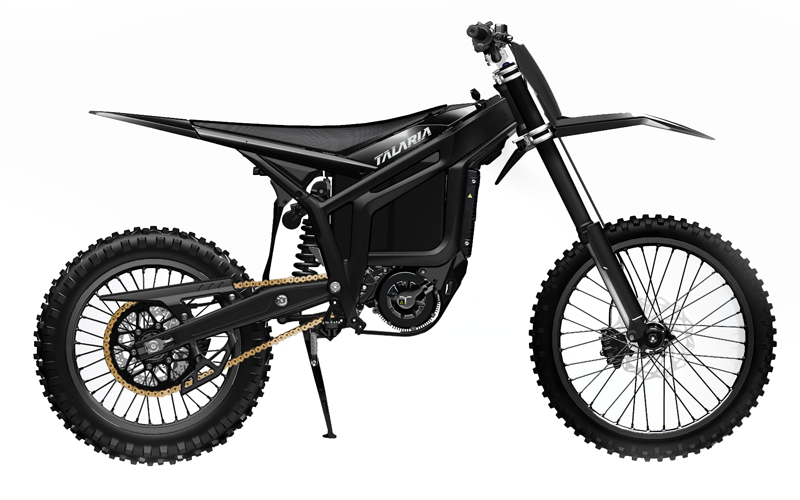
Talaria Komodo vs Sting R is a question best answered by walking the terrain first and reading the spec sheets second. One is a 98 kg machine on 21 and 18 inch wheels with 32 kW of peak power and a 97.2V battery. The other is a 66 kg bike on 19 inch wheels with 8 kW of peak power and a 60V pack. On the wrong ground either one feels like a mistake; on the right ground each is hard to fault. This guide starts with four kinds of UK riding, then works through the figures that explain the recommendations.
Start with the terrain
Before any number, picture the ground you ride most. Every Talaria Komodo vs Sting R recommendation in this guide follows from one of these four settings.
Tight woodland and single track
Narrow trails between trees, roots, short steep banks and constant direction changes reward a bike you can flick and, when it goes wrong, pick up on your own. Here the Talaria Sting R MX4 at 66 kg with an 840 mm seat and a 1250 mm wheelbase is in its element. In a Talaria Komodo vs Sting R choice here, the 98 kg Komodo with its 910 mm seat and 1380 mm wheelbase is not wrong, but it asks more of the rider every time the trail tightens.
Open moorland, fire roads and long climbs
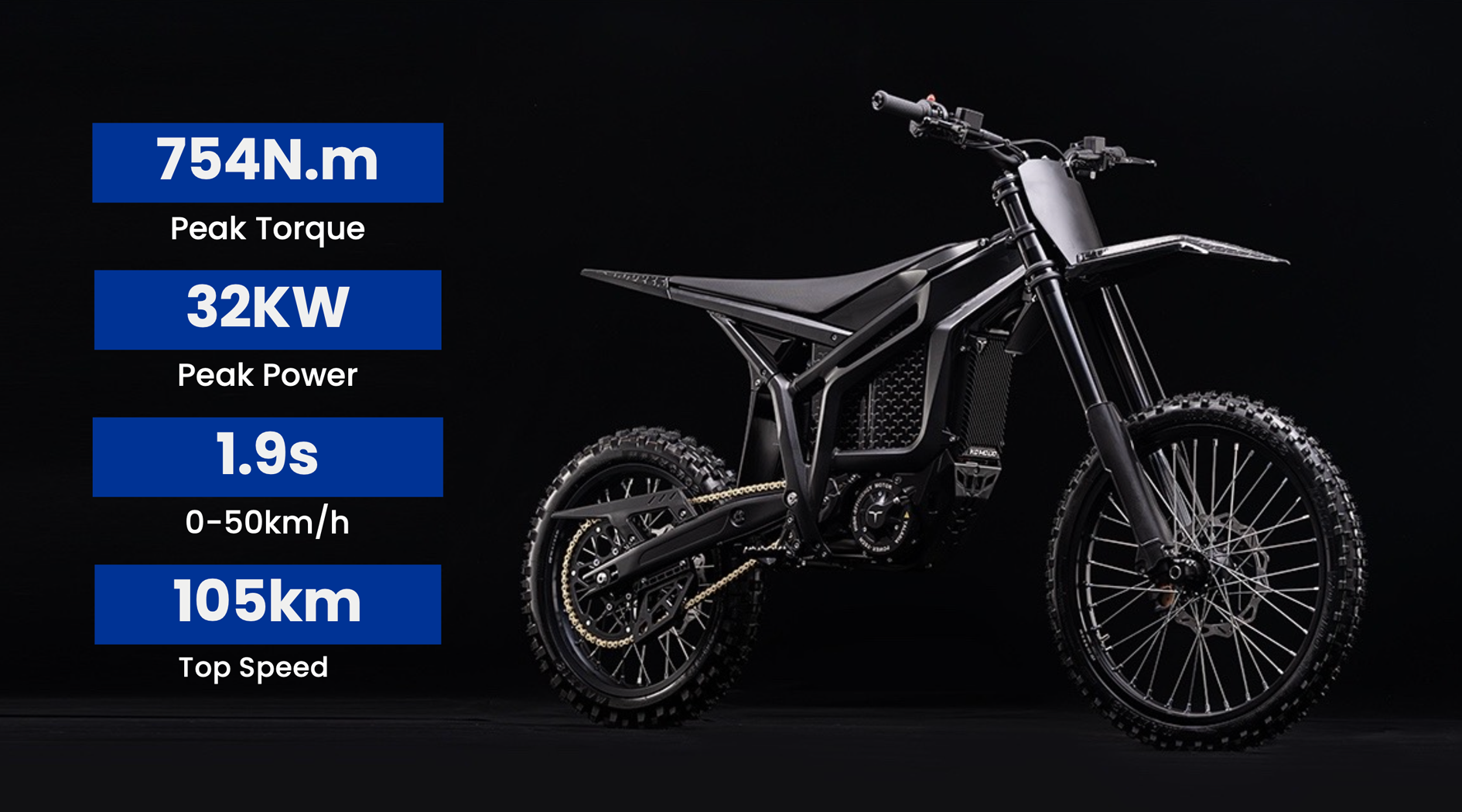
Private estates, quarry tracks and big hillsides are where Talaria Komodo vs Sting R stops being close and the Talaria Komodo makes sense. Its 21 inch front wheel rolls over rocks the 19 inch Sting front would deflect off, and 32 kW of peak power with 754 Nm of peak torque turns a long loose climb into a matter of throttle position. The Sting R will get up the same hill, but at 8 kW it is working, not cruising.
Motocross style tracks and jumps
On jumps, whoops and braking bumps, Talaria Komodo vs Sting R is a suspension question before anything else. The Komodo carries a dual chamber air fork with 250 mm of travel and a rear shock with a 90 mm stroke on a 500 to 720 lb spring. The Sting R runs Fastace or Talaria factory units with less travel. On a proper track the Komodo is the more composed landing platform; on a field with a few jumps the Sting R’s lightness matters more.
The mixed day
If your riding is a bit of everything, Talaria Komodo vs Sting R comes down to weight. The Komodo vs Sting weight gap is 32 kg, close to half the lighter bike again. A rider who can comfortably manhandle 98 kg will enjoy the Komodo everywhere. A rider who cannot should choose the Sting R and never look back.
Talaria Komodo vs Sting R spec table
All Talaria Komodo vs Sting R figures below are from the two manufacturer specifications we hold. The Sting R column uses the MX4 sheet; where the separate Sting R Off Road sheet differs, that is noted in the text rather than mixed into the table.
| Specification | Talaria Komodo 2025 | Talaria Sting R MX4 |
|---|---|---|
| Nominal voltage | 97.2V DC | 60V DC |
| Rated and peak power | 8.6 kW rated, 32 kW peak | 4000W continuous, 8000W peak |
| Torque | 754 Nm peak, motor peak above 90 Nm | 45 Nm nominal at the motor |
| Listed top speed | 105 km/h, which is 66 mph | 53 mph, which is 85 km/h |
| Battery | 97.2V 45Ah, Samsung 50S or LG H51 21700 cells, 4.4 kWh | 60V 45Ah, LG 21700 cells, 2700Wh |
| Battery weight | 24.5 kg | 12.85 kg |
| Range figure | 115 km at 45 km/h | 120 km at 25 km/h |
| Charge time | About 1.5 hours | About 3 hours |
| Net weight | 98 kg | 66 kg including battery |
| Maximum load | 160 kg | Not listed |
| Wheels | 21 inch front on a 1.6 rim, 18 inch rear on a 2.15 rim | 19 inch front and rear |
| Tyres | CST 70/100 front and 90/100 rear, or Maxxis 80/100 front and 110/90 rear | 70/100 front, 80/100 rear |
| Front suspension | Dual chamber air fork, 43 mm tubes, 850 mm long, 250 mm travel | Fastace or Talaria factory fork |
| Rear suspension | 350 mm shock, 90 mm stroke, 500 to 720 lb spring | Fastace, HT or Talaria factory shock |
| Seat height | 910 mm | 840 mm |
| Wheelbase | 1380 mm | 1250 mm |
| Ground clearance | 315 mm | 300 mm |
| Dimensions | 2200 x 810 x 1220 mm | 1880 x 770 x 1088 mm |
| Transmission | Gearbox, 520 chain, 14 or 15T front, 50 or 53T rear | Gearbox, chain, 8.35 (44T) or 9.18 (48T) |
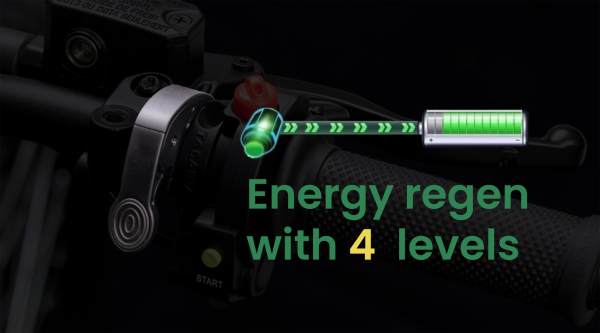
| Riding modes | Eco, Sport, Hyper and Reverse, four regen levels | Four regen levels |
| Brakes | Hydraulic disc | Four piston, 220 mm x 2.3 mm discs |
| Display | TFT, 320 dpi | High contrast OLED |
One note on the Sting R column. The Sting R Off Road sheet quotes both 53 mph and 55 mph in different places and a 53 mile range, while the MX4 sheet prints 53 mph and 120 km at 25 km/h. We use the MX4 figures here.
Size, wheels and weight
The Talaria Komodo vs Sting R size difference is not a matter of degree. The Komodo is 320 mm longer, 40 mm wider and 132 mm taller, its wheelbase is 130 mm longer, and its seat is 70 mm higher. It is, in plain terms, a midweight motorcycle where the Sting R is a lightweight one.
21 and 18 against 19 and 19
The wheel sizes are the sharpest Talaria Komodo vs Sting R difference after weight, because the Komodo runs the sizes used on full size enduro bikes and they change how obstacles feel. A 21 inch front wheel has a shallower approach angle to a rock or a step than a 19, so it rolls over rather than stopping. An 18 inch rear on a 2.15 inch rim carries a 90/100 or 110/90 tyre with far more edge grip than the Sting’s 80/100. The cost is a taller, longer bike that needs more room to turn: the sheet lists a 2.1 m minimum turning radius.
What 32 kg means at the end of the day
Ninety eight kilograms is fine on the move and a different proposition on a slope with the bike on its side. Talaria Komodo vs Sting R at the van doors is simple: a Sting R goes in single handed, a Komodo generally does not. The Komodo does carry a 160 kg maximum load, which suits heavier riders and pillion free luggage.
Voltage, power and torque
Talaria Komodo vs Sting R on paper is 97.2V against 60V, 32 kW against 8 kW and 754 Nm against 45 Nm, though those last two torque figures are measured in different places. The Komodo sheet lists motor peak torque above 90 Nm and 754 Nm as the headline figure, which is consistent with a rear wheel number through its gearbox and 50 or 53T sprocket. The Sting R’s 45 Nm is a nominal motor figure.
How the Komodo delivers it
Four times the peak power arrives through a controller on what Talaria calls a 140V platform with 36 MOSFETs and an M4 core processor, a dual hall throttle with redundant signal paths, and four modes: Eco, Sport, Hyper and Reverse. Reverse is not a gimmick on a 98 kg bike parked nose down in a rut. Our Talaria Komodo top speed guide looks at the 105 km/h figure in detail.
How the Sting R delivers it
The Sting R’s FOC controller and 60V IPM motor give 4000W continuous and 8000W peak with 92 percent motor efficiency on the MX4 sheet. It is quick enough to lift the front on loose ground, and in the Talaria Komodo vs Sting R balance its lower ceiling suits tight trails. The Sting R top speed guide covers the 53 mph line.
Suspension travel and what it absorbs
The suspension row is where the Talaria Komodo vs Sting R gap is most visible. The dual chamber air fork with 43 mm stanchions and 250 mm of travel is a full size enduro specification. The rear shock is 350 mm long with a 90 mm stroke acting through a linkage, sprung between 500 and 720 lb.
Where the Sting R suspension is enough
The MX4 sheet lists Fastace or Talaria factory forks and a Fastace, HT or factory shock, with preload and rebound adjustment. For trail speed on a light bike that is a well matched package, and it narrows the Talaria Komodo vs Sting R gap more than the travel figures suggest; lower mass means the Sting R rarely needs the Komodo’s travel. Only on large drops and high speed rock gardens does the Sting R ask for more.
The Off Road Sting R
The Sting R Off Road sheet names RST Killah forks alongside the factory units, with the same 66 kg weight and the same 60V 45Ah pack. Read that page before deciding Talaria Komodo vs Sting R has only one answer.
Battery, range and charging
Both bikes in the Talaria Komodo vs Sting R comparison carry a 45Ah pack, which makes the voltage difference easy to see: 97.2V gives the Komodo 4.4 kWh, 60V gives the Sting R 2700Wh. The Komodo pack weighs 24.5 kg against 12.85 kg, is rated IP67, and is built from Samsung 50S or LG H51 21700 cells.
Range figures at different speeds
Range is the most misread row in any Talaria Komodo vs Sting R table. Talaria quotes the Komodo at 115 km at a constant 45 km/h and the Sting R MX4 at 120 km at a constant 25 km/h. The distances look equal but the test speeds are not. At the same pace the Komodo, with over 60 percent more stored energy, will go considerably further. Our Talaria range guide explains how to convert these constant speed figures into a realistic trail day.
Charging
The Komodo sheet quotes a full charge in about 1.5 hours; the Sting R sheet quotes about 3 hours. Neither charger crosses the Talaria Komodo vs Sting R divide, because 97.2V and 60V systems use different chargers and connectors. A second Sting R pack is a realistic way to extend a day; on the Komodo, fast charging carries more of the load.
Komodo vs MX4 for the upgrader
Many riders reading this already own an MX4 and are asking whether the Komodo vs MX4 step is one they should make. The honest Talaria Komodo vs Sting R answer depends on what limits you now. If it is grip and composure at speed on open ground, the Komodo solves it. If it is power on climbs, the Komodo solves it. If it is that your local woodland has got boring, the Komodo will not make the trees further apart.
- Choose the Komodo if you ride open land, hills, long tracks or a real enduro loop, and you can handle 98 kg.
- Keep the Sting R, or move to the MX5 Pro, if your riding is tight trails, small private plots or anywhere you lift the bike often.
Talaria Komodo vs Sting R is rarely a question of budget alone. The Komodo is a different category of machine, launched to distributors in April 2025 as the most powerful Talaria built, and it deserves terrain that uses it. Every Komodo variant sits in our Talaria Komodo category.
Where you can lawfully ride either
Talaria Komodo vs Sting R makes no difference to the law: the Komodo 2025 on our sheet is an off road vehicle, and the Sting R MX4 in MX form is too. Neither can be ridden on a public road, byway, bridleway, footpath or pavement in the UK. Private land with the landowner’s permission is the lawful place for both, and organised competition under Auto Cycle Union rules is the other lawful route. The Trail Riders Fellowship explains why unregistered bikes cannot use green lanes.
The Sting R MX4 is also offered with an L1e street legal version, and the wider Sting family includes L1e and L3e models covered in our road legal Talaria category. The requirements for each class, from a CBT at 16 for L1e to a full licence or CBT at 17 for L3e A1, are set out on GOV.UK. The Komodo sheet lists no road legal version, so a rider who needs a plate has the Talaria Komodo vs Sting R question answered for them.
Frequently asked questions
Is the Talaria Komodo much faster than the Sting R?
Yes. In Talaria Komodo vs Sting R terms the Komodo sheet lists 105 km/h, which is 66 mph, against 53 mph for the Sting R MX4. Peak power is 32 kW against 8000W and the Komodo runs a 97.2V system against 60V. The difference is felt most on climbs and open ground, where the Komodo holds speed the Sting R cannot.
How much heavier is the Komodo than the Sting R?
The Komodo is listed at 98 kg net and the Sting R MX4 at 66 kg including its battery, a gap of 32 kg. The Komodo battery alone is 24.5 kg against 12.85 kg. The Komodo also carries a 160 kg maximum load rating, which the Sting R MX4 sheet does not list.
Which is better for a beginner, Komodo or Sting R?
In a Talaria Komodo vs Sting R choice for a beginner, the Sting R. Its 66 kg weight, 840 mm seat height, 1250 mm wheelbase and 8000W peak are far easier to learn on than a 98 kg bike with a 910 mm seat and 32 kW. A beginner will progress faster on a machine they can pick up alone, and the Komodo will still be there when the skills are.
Does the Komodo have a road legal version in the UK?
Not on the specification we hold. The Komodo 2025 is sold as an off road machine for private land with permission. The Sting R MX4 is offered with an L1e street legal version, and the Sting L1e and L3e models are registered alternatives for riders who need to use public roads.
Which has the longer range in the Talaria Komodo vs Sting R comparison?
Talaria quotes 115 km at 45 km/h for the Komodo and 120 km at 25 km/h for the Sting R MX4. Because the Komodo figure is measured at almost twice the speed and its 4.4 kWh pack holds over 60 percent more energy than the Sting R’s 2700Wh, the Komodo goes further at any matched pace.
Can the Komodo and Sting R share batteries or chargers?
No, and it is the one Talaria Komodo vs Sting R difference with no workaround. The Komodo is a 97.2V system with a 24.5 kg pack and the Sting R is a 60V system with a 12.85 kg pack. Chargers, connectors and battery enclosures are specific to each. The Komodo sheet quotes about 1.5 hours for a full charge and the Sting R sheet about 3 hours.
Next steps
Talaria Komodo vs Sting R comes down to the ground under the wheels. If the moorland and hill climb paragraphs described your riding, open the Talaria Komodo 2025 page. If the woodland and single track section did, the Talaria Sting R MX4 is the bike. Both come with UK mainland delivery, timescales confirmed at checkout, and are covered by our UK warranty, full terms on the warranty page.
