
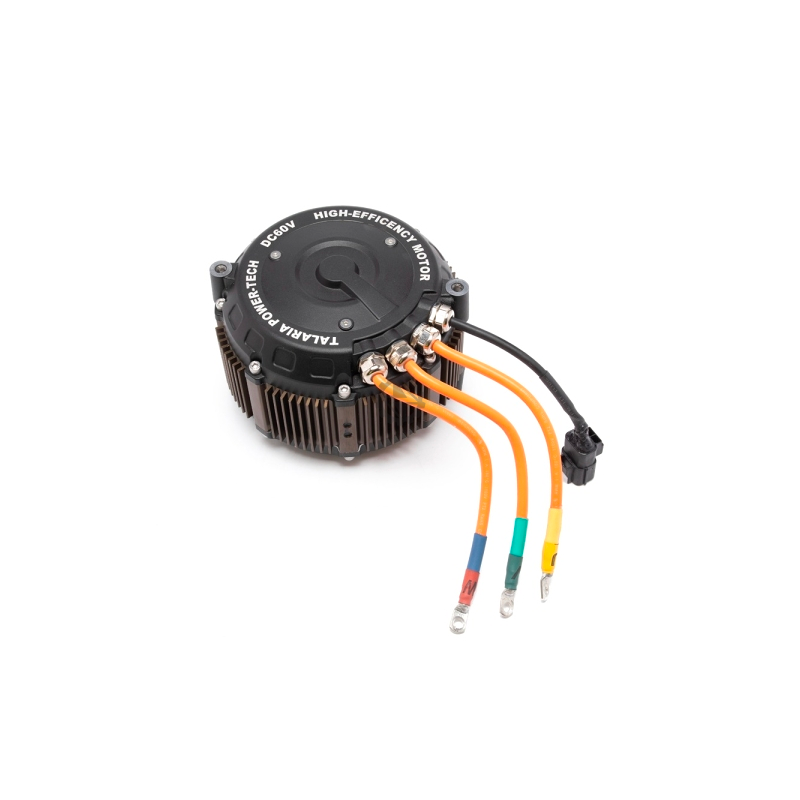
Replacement Motor IPM Sting MX4
£592.99
The genuine Talaria MX4 motor, a 60V interior permanent magnet unit with magnetic encoder, sold bare for Sting R and XXX rebuilds and explained in full.
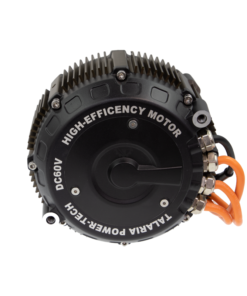
The Talaria MX4 motor is the interior permanent magnet unit that turned the Sting into the Sting R, and this listing is the bare replacement motor for that generation. It is the same 60V DC IPM design that Talaria fits to the Sting R MX4, the MX4 Expert and the XXX, rated at 4000W continuous and 8000W peak with 45 Nm of peak torque, supplied by The Talaria UK as a specialist retailer for owners who need to rebuild rather than replace the whole assembly.
Why Talaria changed the motor for the MX4
The original Sting used a permanent magnet synchronous motor with the magnets bonded to the rotor surface and hall sensors telling the controller where the rotor was. It was quick, but two weak points showed up as bikes aged and owners pushed more current through them. Surface mounted magnets can work loose or lose strength when hot, and hall sensors are small, heat sensitive components inside that same hot casing.
For the Sting R, Talaria redesigned the unit as an interior permanent magnet motor. The magnets moved inside the rotor laminations, the sensing moved to a magnetic encoder, and the rating rose from 3000W to 4000W continuous and from 6000W to 8000W peak. The XXX inherited the same Talaria MX4 motor. The Talaria MX4 motor is, in short, the fix for everything owners disliked about the first generation, and this replacement is that exact unit.
How an interior permanent magnet motor works
The Talaria MX4 motor and the older unit are both synchronous: the rotor turns at the speed of the rotating field the controller creates in the stator. The difference is where the magnets sit and how torque is produced.
Magnets buried in the rotor
In the Talaria MX4 motor the magnets are set into slots cut inside the rotor’s steel laminations rather than glued to its surface. The steel around each slot holds the magnet mechanically, so centrifugal force and heat cycling cannot peel it away. It also protects the magnet from the demagnetising fields the stator throws at it under heavy load, which is why the IPM motor Talaria Sting R riders run tends to keep its strength over years of hard use.
Two kinds of torque from one rotor
Burying the magnets creates a rotor whose magnetic resistance varies as it turns. That gives the controller a second lever. Alongside the ordinary magnet torque, an IPM rotor produces reluctance torque, the same effect that pulls a piece of steel into line with a magnet. A field oriented control (FOC) controller such as the factory Talaria unit uses both, which is part of how the Talaria MX4 motor makes more torque from a housing the same size and weight as the old one.
Why it runs cooler and revs higher
Because the controller can weaken the magnet field electronically at high speed, the Talaria MX4 motor is easier to drive past the point where a surface magnet motor runs out of voltage. That is why the Sting R reaches a higher top speed on the same 60V battery. Better magnetic efficiency also means less of the energy becomes heat, and Talaria quotes a peak efficiency of 94 percent for the unit, all inside the same 180mm air cooled casing.
Talaria MX4 motor specification
These are Talaria’s published figures for the Talaria MX4 motor, and they apply here because this is the same production part.
- Type: air cooled DC interior permanent magnet motor, mid mounted
- Nominal voltage: 60V DC
- Continuous power: 4000W
- Peak power: 8000W
- Peak torque at the motor shaft: 45 Nm
- Peak efficiency: 94 percent
- External diameter: 180mm
- Weight: 7.0 kg
- Rotor position sensing: magnetic encoder
- Primary drive: Talaria gearbox, 8.35 ratio with the 44 tooth sprocket or 9.18 with the 48 tooth
- Final drive: chain
On the bike the Talaria MX4 motor is paired with a 2 kg FOC controller and a 60V 45Ah battery of LG 21700 cells. Talaria quotes a maximum speed of 55 mph for the Sting R, on private land only for the off road model.
Magnetic encoder, not hall sensors
Ask an experienced Sting mechanic what killed the most first generation motors and the answer is usually the hall sensors, not the windings. Three small sensors sit on a board inside the casing, each with its own wire to the controller, and each is a point of failure from heat, vibration or chafe. When one drops out the bike stutters, cuts or refuses to start.
The Talaria MX4 motor replaces that board with a single magnetic encoder. A small magnet on the shaft end rotates in front of a sensor chip that reads its angle continuously, rather than sampling it at three fixed points. The result is finer position data for the controller, a smoother throttle at low speed, a more robust motor with fewer connections, and one neat sensor lead instead of a bundle. This is also why the Talaria MX4 motor is not a drop in for an MX3 controller: the two speak different sensor languages.
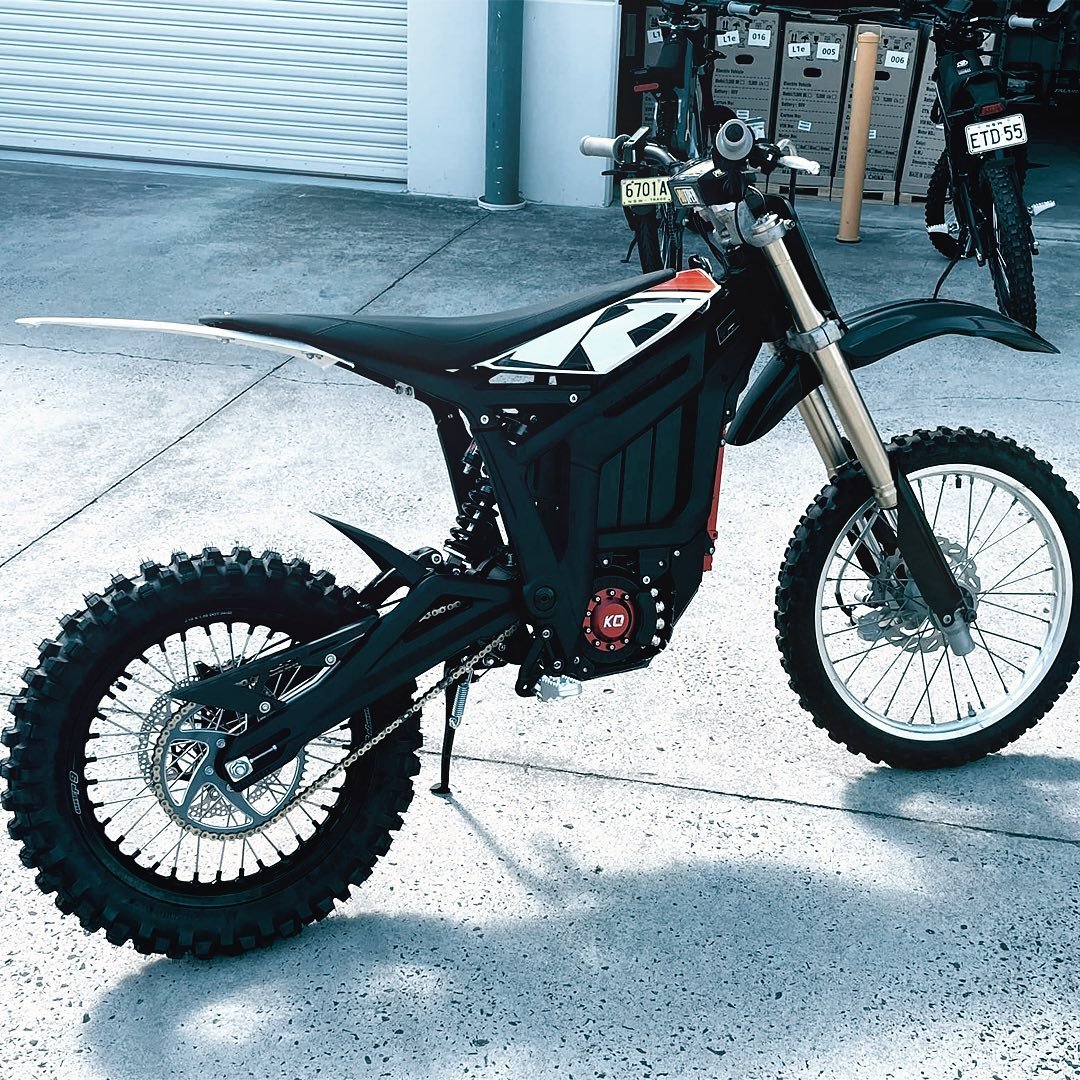
MX3 motor versus MX4 motor, side by side
If you are deciding whether to rebuild an older Sting with its original PMSM unit or move to the Talaria MX4 motor platform, this is the comparison that matters. Figures are from Talaria’s specification sheets.
| Characteristic | Sting MX3 motor (PMSM) | Talaria MX4 motor (IPM) |
|---|---|---|
| Magnet placement | Bonded to the rotor surface | Set inside the rotor laminations |
| Rotor sensing | Hall sensors, multi wire harness | Magnetic encoder, single lead |
| Continuous power | 3000W | 4000W |
| Peak power | 6000W | 8000W |
| Peak torque at the shaft | 34 Nm | 45 Nm |
| Peak efficiency quoted | 92 percent | 94 percent |
| Housing diameter and weight | 180mm, 7.0 kg | 180mm, 7.0 kg |
| Cooling | Air cooled | Air cooled |
| Maximum speed on the bike | 75 km/h (47 mph) | 55 mph |
| Fitted to | Sting MX3, TL3000 | Sting R MX4, MX4 Expert, XXX |
| Aftermarket controller headroom | Limited by magnet retention and sensor heat | Substantial, subject to cooling |
The one figure that does not change is the weight. Talaria managed a third more peak power from the Talaria MX4 motor inside the same 7.0 kg, 180mm envelope, which is the clearest sign of how much the magnetic design improved. Owners of the older bike who want the PMSM unit should read the PMSM replacement motor for the Sting MX3 page rather than this one.
Fitment: which bikes take this motor
This is the bare Talaria MX4 motor, so it suits any bike that left the factory with the IPM unit and an encoder ready controller. If you would rather have the whole assembly with everything already fitted and terminated, the complete OEM motor for the Sting is the alternative.
Direct fit
- Talaria Sting R MX4, off road and L1e versions
- Talaria Sting R MX4 Expert
- Talaria XXX, which uses the Sting R motor
- Sting R Off Road and Sting L3e models built on the MX4 platform
Not a direct fit
The Sting MX3 and TL3000 use a hall sensor controller and cannot read the Talaria MX4 motor encoder without a controller change. Converting an MX3 to the IPM unit is possible, but it is a controller and motor project rather than a motor swap, and it is best discussed with us before you order either part. Note also that a Sting L1e or L3e registered for the road is type approved as a complete vehicle under Regulation 168/2013, so it must go back together to its approved specification.
Diagnosis before replacement
The Talaria MX4 motor fails far less often than the old unit, so a fault on a Sting R deserves a proper diagnosis first. Work through the cheap items with the battery removed.
- Inspect the three phase connectors at the controller for discolouration, melted housings or green corrosion. A single overheated pin can mimic a failing motor.
- Check the encoder lead along its whole length for chafe against the frame or swingarm and confirm the connector is fully latched.
- Read the display. Encoder and phase faults show as specific error states on the OLED screen; note the code before clearing it.
- With the rear wheel off the ground, turn the wheel by hand. A rough or notchy feel from the motor side of the gearbox suggests a bearing.
- Drain a little gearbox oil and look for metal. Glitter means the gearbox needs attention too, and a new motor alone will not cure it.
If the connectors and lead are sound, the display keeps reporting a sensor fault and the motor feels rough or weak, the unit itself is the problem. Water ingress after a river crossing or a pressure wash aimed at the seals is the most common cause on the MX4, followed by bearing wear on high mileage bikes.
Fitting notes for the IPM unit
The mechanical job is the same as any mid mounted Sting motor: battery out, gearbox drained, chain off, leads disconnected, motor unbolted from the gearbox housing and frame. A few points are specific to the Talaria MX4 motor.
- Photograph the phase lead order before disconnecting anything. The encoder gives the controller precise rotor angle, so a swapped pair of phases produces a motor that judders or runs backwards under load.
- Do not lever on the encoder end of the shaft. The sensor magnet is small and its alignment matters. Handle the Talaria MX4 motor by the casing.
- Fit a new gasket or seal at the gearbox face. A reused seal is the usual cause of the oil weep owners notice a week after a swap.
- Tighten the mounting bolts in a cross pattern to the torque values in your Talaria documentation, with a calibrated wrench. The threads are in aluminium.
- Refill the gearbox with fresh oil to the correct level, refit the chain, then power up on the stand and let the wheel spin at low throttle before riding.
The first ride should be gentle. There is no running in for the windings, but the fresh gearbox pairing beds in over a few miles and the oil deserves an early change. The replacement is covered by our UK warranty, full terms on the warranty page.
Controller headroom and the legal line
The reason so many owners specify the Talaria MX4 motor for a rebuild, even on a bike that could take a cheaper unit, is what it allows later. Because the magnets are retained mechanically and the encoder tolerates heat, the Talaria MX4 motor handles substantially more phase current than the factory controller supplies. Owners fitting the EBMX X9000 power kit or a Nucular controller are building on this motor, not the old one. Our guide to Talaria controller upgrades compares the options and what each one asks of the motor.
Two boundaries apply. The first is thermal: the Talaria MX4 motor is still an air cooled 180mm unit, and more current means more heat, so any upgraded controller should have its motor temperature limit set and respected, particularly on slow, high load climbs. The second is legal. On an off road Sting R MX4 or XXX ridden on private land with the landowner’s permission, the power you run is your choice. Off road models cannot be used on public roads, byways, bridleways, footpaths or pavements at any power level.
On a road registered Sting L1e or L3e, raising the output changes the vehicle you registered and insured. An L1e is a 45 km/h moped class vehicle ridden at 16 with a CBT; more power can move it out of that class entirely. If you ride a registered Talaria, read the government’s guide to riding a motorcycle or moped and its compulsory basic training page before changing any part of the powertrain. A factory specification motor swap keeps the bike as approved; a controller upgrade does not.
Frequently asked questions
What does IPM stand for on the Talaria MX4 motor?
Interior permanent magnet. The magnets sit in slots inside the rotor’s steel laminations rather than on its surface, which holds them mechanically, protects them from demagnetising fields and lets the controller add reluctance torque to magnet torque. It is the design Talaria adopted for the Sting R generation and the XXX.
Is this the same motor fitted to a new Sting R?
Yes. This is the Talaria MX4 motor production part, with the same 4000W continuous and 8000W peak rating, 45 Nm peak torque, 180mm casing and 7.0 kg weight as the motor in a new Sting R MX4. It is sold as a bare motor for rebuilds; the complete assembled unit is a separate listing.
Will the IPM motor fit my Sting MX3?
Not directly. The MX3 controller expects hall sensor signals and this motor uses a magnetic encoder, so the two cannot talk to each other. Fitting the MX4 motor to an MX3 means changing the controller as well, and possibly the display and harness. Contact us before ordering if that is the project you have in mind.
How much more power does the MX4 motor make than the MX3 motor?
Talaria’s figures are 4000W continuous and 8000W peak for the MX4 unit against 3000W and 6000W for the MX3, with peak torque rising from 34 Nm to 45 Nm. Both motors share the same 180mm diameter and 7.0 kg weight, so the gain comes from the magnetic design rather than a bigger housing.
Can I run a more powerful controller on this motor?
Yes, within thermal limits. The IPM design is what makes controller upgrades such as the EBMX X9000 viable on the Sting R. Set a motor temperature limit and watch it on slow climbs. On a road registered L1e or L3e bike, a power increase changes the approved vehicle, so keep those bikes at factory specification.
Does the motor come with the gearbox or sprocket?
No. This is the Talaria MX4 motor only. The primary gearbox, its oil, the output sprocket and the chain stay on the bike and are reused. You will need fresh gearbox oil and a new gasket or seal for the motor to gearbox face when you fit it.
Next steps
Order the Talaria MX4 motor with your bike model and year in the order notes so we can confirm the encoder and connector fit before it ships. UK mainland delivery, timescales confirmed at checkout. If your rebuild also needs bearings, seals or a wheel set, everything else for the platform is in our Talaria parts range, and the warranty page sets out how the motor is covered once it is fitted.
Buying this from The Talaria UK
Our service promise as a UK Talaria specialist.
- Checked before it shipsEvery bike is unboxed, inspected, torqued, charged and test run in our workshop before the courier is booked. You get a machine that is ready to ride, not a crate and a leaflet.
- Packed to arrive intactBikes travel in their factory crate with the fragile parts protected, and we tell you exactly what to check before you sign for it.
- UK mainland deliveryShipped across the UK mainland, with options, costs and timescales confirmed at checkout and tracking sent on dispatch.
- Answers from people who ride theseAsk which model suits your weight, your ground or your licence and you get an answer from someone who has set these bikes up, not a script.
- Parts on the shelfWe stock the batteries, chargers, controllers, motors, forks and wheels for what we sell, so a repair or an upgrade is a stock check rather than a long wait.
- Covered after you buyEvery bike is covered by our UK warranty, with the period for this model shown on this page and in your order confirmation, and claims handled by the team that inspected it.
Questions before you order? Contact us, or read the delivery guide, the warranty terms and finance options.
Related products
Talaria Parts
Talaria Parts
Talaria Parts
Talaria Parts
Talaria Batteries and Chargers
Talaria Batteries and Chargers
Talaria Batteries and Chargers