
Uncategorized
Talaria Sting R vs MX5: Which One Suits the Rider You Are
Jul
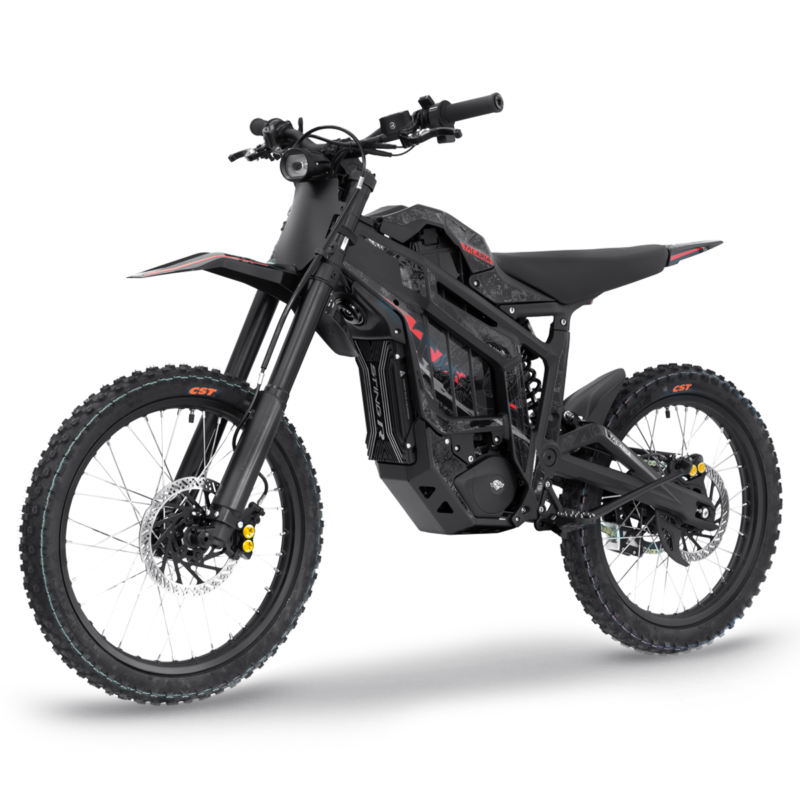
Talaria Sting R vs MX5 is the question we hear most often across the counter, and the honest answer depends far more on who is riding than on which spec sheet has the larger numbers. The Sting R MX4 is a 60V bike with 8000W of peak power that weighs 66 kg. The Sting MX5 Pro is a 72V bike with 13.4 kW of peak power that weighs 76 kg. This guide starts with four rider profiles, then works through the figures behind each recommendation.
Four rider profiles, one decision
Most people who ask about Talaria Sting R vs MX5 fall into one of four groups. Read your own profile first; the same figure can be a strength for one rider and an irrelevance for another.
The weekend trail rider
For this rider Talaria Sting R vs MX5 is settled at the tailgate. You have access to a field, a farm track or a private woodland loop, you ride for two or three hours on a Sunday, and you want the bike to be light enough to lift into a van on your own. This rider is the natural home of the Talaria Sting R MX4: 66 kg including the battery, 4000W continuous, 8000W peak and a 120 km range figure at a steady 25 km/h.
The sixteen year old and the parent
In a Talaria Sting R vs MX5 conversation the teenager wants the fastest bike in the catalogue. The parent wants something that can be ridden lawfully and insured. Neither the Sting R MX off road model nor the MX5 Pro off road model can be ridden on a UK public road, but both families have registered road legal versions, and the moped class L1e Sting is the one a 16 year old can ride with a CBT.
The hill and enduro rider
You ride steep, loose, technical ground where the bike spends more time climbing than cruising. Here the Talaria Sting R vs MX5 balance tips, because the 72V system starts to earn its weight. The MX5 Pro lists 500 Nm at the rear wheel through its 48T sprocket, a 45 degree maximum climbing angle and a Hyper riding mode above Eco and Sport.
The upgrader who already owns a 60V Talaria
For you the Talaria Sting R vs MX5 comparison is really a Talaria MX4 vs MX5 comparison, and the MX5 Pro is the only stock bike in the Sting family that moves the voltage ceiling rather than just adding power under it.
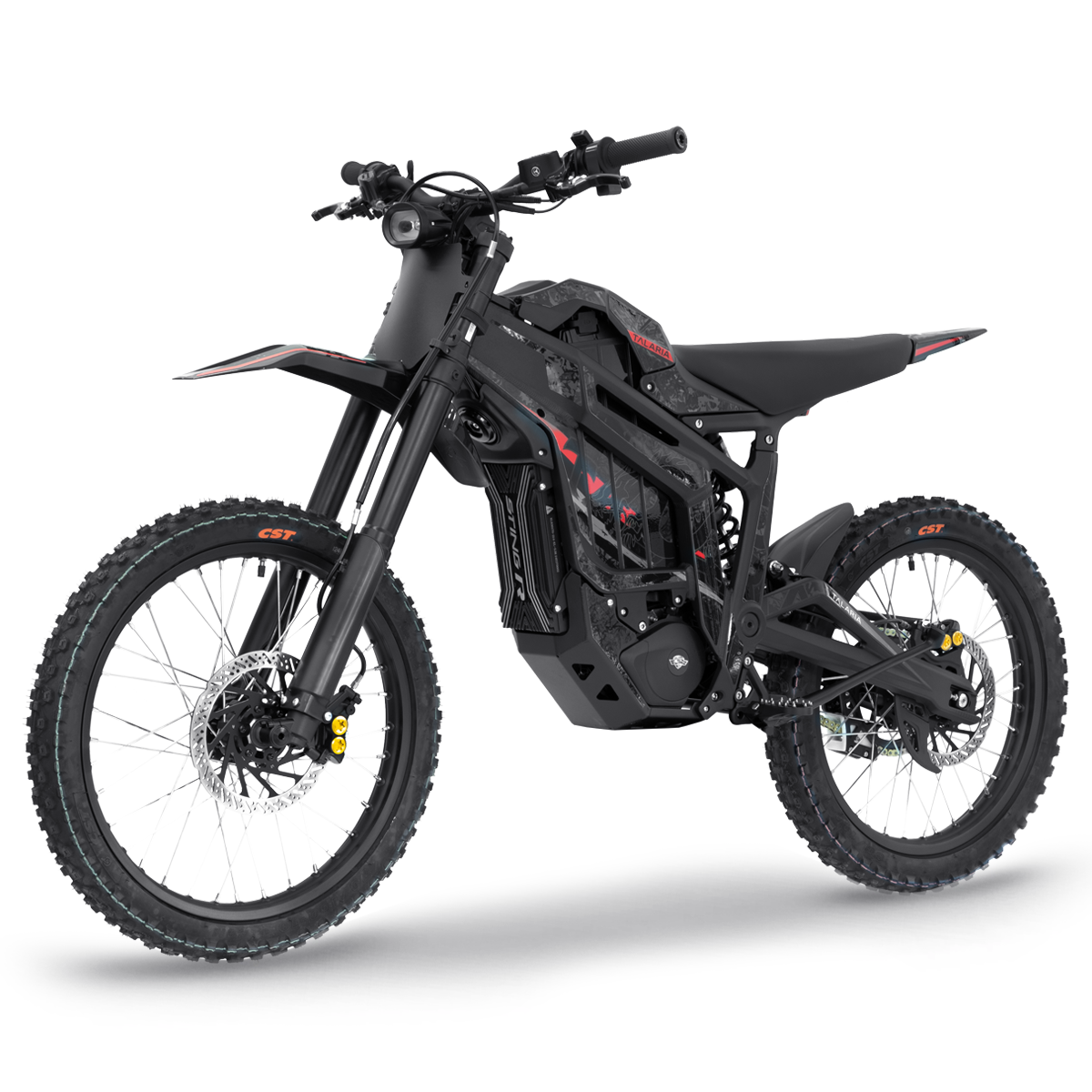
Talaria Sting R vs MX5 spec table
The Talaria Sting R vs MX5 table below uses only the manufacturer figures printed on the two product specifications we stock. Where a value is not listed for one bike, the cell says so rather than guessing.
| Specification | Talaria Sting R MX4 | Talaria Sting MX5 Pro |
|---|---|---|
| Nominal voltage | 60V DC | 72V DC |
| Continuous or rated power | 4000W | 5.5 kW |
| Peak power | 8000W | 13.4 kW |
| Motor torque | 45 Nm nominal | Not listed (500 Nm at the rear wheel, 48T) |
| Battery | 60V 45Ah, LG 21700 cells, 2700Wh | 72V 40Ah, Samsung 50S cells, 2880Wh |
| Battery weight | 12.85 kg | Not listed |
| Net weight with battery | 66 kg | 76 kg |
| Listed maximum speed | 53 mph (85 km/h) | Factory limited on the road legal setup, see body copy |
| Range figure | 120 km at 25 km/h | 100 km at 25 km/h |
| Riding modes | Regen adjustable in 4 levels | Eco, Sport, Hyper plus 4 regen levels and a regen lever |
| Brake discs | 220 mm x 2.3 mm, four piston | 220 mm x 3 mm, four piston, redesigned master cylinders |
| Front suspension | Fastace or Talaria factory | Adjustable air plus dual spring, 220 mm travel |
| Rear suspension | Fastace, HT or Talaria factory | Adjustable, 85 mm shock travel with linkage |
| Final drive | Gearbox and chain, 8.35 (44T) or 9.18 (48T) | Gearbox and 428 chain, 48T rear sprocket |
| Display | High contrast OLED | Colour TFT |
| Wheels and tyres | 19 inch front and rear, 70/100 front, 80/100 rear | 19 inch, 1.4 front and 1.6 rear rims, 70/100 front, 80/100 rear |
| Seat height | 840 mm | 840 mm |
| Wheelbase and ground clearance | 1250 mm and 300 mm | 1250 mm and 300 mm |
| Maximum recommended load | Not listed | 100 kg |
Two rows in the Talaria Sting R vs MX5 table deserve a second look: the range row, which favours the Sting R despite its smaller pack because a 13.4 kW system draws harder whenever the throttle opens, and the weight row, which gets its own section below.
Sixty volts against seventy two
The voltage difference is what makes Talaria Sting R vs MX5 a comparison of two classes rather than of a bike and its tuned version. Talaria describes the result as a 45 percent power increase over its 60V models, and the peak figures bear that out: 8000W against 13.4 kW.
What the Sting R does with 8000W
In Talaria Sting R vs MX5 terms the MX4’s 60V system is properly matched to its 66 kg chassis. With 4000W continuous the motor can hold a fast trail pace without heat soak, and the 8000W peak is enough to lift the front wheel on loose ground with a modest rider. Its nominal torque of 45 Nm through an 8.35 or 9.18 reduction gives a strong launch without overwhelming the 70/100 front tyre.
What the MX5 Pro does with 13.4 kW
The MX5 Pro’s 5.5 kW rated and 13.4 kW peak output arrive with a Hyper mode that the 60V bikes do not have. The 500 Nm rear wheel torque figure on the 48T sprocket is the number that riders feel most, because it is what turns a steep bank into a straightforward climb. The Talaria Sting R vs MX5 trade is that the extra output needed a reinforced gearbox, a 428 chain and thicker 3 mm brake discs, which is where much of the additional weight comes from.
If you want to see how the two peak figures translate to a top speed ceiling, our Talaria Sting R top speed guide walks through the 53 mph figure and the Expert’s 55 mph line by line.
Ten kilograms and what they buy
Sting R MX4 vs MX5 Pro on a set of scales reads 66 kg against 76 kg, both with the battery in. Ten kilograms is roughly 15 percent of the lighter bike, and it is the Talaria Sting R vs MX5 figure you feel in three places: lifting the bike into a vehicle, picking it up after a fall on a slope, and changing direction through tight trees.
Where the MX5 weight goes
- The 72V 40Ah Samsung pack carries more energy, 2880Wh against 2700Wh, in a larger enclosure.
- Brake discs go from 2.3 mm to 3 mm thick, with larger calipers and DOT fluid master cylinders.
- The 428 chain and 48T sprocket replace the lighter 420 chain used on the MX4.
- The air plus dual spring fork with 220 mm of travel and the linkage rear shock are heavier assemblies than the Fastace units.
Where the Sting R weight advantage pays
For a rider under about 70 kg, or anyone riding alone who has to recover the bike unaided, Talaria Sting R vs MX5 resolves to the lighter machine. The Sting R MX4 Expert adds a Manitou Dorado fork and Magura brakes with a 10 percent peak power increase and 50 Nm of torque, so there is a way to buy more capability without the full MX5 mass.
Battery, range and charging
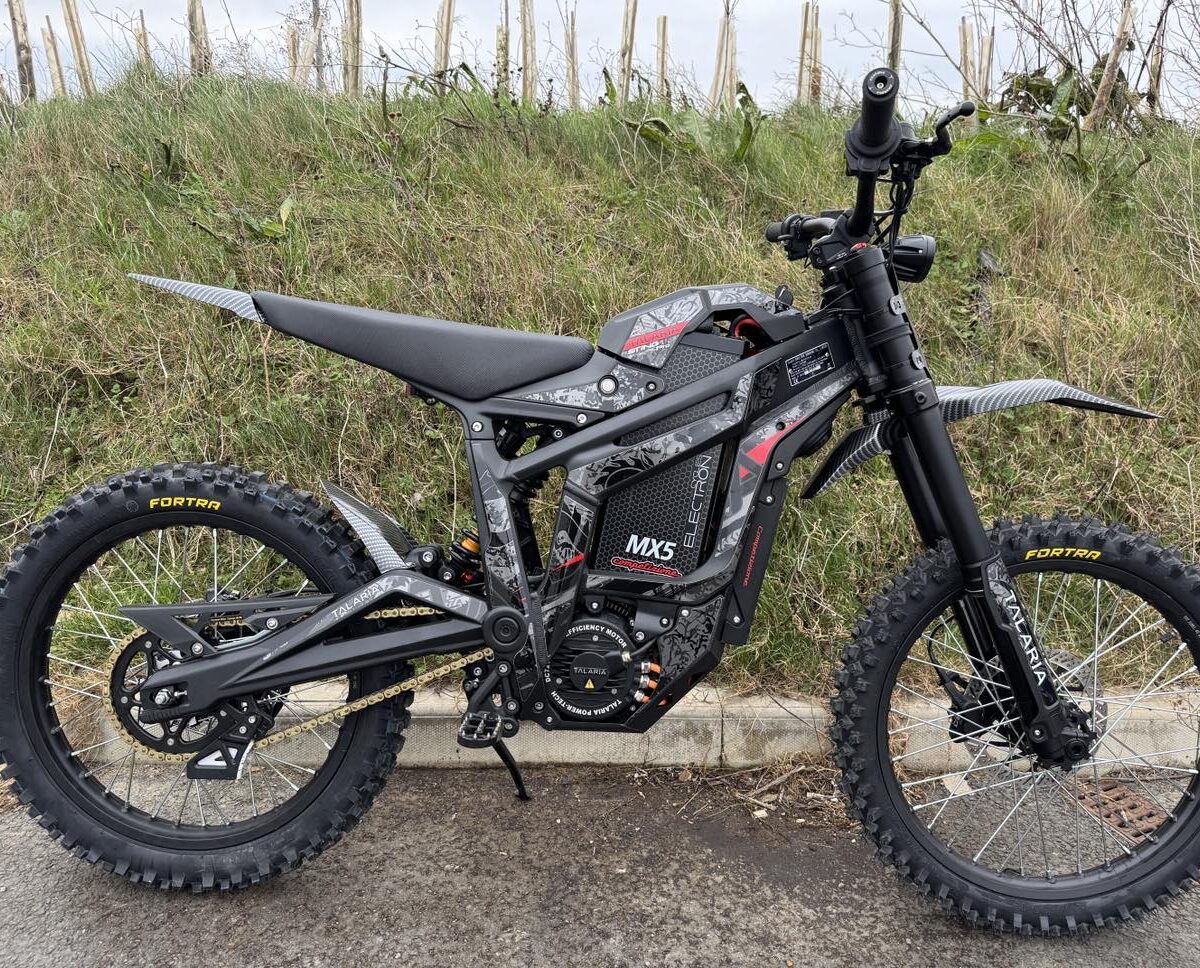
On battery capacity the Talaria Sting R vs MX5 gap is narrower than the voltage difference suggests. The Sting R’s 60V 45Ah pack of LG 21700 cells stores 2700Wh and weighs 12.85 kg on the manufacturer sheet. The MX5 Pro’s 72V 40Ah pack of Samsung 50S cells stores 2880Wh, a difference of under seven percent.
Range figures and how to read them
Talaria quotes 120 km at 25 km/h for the Sting R MX4 and 100 km at 25 km/h for the MX5 Pro. Both figures are steady state constants at a gentle pace, not trail riding numbers. In use the MX5 empties its larger pack faster, which is the one Talaria Sting R vs MX5 row that favours the older bike, because Hyper mode invites you to open the throttle. Our Talaria battery guide explains why 60V and 72V packs are not interchangeable between the two families.
Charging
The Sting R sheet lists a fast charge time of about 3 hours from its supplied charger. The MX5 Pro product specification we hold does not print a charge time, so we will not guess one. Its charger is matched to 72V and cannot be swapped with a 60V unit, so Talaria Sting R vs MX5 in one household means two separate charging setups.
Road legal versions and UK law
Both sides of the Talaria Sting R vs MX5 comparison are sold in off road form, and in that form neither may be ridden on a public road, byway, bridleway, footpath or pavement in the UK. Private land with the landowner’s permission is the only lawful place for the MX versions.
L1e: the moped class Sting
The Sting L1e is homologated as an L1e moped under EU Regulation 168/2013, which the UK retains. It is limited to 45 km/h, and a rider aged 16 or over can use it on the road with a CBT certificate, a provisional licence, registration, a number plate, insurance and a helmet. This is the version for the teenager in the second rider profile.
L3e A1: the 125 equivalent Sting
The Sting L3e sits in the L3e A1 class, the 125 equivalent, with 3500W rated power and a 60V 45Ah battery at 71 kg. It needs a rider aged 17 or over with a CBT, or a full A1, A2 or A licence, plus registration, insurance and an MOT when due. The full rules for each class are set out on the GOV.UK motorcycle and moped page. Every registered model sits in our road legal Talaria category.
Which Talaria to buy, profile by profile
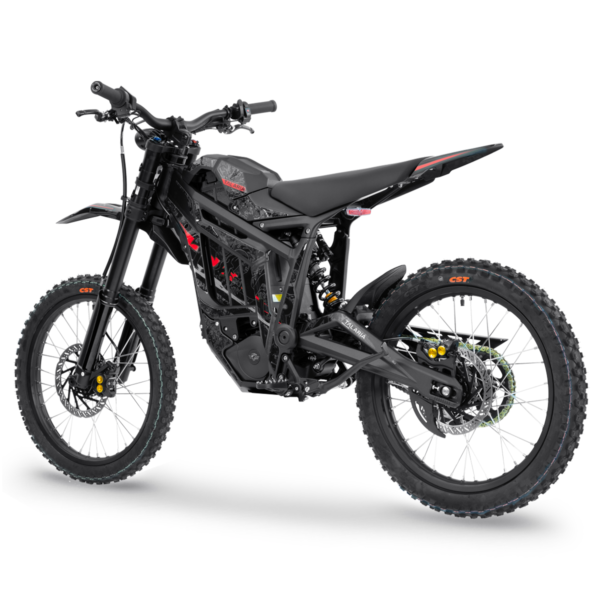
Return to the four profiles and the Talaria Sting R vs MX5 answer falls out of the numbers. Deciding which Talaria to buy is not about finding the best bike, it is about finding the one whose strengths line up with how you will actually ride it.
Weekend trail rider: Sting R MX4
For this profile the Talaria Sting R vs MX5 decision goes to the 66 kg MX4 with 8000W peak and a 120 km range figure. You will lift it more often than you will max it out, and the money saved against the MX5 Pro covers a second battery, which does more for a Sunday ride than an extra 5 kW ever will.
Sixteen year old and parent: Sting L1e
Buy the registered moped class Sting, insure it, do the CBT, and keep the off road bikes for later. The Talaria Sting R vs MX5 debate is the wrong argument for this household until the rider is 17.
Hill and enduro rider: Sting MX5 Pro
For this rider Talaria Sting R vs MX5 ends with the Talaria Sting MX5 Pro. The 500 Nm rear wheel torque, Hyper mode, 3 mm discs, linkage rear suspension and 428 chain are all answers to questions that steep ground asks. If your riding is more extreme still, the MX5 Pro Competizione 50S takes the same chassis to 81.4V, 4060Wh and 21 kW with an EBMX X9000 controller.
Upgrader from a 60V Talaria: MX5 Pro, or the Expert
In a Talaria Sting R vs MX5 upgrade, if what you miss is the ceiling, only the 72V MX5 Pro moves it. If what you miss is sharper suspension and braking at the same weight, the MX4 Expert with its Manitou Dorado fork gives you that with 10 percent more peak power. Spread the cost of either through our Talaria finance page.
Frequently asked questions
Is the MX5 Pro really that much faster than the Sting R?
In Talaria Sting R vs MX5 peak power terms, yes: 13.4 kW against 8000W, a 45 percent increase by Talaria’s own description. The 72V system also raises the motor’s speed ceiling. The Sting R MX4 lists 53 mph, and the MX5 Pro’s unrestricted setup sits above that, though the sheet we hold only prints a factory limited figure, so we do not quote one.
How much heavier is the Talaria MX5 than the MX4?
Ten kilograms on the manufacturer sheets: 76 kg for the MX5 Pro against 66 kg for the Sting R MX4, both including the battery. The extra mass comes from the larger 72V pack, thicker 3 mm brake discs with bigger calipers, a 428 chain, the air plus dual spring fork and the linkage rear shock.
Can I put the MX5 battery in a Sting R?
No, and it is the hardest line in the Talaria Sting R vs MX5 comparison to work around. The Sting R is a 60V system with a 45Ah LG pack and the MX5 Pro is a 72V system with a 40Ah Samsung pack. The controllers, chargers and battery enclosures are matched to their own voltage. Fitting a 72V pack to a 60V bike is not a supported upgrade and would put the controller outside its design range.
Which Talaria is better for a beginner, Sting R or MX5?
For a beginner the Talaria Sting R vs MX5 answer is the Sting R MX4. It is 10 kg lighter, its 8000W peak is more than enough to learn on, and its Fastace suspension is forgiving. The MX5 Pro’s Hyper mode and 500 Nm rear wheel torque reward experience. A beginner can grow into an MX4 for a long time before its ceiling becomes the limiting factor.
Do both bikes have the same seat height?
Yes, and Talaria Sting R vs MX5 is not a size question. Both the Sting R MX4 and the Sting MX5 Pro list an 840 mm seat height, a 1250 mm wheelbase, 300 mm of ground clearance and 19 inch wheels front and rear. The two bikes are the same size on the ground; the difference is entirely in the power system, the brakes, the suspension and the resulting weight.
Is either bike legal to ride on UK roads?
Not in MX off road form. The Sting family is also sold as an L1e moped class bike limited to 45 km/h for riders aged 16 and over with a CBT, and as an L3e A1 125 equivalent for riders aged 17 and over with a CBT or full licence. The MX5 Pro is listed with a road legal version too. All road versions need registration, a number plate and insurance.
Next steps
Talaria Sting R vs MX5 ends where it started, with the rider. If you recognised yourself in the weekend trail profile, open the Sting R MX4 page and choose a colour. If the hill rider paragraph read like your Sunday, the Sting MX5 Pro is the bike to configure. Either way, our finance options let you spread the cost, and both bikes ship with UK mainland delivery, timescales confirmed at checkout, covered by our UK warranty with full terms on the warranty page.
