
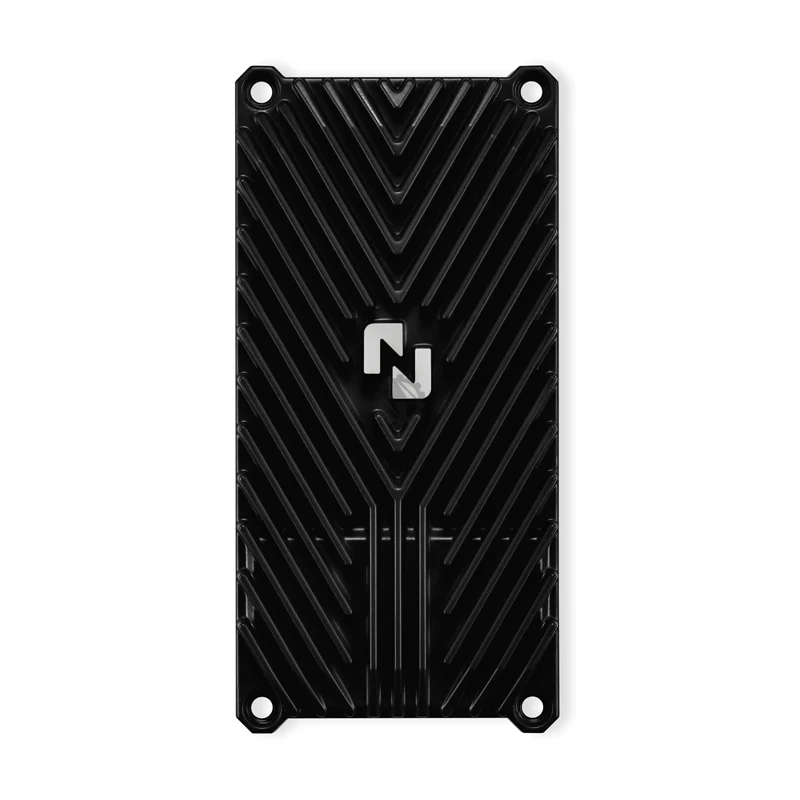
Performance Controller Nucular Electronics for the Sting MX3/MX4
£659.99
The Nucular Plug and Ride kit for the Sting MX3 and MX4 explained: the 30 and 300 percent figures, box contents, FOC and motor detection, tuning, fitting and legality.
The Nucular controller Talaria riders ask about most is this Plug and Ride kit for the Sting MX3 and Sting R MX4, and the reason is a pair of numbers: up to 30 percent more power on the standard 60V battery, and up to 300 percent more on a 72V battery. Those two figures describe the same controller doing two very different jobs, and understanding why is the key to deciding whether this kit is the right performance controller for your Sting.
The numbers behind 30 percent and 300 percent
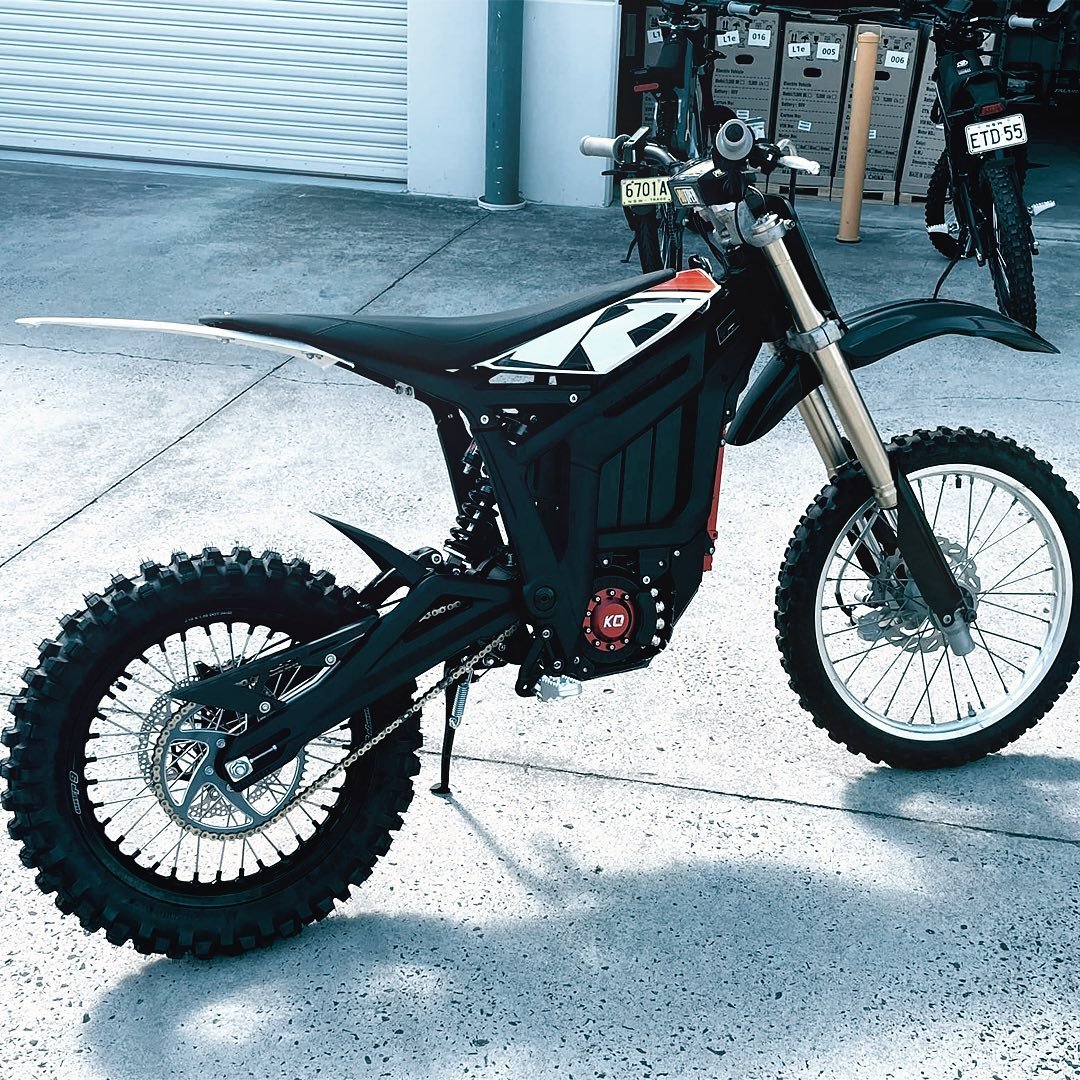
Electrical power is voltage multiplied by current. A stock Sting R MX4 makes its 8 kW peak from a 60V pack, which puts battery current somewhere near 130 A at that moment, and the bike ships with a 125 A circuit breaker to match. The factory battery management system sets a discharge ceiling in that region. Fit the Nucular controller Talaria kit to the standard pack and the controller can raise phase current and sharpen the delivery, but it cannot draw more from the battery than the BMS permits. That is the 30 percent figure: a gain won inside the existing current envelope.
Move to a 72V pack with the Nucular controller Talaria kit and both halves of the equation change. Voltage rises by a fifth, so every amp does more work and the motor can spin faster before its back EMF meets the supply. A 72V pack built for high discharge also lifts the current ceiling. Multiply the two together and the controller’s own capacity becomes the limit rather than the battery’s, which is where the 300 percent figure comes from. It is a peak number, not something a 7 kg air cooled motor can sustain.
What this means for your decision
If you intend to keep the stock battery, buy the Nucular controller Talaria kit for the sharper throttle, the adjustability and a meaningful lift in torque, and expect the modest gain. If you intend to run 72V, budget for the pack and a 72V charger at the same time, because the factory 60V charger cannot charge a 72V battery and the factory controller cannot run one.
What the Plug and Ride kit includes
Nucular Electronics builds its controllers as a system rather than a single box, and the Sting kit reflects that. It is the reason the Nucular controller Talaria owners fit is described as a kit rather than a controller. The name Plug and Ride is a promise about the harness: the kit terminates in connectors that mate with the Sting loom, so the swap is mechanical and electrical rather than a wiring project.
- Nucular FOC controller sized for the Sting motor.
- Nucular display unit with its menu system and bar mount.
- Model specific harness for the MX3 or MX4 motor sensing.
- Battery, phase and sensor connectors matched to the Sting.
- Mounting hardware for the factory controller bay.
Specify MX3 or MX4 when you order the Nucular controller Talaria kit. The MX3 motor is a PMSM unit with Hall sensors and the MX4 motor is an IPM unit with a magnetic encoder, and the kit is configured for whichever your bike carries. Owners who have already swapped to the IPM MX4 motor on an MX3 chassis should tell us, because the controller then needs the MX4 sensing configuration.
Controller fundamentals: current, voltage and torque
A motor controller takes direct current from the battery and turns it into three phases of alternating current, timed to the rotor. It also imposes every limit the rider feels. The throttle asks for torque, the controller decides how much phase current that request is worth, and it checks the answer against the battery current limit, the voltage limits and the temperature limits before delivering it. The Nucular controller Talaria kit lets you set those limits yourself, and it has the hardware to honour much higher ones.
Phase current makes torque, battery current makes power
Torque in a permanent magnet motor is proportional to phase current, the current circulating in the windings. Power is what the battery supplies, voltage times battery current. At low rotor speed the controller can push a high phase current while drawing a much smaller battery current, because the voltage across the windings is low. As speed rises, the two converge until at full speed battery and phase current are nearly equal and the battery ceiling takes over. That is why a high phase limit gives a hard launch and a high battery limit gives a strong top end, and both are yours to set on the Nucular controller Talaria kit.
Why the Sting motor responds so well
Talaria quotes 34 Nm peak torque for the MX3 motor and 45 Nm for the MX4, through a gearbox and chain with an 8.35 or 9.18 overall ratio. The motor has headroom for short bursts above those figures, and the Nucular controller Talaria kit, with its higher phase current limit, is what unlocks them. What it cannot do is add cooling, so the extra torque is available in bursts rather than as a new continuous rating.
FOC, sensors and motor detection
Nucular controllers use field oriented control. FOC treats motor current as a rotating vector and holds it at right angles to the rotor field, which produces torque without wasted current, keeps the motor quiet and delivers smooth power from a standstill. The factory Sting controller is also FOC, so the change is not the control principle but the quality of the current handling, the switching hardware and, above all, the access to settings. That access is what separates the Nucular controller Talaria tuners favour from a simple drop in unit.
FOC only works if the controller knows exactly where the rotor is. On the MX3 that comes from Hall sensors; on the MX4 from the magnetic encoder that replaced them. The Nucular controller Talaria kit runs a motor detection routine on first setup, measuring winding resistance and inductance and learning the sensor alignment, then stores the result. Run it with the rear wheel off the ground and repeat it if you ever change the motor.
Thermal management
Heat is the boundary of every controller upgrade. Resistive loss in the windings rises with the square of phase current, so a tune that doubles phase current roughly quadruples the heat in the motor for the same seconds of use. Talaria specifies a 100 degree maximum working temperature for the motor and the same for the controller. The Nucular controller Talaria kit reads the motor temperature sensor and reduces current progressively as that limit approaches, and it monitors its own MOSFET temperature in the same way.
Rollback protects the components, but it does not make heat disappear. On the standard 60V pack the 30 percent gain is comfortably inside what the motor can shed with normal on and off throttle riding. On 72V, the 300 percent peak is for exits, climbs and short straights, and a rider who holds full throttle for long periods will meet the rollback quickly. Set a lower continuous limit on the Nucular controller Talaria profile you use for long rides, and keep the high setting for a separate mode.
Three habits that keep temperatures down
- Mount the controller flat against the frame so the aluminium carries heat away from the case.
- Keep the motor fins and the controller bay clear of packed mud, which insulates both.
- Watch the Nucular controller Talaria temperature readout for the first few rides and learn where your riding puts it.
The Nucular display and wiring
This kit brings its own display, and that is a defining difference from the KO Moto route. The Nucular controller Talaria kit is built around that display, and every setting below is reached through it. The Nucular display is the interface for every parameter: current limits, throttle curve, regen, speed limit per mode, temperature thresholds and live readouts of voltage, current and temperature. It mounts to the bars beside or in place of the stock dash. The factory Sting R display can stay fitted for battery percentage and odometer, but the Nucular display becomes the instrument you actually use.
Wiring on the Nucular controller Talaria kit follows the harness. Battery leads, three phases, sensor plug, throttle, both brake cutout switches and the display connector each have a home, and the Plug and Ride harness puts them where the Sting loom expects. The one thing to plan is the extra display cable running from the controller bay to the bars, which wants routing away from the steering stops and the headlight cowl.
Installation overview
Set aside half a day the first time you fit the Nucular controller Talaria kit. The work is in the care, not the difficulty.
- Remove the battery and seat, then the side panel that opens the controller bay.
- Photograph the factory controller and label the phase leads before disconnecting anything.
- Disconnect battery leads first, then phases, sensor, throttle, brakes and the CAN display connector.
- Remove the factory controller and clean the mounting surface.
- Fit the Nucular controller Talaria unit flat in the bay and torque the bolts to the same feel as the originals.
- Connect the harness, matching phase colours and the sensor plug, and route the display cable to the bars.
- Mount the Nucular display, refit the battery and power up.
- Run motor detection with the rear wheel lifted, then set throttle and brake inputs in the menu.
- Load a conservative first profile, check throttle, cutouts and regen at walking pace, and ride gently on private land.
Tuning parameters explained
The Nucular controller Talaria menu exposes more settings than most riders will ever touch. These are the ones that shape the bike, with a note on where to start. The starting points are conservative on purpose; raise them one at a time and ride between changes.
| Nucular controller Talaria parameter | What it controls | Sensible starting point |
|---|---|---|
| Phase current limit | Peak torque off the line and on climbs | Factory level, then raise in small steps while watching motor temperature |
| Battery current limit | Power at speed and load on the pack | At or below the pack’s BMS discharge rating, never above it |
| Throttle curve | How quickly torque arrives for a given twist | Linear or slightly soft for loose ground, sharper for hard pack |
| Regen strength | Engine braking feel and energy recovery on closed throttle | Low on gravel and mud, higher on firm descents |
| Speed limit per mode | Maximum speed in each profile | Set a low limit on a learner or wet weather mode |
| Motor temperature limit | Where rollback begins | Leave at the default, which respects Talaria’s 100 degree rating |
Create at least two Nucular controller Talaria profiles: an everyday setting you can ride to empty without the temperature warning, and a stronger setting for short sections. Switching between them from the display takes seconds and it is far better practice than running one aggressive tune everywhere. Our Talaria controller upgrade guide covers reading live data in more depth.
Legal standing and warranty
An off road Sting MX3 or MX4 with a Nucular controller Talaria kit fitted is still an off road bike: private land with the landowner’s permission, or organised events. Registered trail riding on lawful routes is for registered, road legal machines, and the Trail Riders Fellowship explains that distinction well.
A road legal Sting L1e or L3e is a different matter, whatever the Nucular controller Talaria kit can do off road. Its approval under Regulation (EU) 168/2013 records a declared power output, and for L1e a 45 km/h limit. Fitting a performance controller means the bike no longer conforms to that approval. It cannot lawfully be used on the road until it has been approved again as a modified vehicle through the DVSA, which may place it in a different category with different licence requirements, and its insurance would not cover the modified specification. Keep road legal bikes on the factory controller.
Warranty
Replacing the controller takes the motor, battery and loom outside the specification the bike’s powertrain warranty covers. The Nucular controller Talaria kit itself is covered by our UK warranty, full terms on the warranty page. Keep the factory controller and its bolts so the bike can be returned to standard.
Nucular against the alternatives
Seen from the Nucular side, the comparison is about control. Set the Nucular controller Talaria riders choose beside the KO Moto and EBMX kits and the difference is a menu on the bars rather than an app on a phone. The other kits are excellent at what they do, but neither gives the rider a display on the bars with every parameter a menu away.
| Controller | Adjustability | Display | 60V gain | 72V route | Best match |
|---|---|---|---|---|---|
| Factory Sting FOC | Mode and regen only | Stock CAN dash | None, 6 kW MX3 or 8 kW MX4 peak | Not supported | Road legal and unmodified bikes |
| KO Moto Rush | App, moderate | Designed to keep the stock dash | Higher phase current on the stock pack | Not supported | Least change to the bike |
| Nucular controller Talaria kit | Full menu on the display plus app | Own display | Up to 30 percent | Up to 300 percent | Riders who tune |
| EBMX X9000 | App, several modes | App primary | BMS limited on the stock pack | Up to 15 kW with an EBMX pack | Maximum output, three platforms |
Frequently asked questions
Does the Nucular controller Talaria kit fit both the MX3 and the MX4?
Yes, with the correct configuration. The MX3 uses a PMSM motor with Hall sensors and the MX4 an IPM motor with a magnetic encoder, so the kit is set up for the model you choose at checkout. If you have fitted an MX4 motor to an MX3 frame, tell us so the sensing is matched to the motor.
Will I really get 300 percent more power?
Only with a 72V high discharge battery and a 72V charger, and only as a peak for short bursts. On the standard 60V pack the realistic figure is up to 30 percent, because the factory BMS limits the current the controller can draw. Both numbers come from Nucular’s own description of the kit.
Do I have to remove the stock display?
No. The Nucular display becomes the primary instrument and carries every setting and live readout, but the factory dash can remain on the bars for battery percentage and odometer if you have room and prefer to keep it.
Is the kit plug and play on a Sting?
The Nucular controller Talaria harness is built to mate with the Sting loom, so there is no cutting or soldering. You still need to run motor detection, set the throttle and brake inputs in the menu and load a first profile before riding, which is a half day job for a careful home mechanic.
Can I use it on a road legal Sting?
Not on the road. A road legal L1e or L3e Sting fitted with a performance controller no longer matches its approval and cannot lawfully be used on public roads until approved again as a modified vehicle. Its insurance would not cover the change either. Off road models on private land are unaffected.
What happens if the motor gets too hot?
The Nucular controller Talaria kit reads the motor temperature sensor and reduces current progressively as it nears the limit, then restores it as the motor cools. Treat that as protection rather than a target. If rollback happens often, lower the continuous profile and keep the high setting for short sections.
Next steps
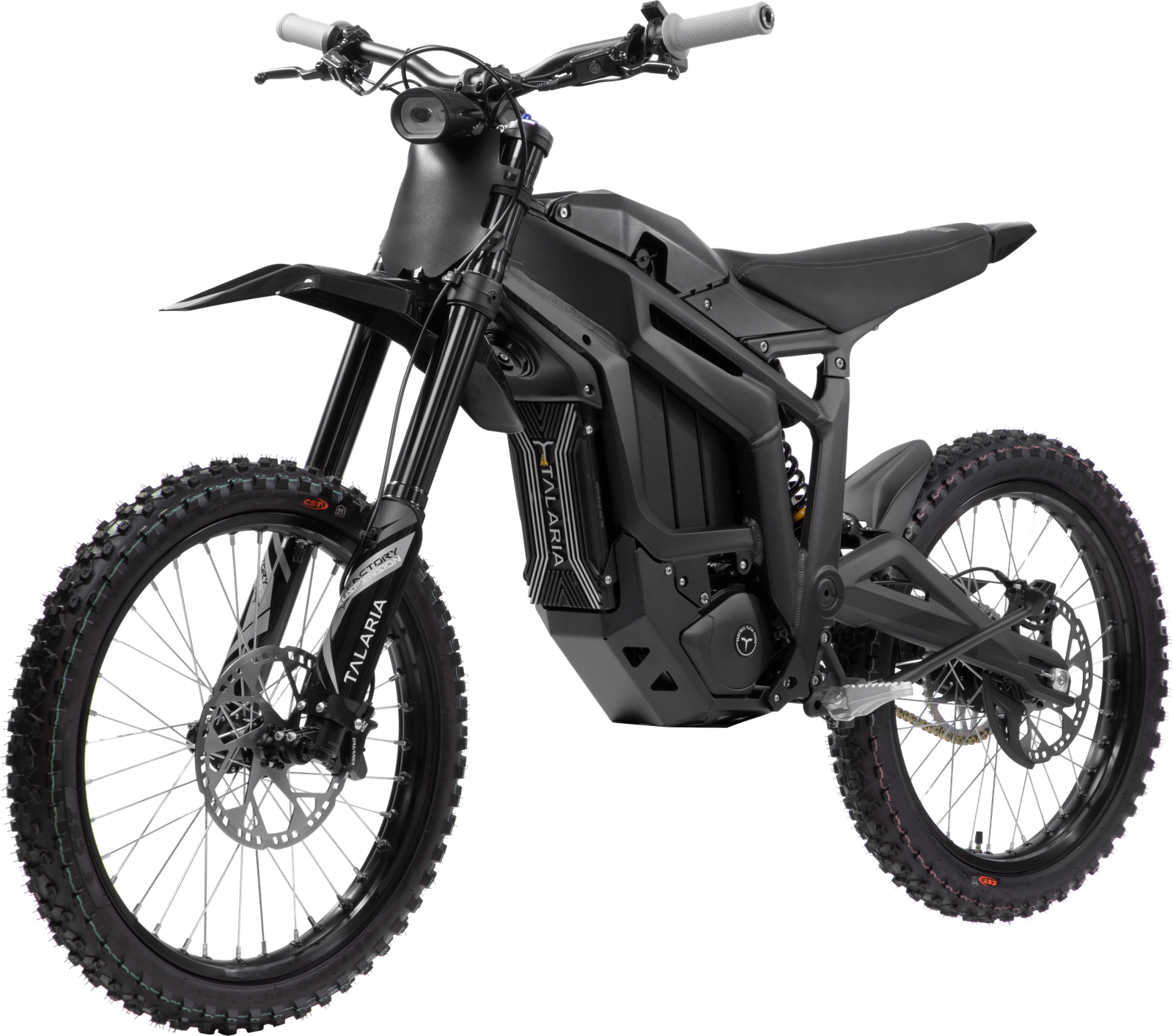
Order the Nucular controller Talaria kit with MX3 or MX4 selected and it ships with UK mainland delivery, timescales confirmed at checkout. If you are planning the 72V route, read the Talaria battery guide first so the pack, charger and controller arrive as a matched set, and browse the batteries and chargers range. For the bike itself, the Talaria Sting R MX4 is the platform most riders build on.
Buying this from The Talaria UK
Our service promise as a UK Talaria specialist.
- Checked before it shipsEvery bike is unboxed, inspected, torqued, charged and test run in our workshop before the courier is booked. You get a machine that is ready to ride, not a crate and a leaflet.
- Packed to arrive intactBikes travel in their factory crate with the fragile parts protected, and we tell you exactly what to check before you sign for it.
- UK mainland deliveryShipped across the UK mainland, with options, costs and timescales confirmed at checkout and tracking sent on dispatch.
- Answers from people who ride theseAsk which model suits your weight, your ground or your licence and you get an answer from someone who has set these bikes up, not a script.
- Parts on the shelfWe stock the batteries, chargers, controllers, motors, forks and wheels for what we sell, so a repair or an upgrade is a stock check rather than a long wait.
- Covered after you buyEvery bike is covered by our UK warranty, with the period for this model shown on this page and in your order confirmation, and claims handled by the team that inspected it.
Questions before you order? Contact us, or read the delivery guide, the warranty terms and finance options.
Related products
Talaria Parts
Talaria Parts
Talaria Parts
Talaria Parts
Talaria Parts
Talaria Batteries and Chargers
Talaria Parts
Talaria Batteries and Chargers