
Sting R MX4 OEM Battery Charger (110V)
£250.00
The stock 60V 12A OEM charger for the Talaria Sting R MX4, with an honest note on the 110V input and UK mains, charge times by pack and safe charging practice.
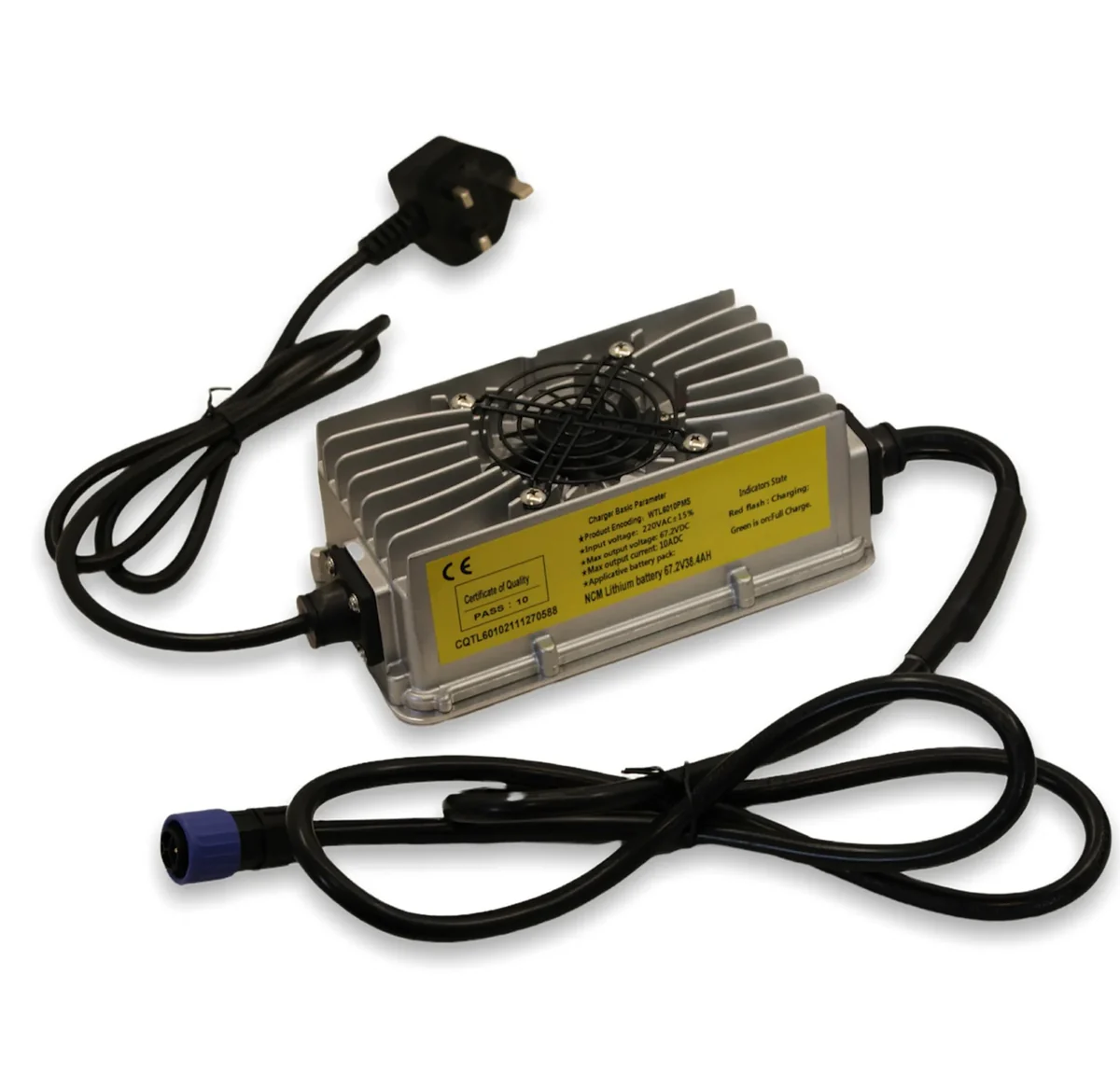
A genuine Talaria Sting charger is the part most owners never think about until the original fails, gets left at a venue, or a second pack arrives. This is the stock OEM replacement charger for the Talaria Sting R MX4: a 60V 12 amp unit as supplied with the bike. One detail decides whether you should order it at all: this listing is the 110V version built for a US household outlet, and UK mains is 230V. The section on UK mains below explains what that means for you.
What this Talaria Sting charger is
This Talaria Sting charger is the stock OEM replacement for the Sting R MX4, rated at 60V and 12 amps. The 60V figure describes the pack it is built for: the 16 series lithium ion pack fitted to the Sting family, which reaches 67.2 volts at full charge. The 12 amp figure is the current the charger delivers during the bulk phase, and it is the reason Talaria quotes roughly three hours from empty to full on the Sting R.
Multiply the two and you get the approximate output of the Talaria Sting charger: 60 volts at 12 amps is 720 watts flowing into the pack, with the draw from the wall a little higher to cover the charger’s own losses. That is about the same as a small kettle on its lowest setting, which is why the charger has a cooling fan and why it wants a ventilated spot rather than a cupboard.
What it does that a generic charger does not
- Cuts off at exactly the voltage the Talaria pack’s BMS expects, rather than a nearby figure.
- Delivers a current within the rating the factory pack’s BMS is designed to accept.
- Uses the correct connector for the Sting battery, with no adaptor in the chain.
- Steps down from the bulk phase to a constant voltage phase so the BMS can balance the cell groups.
Those four points are the whole argument for a genuine Talaria Sting charger, and they apply equally to a replacement and to a second charger for a second pack such as the genuine 60V 43.2Ah Sting R battery.
The 110V input and UK mains: read this before ordering
The listing is explicit: this Talaria Sting charger is the US 110V version and uses the standard household 110 outlet in the United States. UK domestic mains is 230 volts at 50 hertz. A Talaria Sting charger built only for a 110 volt supply must not be plugged into a UK socket, and we do not claim that this unit will run on UK mains. What we ask is simple: confirm input voltage suitability with us at the point of order, before the charger ships.
Many modern switch mode chargers accept a wide input range, often printed on the label as 100 to 240V, and run on either supply with nothing more than the right plug. Others are built for a single supply voltage and will fail, sometimes destructively, on the wrong one. We will not guess which applies to a given batch, and neither should you. Tell us at checkout that the Talaria Sting charger is for UK use and we will confirm the rating of the unit we ship.
What we will not recommend
We do not recommend running a 110 volt only charger through a step down transformer as a routine solution for a 720 watt continuous load. Transformers sized for travel appliances are not built for hours of sustained draw, and an undersized one is a fire risk in its own right. If the unit we can supply is 110 volt only, the right answer for a UK owner is a 230 volt Talaria Sting R charger, and we will say so rather than sell you the wrong part.
If you already own a Sting bought in the UK, the Talaria Sting charger it came with is a 230V unit and this is the reference point: the replacement must match the input rating of the one it replaces.
Charge time by pack at 12 amps
A 12 amp Talaria Sting charger fills a pack at a rate you can estimate from the label. Divide the pack’s amp hours by 12 for the bulk phase, then allow extra for the constant voltage stage at the end, when the current tapers while the BMS balances the cell groups. Talaria’s own figures of 3 to 3.5 hours for the Sting family sit close to the arithmetic.
| Pack | Capacity | Energy | Bulk phase at 12A | Talaria quoted time |
|---|---|---|---|---|
| Sting MX3 and L1E factory pack | 60V 38.4Ah | 2304 Wh | About 3.2 hours | 3 to 3.5 hours |
| Sting R MX4 factory pack | 60V 43.2Ah (45Ah max) | 2592 Wh | About 3.6 hours | About 3 hours |
| Sting L3E and Sting R Off Road pack | 60V 45Ah | 2700 Wh | About 3.75 hours | 3.5 hours |
| EBMX 60V 65Ah pack | 60V 65Ah | 3900 Wh | About 5.4 hours | Not quoted, plan on overnight |
Two practical notes. A pack is rarely charged from completely flat, so real sessions are usually shorter than the table. And a warm pack straight off the trail may sit for a while before the BMS allows charging to begin, which adds to the clock without adding to the charge. Our Talaria charger guide covers charge rates, indicator lights and faster charging options in more depth.
Which Talaria models this charger suits
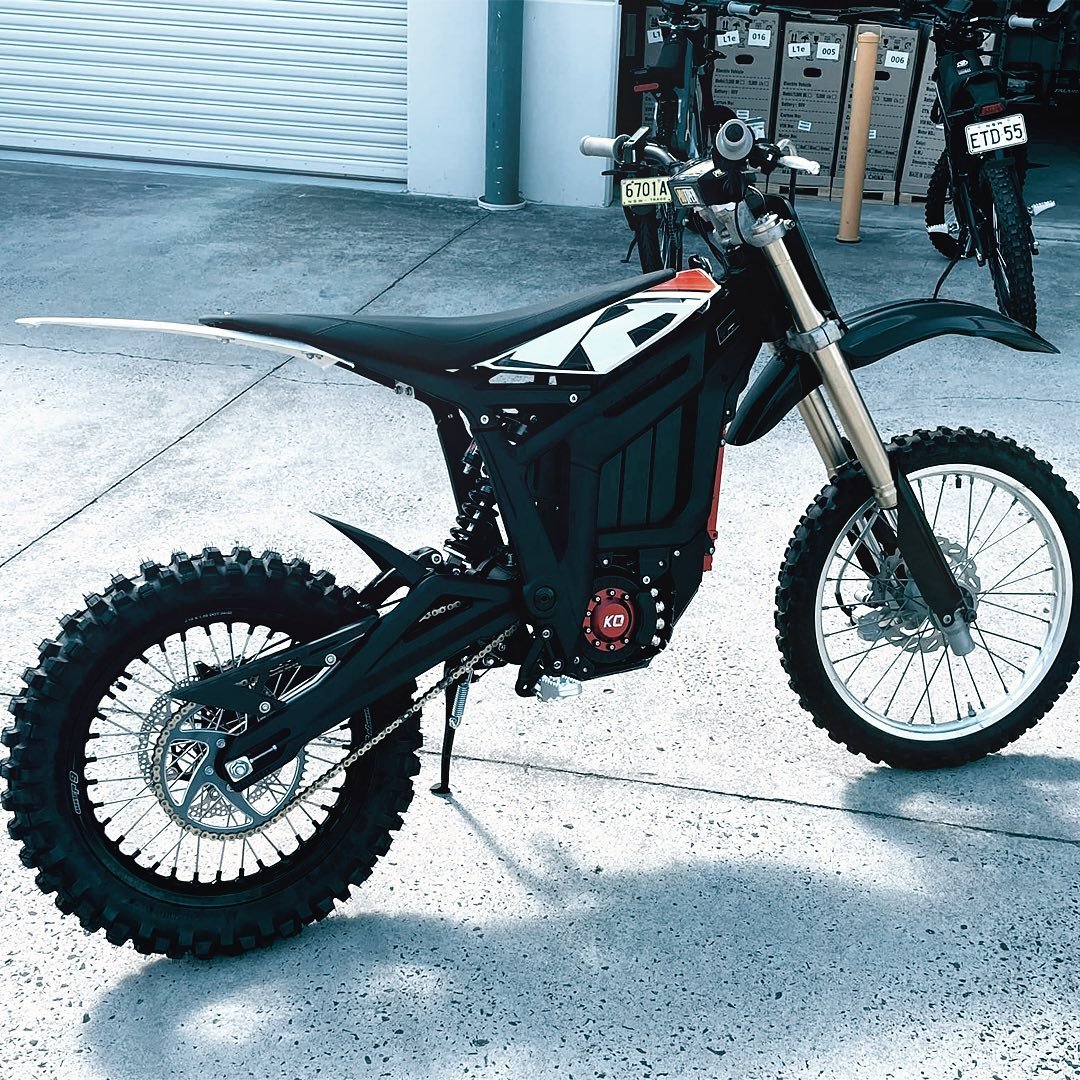
This Talaria Sting charger is defined by its 60V output and its connector, so it suits the Sting models that share the 60V pack and the Sting battery connector. It is the wrong charger for every 72V and higher Talaria, which need a charger with a different cut off voltage and connector.
| Talaria model | System voltage | This 60V 12A charger | Notes |
|---|---|---|---|
| Sting R MX4 | 60V | Yes, the OEM Talaria Sting charger | Direct replacement, subject to input voltage confirmation. |
| Sting R Off Road | 60V | Yes | Same 60V 45Ah pack family. |
| Sting MX3 | 60V | Yes | Same pack connector; the MX3 shipped with a similar Talaria Sting charger. |
| Sting L1E and L3E Road Legal | 60V | Yes | Same 60V system; confirm connector on early models. |
| Sting MX5 Pro | 72V | No | 72V pack needs an 84 volt cut off charger. |
| XXX and X3 | 60V | Confirm first | 60V system but a built in pack with its own charge port; check connector before buying. |
| Komodo | 97.2V | No | Different platform. |
| Dragon | 88V | No | Different platform. |
For a Talaria Sting R MX4 this is simply the charger that belongs in the box. For the road legal L1E and L3E Stings the charger is the same 60V type, and charging does not affect the bike’s status; the licence, registration and insurance rules on the GOV.UK motorcycle and moped guide apply to riding, not to what you plug in.
How to use a Talaria Sting charger safely
The routine is short and worth following every time. Charging is the moment a lithium pack is under the most stress, and a genuine Talaria Sting charger takes care of the electrical side only if it is used in the right conditions.
- Let the pack cool after a ride. A hot pack charges inefficiently and the BMS may hold off the charge until the cells are within their temperature window.
- Place the charger on a hard, dry, non flammable surface with clear space around the fan vents. Not on carpet, not on the seat of the bike, not under a jacket.
- Connect the charger to the battery first, then switch on at the wall.
- Stay on the premises while charging, and never leave the pack charging overnight in a living area or across an escape route.
- Let the charger finish its cycle so the BMS balances the pack, then switch off at the wall and disconnect from the battery.
The Talaria Sting charger can be used with the pack on the bike or on the bench. On the bench is tidier for a second pack, and it keeps the bike free to ride on the other one. Either way, the same rules apply: dry, ventilated, attended, and matched to a 60V pack only.
Never use it on a 72V pack
A 72V pack needs an 84 volt charger. This 60V unit would stop far short of full on a 72V pack and is not built to communicate with it. Equally, a 72V charger must never be connected to a 60V Sting pack. If both voltages live in your garage, label the chargers.
Genuine OEM versus aftermarket chargers
Aftermarket alternatives to the Talaria Sting charger fall into two camps. The first is the cheap generic 60V lithium charger, which may or may not cut off at the right voltage and often arrives with the wrong connector and a spliced adaptor. The second is the quality fast charger, delivering 15 amps or more, which shortens charge times but pushes current into the pack faster than the factory unit was designed to.
A genuine Talaria Sting charger is the safe middle. It charges at the rate the factory pack’s BMS was specified for, it stops where the BMS expects it to, and it plugs straight in. For a rider with one pack and a normal riding pattern there is little reason to look elsewhere. A fast charger earns its place only when you charge the same pack twice a day, and even then it should be a proper lithium unit whose current sits inside the BMS rating, chosen with our help rather than off a marketplace listing.
When a faster charger does make sense
- Owners of the 60V 65Ah EBMX battery, where 12 amps means well over five hours from empty.
- Event riders charging between sessions with mains available.
- Households with two Stings and one evening to charge both.
Care, faults and when to stop using it
A Talaria Sting charger lives a hard life: dragged out at venues, coiled tightly, left in damp vans. Store it dry, coil the cable loosely, and keep the connector capped or bagged so grit does not get into the pins. Check the cable for chafe where it enters the case, and listen to the fan; a fan that has stopped, rattles or runs constantly at full speed is the usual first sign of trouble.
Stop using the Talaria Sting charger and contact us if it smells hot, if the case is cracked, if the indicator lights behave unexpectedly, or if the pack no longer reaches a full charge. Do not open the case: there are mains voltages inside and no user serviceable parts. The charger is covered by our UK warranty, full terms on the warranty page, and if a return is needed we will arrange it. UK mainland delivery, timescales confirmed at checkout, and the delivery page explains what we check before dispatch.
Disposal of an old charger and pack
A dead charger is waste electrical equipment and belongs at a recycling centre, not in household waste. The lithium pack it charged has stricter rules again: the GOV.UK batteries and accumulators guidance sets out the compliant routes for lithium batteries, and we can advise on returning a worn out pack.
Frequently asked questions
Will this charger work on UK mains?
This Talaria Sting charger is listed as the 110V US version, and UK mains is 230V. We do not claim it will run on a UK socket. Before ordering, tell us the charger is for UK use and we will confirm the input voltage rating of the unit we can supply. If only a 110 volt only unit is available, we will advise a 230V Talaria Sting R charger instead.
Is this the same Talaria Sting charger that came with my Sting R MX4?
It is the stock OEM replacement for the Sting R MX4: a 60V 12 amp Talaria unit with the correct connector and cut off voltage for the factory pack. The one caveat is input voltage, since a UK supplied bike came with a 230V unit. Match the input rating of the charger you are replacing.
How long does a full charge take?
Talaria quotes about 3 hours for the Sting R MX4 and 3 to 3.5 hours for the other Sting models. Dividing the pack’s amp hours by 12 gives the bulk phase, about 3.6 hours for a 43.2Ah pack, with the final balancing stage on top. Packs are rarely charged from flat, so real sessions are usually shorter.
Can I use it on a Sting MX3 or a road legal Sting?
Yes. The MX3, the L1E and the L3E all run 60V packs with the Sting connector, so this 60V 12 amp Talaria Sting charger suits them. Confirm the connector on early models if you are unsure. It is not suitable for the 72V MX5 Pro, or for the Komodo and Dragon, which run entirely different voltages.
Is a faster aftermarket charger better?
Faster is not the same as better. A quality lithium charger at a higher current shortens the wait but adds stress to the pack, and a cheap generic charger may stop at the wrong voltage or need a spliced connector. For most riders the genuine unit is the right choice; a fast charger earns its place only when you charge twice a day.
Can I leave the charger connected after the pack is full?
Let the Talaria Sting charger complete its cycle so the BMS can balance the cell groups, then switch off at the wall and disconnect. Leaving a pack on the charger for days serves no purpose, and no lithium pack should be left charging unattended or overnight in a living area. For storage, aim for 40 to 60 percent charge rather than full.
Next steps
Add the Talaria Sting charger to your order with a note that it is for UK use so we can confirm the input voltage before dispatch, or contact us with your model and year and we will match the right unit. Every pack and charger for the Sting family is listed in the Talaria batteries and chargers category.
Buying this from The Talaria UK
Our service promise as a UK Talaria specialist.
- Checked before it shipsEvery bike is unboxed, inspected, torqued, charged and test run in our workshop before the courier is booked. You get a machine that is ready to ride, not a crate and a leaflet.
- Packed to arrive intactBikes travel in their factory crate with the fragile parts protected, and we tell you exactly what to check before you sign for it.
- UK mainland deliveryShipped across the UK mainland, with options, costs and timescales confirmed at checkout and tracking sent on dispatch.
- Answers from people who ride theseAsk which model suits your weight, your ground or your licence and you get an answer from someone who has set these bikes up, not a script.
- Parts on the shelfWe stock the batteries, chargers, controllers, motors, forks and wheels for what we sell, so a repair or an upgrade is a stock check rather than a long wait.
- Covered after you buyEvery bike is covered by our UK warranty, with the period for this model shown on this page and in your order confirmation, and claims handled by the team that inspected it.
Questions before you order? Contact us, or read the delivery guide, the warranty terms and finance options.
Related products
Talaria Parts
Talaria Batteries and Chargers
Talaria Parts
Talaria Batteries and Chargers
Talaria Parts
Talaria Parts
Talaria Parts
Talaria Batteries and Chargers