
Uncategorized
Talaria Controller Upgrades: From OEM to EBMX X9000 and What Each Step Demands
Mar
The Talaria controller is the single component that decides how much of the battery’s energy reaches the motor, how quickly, and with what kind of throttle feel, which is why it is the first thing experienced riders think about changing and the first thing inexperienced riders break. This article maps the upgrade landscape as it stands in the UK: the factory units by model, the KO Moto Rush, the Nucular kit and the EBMX X9000 we stock, plus the Torp TC500 and VTB options riders ask us about, and what each rung of the ladder asks of your battery, wiring, cooling, motor and legal position.
What the controller actually does
A brushless motor cannot simply be connected to a battery. It needs three phase alternating current, timed precisely to the rotor’s position, and the Talaria controller is the electronics package that creates it. Inside are banks of MOSFETs switching tens of thousands of times a second, a processor running a control algorithm, current sensors and a stack of protections for temperature, voltage and runaway.
Field oriented control
Every Talaria controller, factory or aftermarket, uses field oriented control, abbreviated to FOC on the specification sheets. FOC calculates the magnetic field angle continuously and drives the phases to keep torque smooth at any speed. It is quieter and more efficient than older trapezoidal control and it is why a Sting pulls cleanly from a standstill without the cogging older electric bikes suffered.
Phase current versus battery current
Two current figures matter and they are not the same. Battery current is what the pack delivers. Phase current is what the motor windings see, and at low speed it can be several times higher than battery current because the controller trades voltage for amps. A Talaria controller phase rating governs launch torque; its battery current rating governs what it can pull at speed and what your pack must survive.
The factory Talaria controller, model by model
The specification sheets we hold list the same core Talaria controller for the Sting MX3 and Sting R MX4: an FOC controller weighing 2 kg, measuring 248 mm by 128 mm by 50 mm, with 92 percent peak efficiency and a maximum working temperature of 100 degrees. On the MX3 it delivers 3000W nominal and 6000W peak from the 60V pack. On the MX4 the same class of unit is tuned for 4000W continuous and 8000W peak, and the bike gained an upgraded 125A circuit breaker to match.
MX5 Pro: the 72V step
The Sting MX5 Pro moved to a 72V 40Ah pack and its Talaria controller is rated at 5.5kW continuous and 13.4kW peak when unrestricted, with three modes, Eco, Sport and Hyper. That is a different tier of electronics from the 60V bikes and it explains why MX5 owners are the least likely to feel the need for an aftermarket unit early on.
Komodo: a 140V platform
The Komodo Talaria controller is a different animal again: 36 high power MOSFETs on a 140V platform with an M4 core microprocessor, feeding a 32kW peak motor from a 97.2V pack. It also uses a dual hall throttle with automatic signal switching if one path fails. For most riders the Komodo’s factory controller is the ceiling, not the starting point.
The upgrade ladder
Think of Talaria controller upgrades as rungs rather than a single jump. Each rung adds power, cost and complexity, and each rung shifts the weakest link somewhere else on the bike.
Rung one: the KO Moto Rush
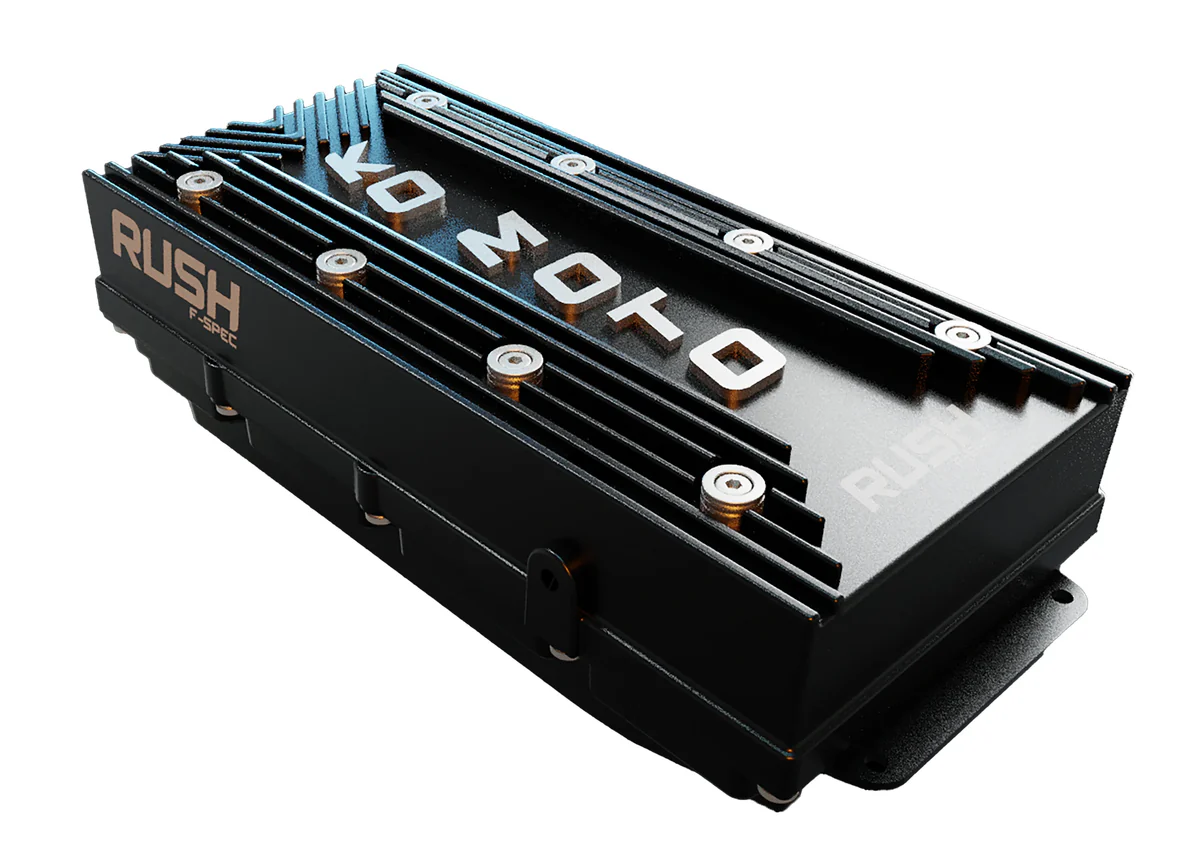
The KO Moto Factory Spec Rush controller upgrade is the entry point. It is positioned as a factory spec replacement with improved response, staying within the envelope the stock 60V pack and motor were designed for. We do not publish power figures for it because the manufacturer’s sheet supplied to us does not state them, and we would rather say nothing than guess. Riders choose it as the first Talaria controller change because it sharpens throttle mapping without rewiring the bike.
Rung two: the Nucular kit
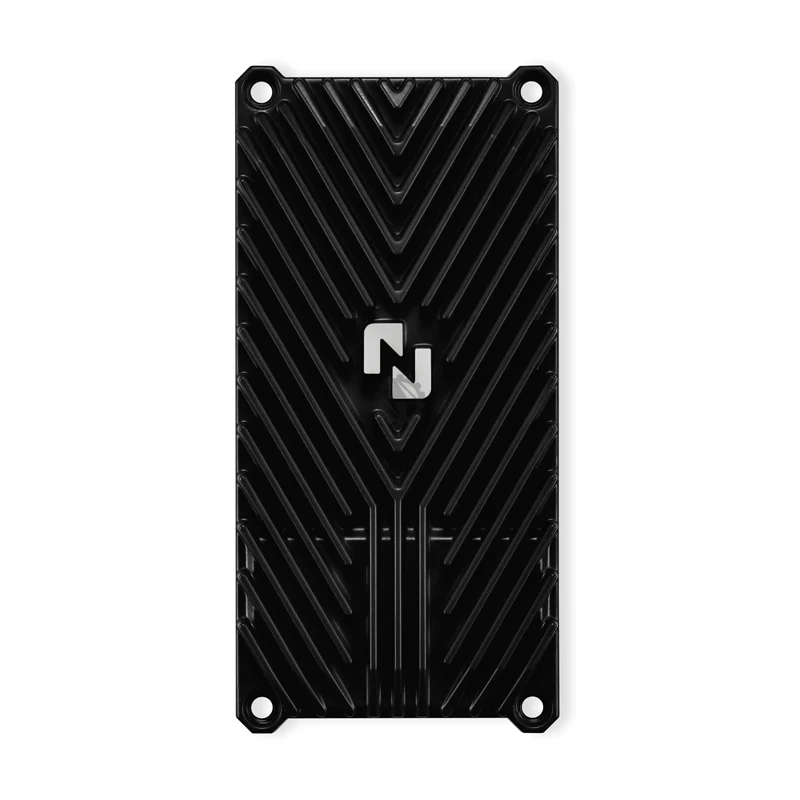
The Nucular Electronics performance controller for the Sting MX3 and MX4 is sold as a plug and ride kit. Its sheet quotes up to 30 percent more power on the standard 60V battery and up to 300 percent on a 72V battery. That second figure is the important one: the Nucular Talaria controller only shows its full character once you pair it with a higher voltage pack, so it is really a two stage purchase.
Rung three: the EBMX X9000
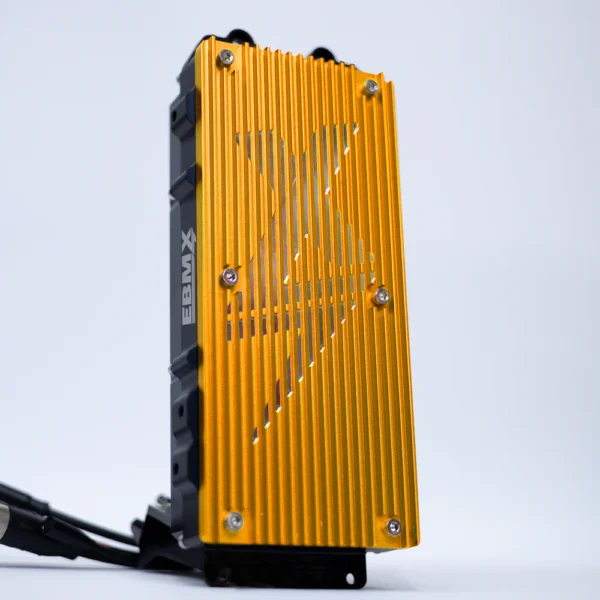
The EBMX X9000 power kit is the top of the Talaria controller range we stock. The V2 specification lists 22kW rated continuous power, an input range of 40V to 100V, a working range of 48V to 93V for up to 22 series groups, 1000A continuous phase current with 1500A burst, 500A maximum battery current, 30 MOSFETs, a 12V DC to DC converter with four outputs, CAN bus readiness, VESC based firmware modified by EBMX and IP67 sealing. The kit includes an air cooled heat sink, an SW102 display, a regen thumb throttle and harnesses for the Light Bee and the Talaria MX3 and MX4.
Rung four: Torp TC500 and VTB
Riders also ask us about the Torp TC500 and the VTB controller. Both are well known names in the SurRon and Talaria community and both sit at the high power end of the market. We do not stock either at present and we hold no manufacturer sheets for them, so we will not quote figures. If you are comparing a Torp TC500 or a VTB Talaria controller against the EBMX X9000, ask each vendor for phase current, battery current, working voltage and the exact harness supplied, and compare like with like.
What each level demands from the rest of the bike
A Talaria controller upgrade never arrives alone. The more current you ask the controller to pass, the more the pack, the cables, the motor and the cooling have to keep up.
Battery current and the BMS
The stock 60V packs are built around the factory Talaria controller draw. Ask a pack to deliver two or three times that and the BMS will either cut out or, worse, allow the cells to sag and heat. This is why the EBMX 72V 42Ah battery listing states it will not run on the stock 60V controller, and why the EBMX 60V 65Ah battery is described as able to run a Talaria at up to 15kW with an X9000. Read the Talaria battery guide before choosing a pack for a high power build.
Wiring, connectors and the circuit breaker
Stock phase wires and battery leads are sized for stock current. A high power Talaria controller ships with its own harness for a reason. Undersized cable heats, insulation softens and connectors pit. The MX4’s 125A breaker is a hint at what the factory considered a sensible ceiling; a 500A capable controller lives in a different world and needs the wiring to match.
Cooling and the throttle discipline that goes with it
The X9000 kit ships with an air cooled heat sink for a reason. The EBMX 65Ah battery sheet is blunt about what high power tunes do to motors: it advises against wide open throttle for longer than 10 to 15 seconds, against repeated full throttle runs and against riding long distances at three quarter throttle or more. The stock bike in Sport mode at full throttle runs at 5 to 6kW; a high power Talaria controller tune can push 15kW through the same motor, three times the load.
The motor
The MX4’s IPM motor, listed at 7 kg with a 180 mm case and 94 percent efficiency, tolerates a great deal more than the older MX3 PMSM unit because its magnets are buried in the rotor and it uses a magnetic encoder rather than hall sensors. If you are upgrading an MX3, budget for the IPM Sting MX4 replacement motor as part of any build beyond rung one.
Controller comparison table
Only figures taken from the manufacturer sheets we hold appear below. Where a cell reads “not published” it means the vendor has not supplied that figure to us, not that the product lacks it.
| Controller | Position | Published power | Battery it needs | Wiring and cooling | Motor advice |
|---|---|---|---|---|---|
| Factory MX3 or MX4 unit | Stock | 3000W or 4000W nominal, 6000W or 8000W peak, 92 percent efficiency | Stock 60V pack | Stock harness, passive cooling | Stock PMSM or IPM |
| Factory MX5 Pro unit | Stock, 72V | 5.5kW rated, 13.4kW peak unrestricted | Stock 72V 40Ah pack | Stock harness | Stock IPM |
| KO Moto Rush | Rung one | Not published | Stock 60V pack | Direct replacement | Stock motor |
| Nucular Electronics kit | Rung two | Up to 30 percent more on 60V, up to 300 percent on 72V | 60V stock, or 72V for full gains | Plug and ride harness supplied | IPM strongly advised on 72V |
| EBMX X9000 V2 | Rung three | 22kW continuous, 1000A phase, 500A battery | 48V to 93V working range, high current pack required | Own harness, air cooled heat sink, IP67 | IPM, throttle discipline essential |
| Torp TC500 | Rung four, not stocked | Not published to us | Vendor to confirm | Vendor to confirm | IPM assumed |
| VTB controller | Rung four, not stocked | Not published to us | Vendor to confirm | Vendor to confirm | IPM assumed |
Warranty and road legal implications
Two consequences follow any Talaria controller change and both need to be understood before the first bolt comes out.
Warranty
Every bike we sell is covered by our UK warranty, full terms on the warranty page. A Talaria controller that alters the current the motor, gearbox and battery were designed for changes the failure modes of those parts, and damage that results from a modified controller is not a manufacturing defect. Keep the original unit, keep the receipt for the upgrade, and read the warranty page before you start.
Road legal models lose their approval
The Sting L1e and L3e are type approved under Regulation 168/2013 as specific vehicle categories with defined power and speed limits. Fit a Talaria controller that lifts the bike beyond those limits and it no longer matches its approval, its registration or its insurance. The EBMX battery sheet says this plainly: modified e motos with these controllers and tunes are illegal to ride on the road. Your motor insurance is also based on a declared specification, and an undeclared modification can void it. High power builds belong on private land with permission or on ACU sanctioned competition sites.
Choosing the right level for how you ride
The right Talaria controller is the one that matches the rest of your bike and the riding you actually do, not the biggest number on a sheet.
Trail rider on a stock 60V Sting
If your riding is woodland trails and private land loops on a stock pack, the KO Moto Rush or the Nucular Talaria controller on 60V gives a noticeable step without touching the battery or the motor. Either fits an afternoon’s work and keeps the bike’s character.
Rider planning a 72V pack
If a 72V battery is already on the list, the Nucular kit on 72V or the EBMX X9000 becomes the sensible pairing, along with the IPM motor if you started with an MX3. Plan the charger at the same time, because the stock 60V charger will not touch a 72V pack.
Competition or hard enduro use
For riders who want the full X9000 experience, budget for the high current pack, the heat sink, the harness and the throttle discipline the vendors themselves recommend. Treat 22kW as a burst resource, not a cruise setting, and expect to service the gearbox and chain more often. Browse the wider Talaria parts range for the supporting components.
Frequently asked questions
Can I fit the EBMX X9000 to a Sting MX3?
The kit includes a harness for the Talaria MX3 and MX4, so it fits physically. Whether the rest of the MX3 can use it is another matter: the stock 60V pack and PMSM motor were not designed for that current, so most builds on an MX3 add the IPM motor and a higher current pack at the same time.
Does a controller upgrade affect my warranty?
Damage caused by a modified Talaria controller is not a manufacturing defect and falls outside what a warranty covers, though unrelated defects remain covered. Full terms are on the warranty page. Keep the factory controller and fit it back if you need to make a claim on an unrelated part.
Is a Talaria controller upgrade legal on a road legal Sting?
No. The L1e and L3e models are approved as specific categories with power and speed limits, and a controller that lifts the bike beyond those limits breaks the approval, the registration and the insurance. Controller upgrades belong on off road models used on private land with permission.
What is the difference between the Nucular controller and the KO Moto Rush?
The KO Moto Rush is a factory spec style Talaria controller for stock packs. The Nucular kit is a stated performance step, quoting up to 30 percent more on 60V and up to 300 percent on 72V, and is really designed to be paired with a higher voltage battery.
Do I need a new battery for an EBMX X9000?
Almost always. The X9000 is rated for 500A battery current, far beyond what a stock 60V pack can deliver safely. The EBMX 60V 65Ah pack or a 72V pack with a high current BMS is the usual partner, and a matching charger comes with it.
Why do vendors warn against holding full throttle?
Because a high power tune can push three times the stock load through a motor that cools by air alone. The EBMX guidance is no more than 10 to 15 seconds at wide open throttle, no repeated full throttle runs and no long distances at high throttle. Motor temperature protection helps but cannot remove the risk entirely.
Next steps
Start with the Talaria controller rung that matches your pack. The KO Moto Rush suits a stock 60V bike, the Nucular kit suits riders heading to 72V, and the EBMX X9000 power kit is for full competition builds. All three are covered by our UK warranty, full terms on the warranty page, with UK mainland delivery, timescales confirmed at checkout.
