
Electric Dirt Bike Buying Guide: Choosing a Talaria for UK Off Road Riding
An electric dirt bike gives an adult rider instant torque, near silent running and a machine that charges from a household socket, with no clutch, no carburettor and no can of two stroke oil in the garage. This guide covers the full Talaria range from the Sting MX3 to the Dragon, compares the models side by side, explains where you can legally ride off road in the UK, and weighs electric against a petrol 125 or 250 on cost, noise and maintenance.
Why UK riders are switching to the electric dirt bike
Ask anyone who has ridden a Talaria what surprised them most and the answer is usually the quiet. A petrol motocross bike announces itself half a mile away. An electric dirt bike makes little more than tyre noise and a faint gear whine. That single change opens up land that was never available to petrol riders, because a landowner who would refuse a two stroke will often say yes to a machine the neighbours cannot hear.
The second change on an electric dirt bike is the power delivery. A mid mounted permanent magnet motor produces its full torque from a standstill, so there is no clutch to slip, no powerband to hunt for and no stalling on a technical climb. Beginners find the throttle far easier to learn on, while experienced riders discover how much of their energy on a petrol bike was spent managing the engine rather than reading the terrain.
Weight, simplicity and the garage test
The lightweight class that Talaria helped create with the Sting sits between a mountain bike and a full size motocross machine. A Sting R MX4 weighs 66 kg including its battery, and an XXX Pro just 53 kg, so this is an electric dirt bike adults can lift into a van or up a step without a second pair of hands. There is no oil to change on a belt drive model, no valves to shim and no exhaust to repack. The heavier Komodo and Dragon, at 98 kg and 100 kg, bring full size wheels and suspension but still weigh less than most petrol 250s.
The Talaria electric dirt bike range, model by model
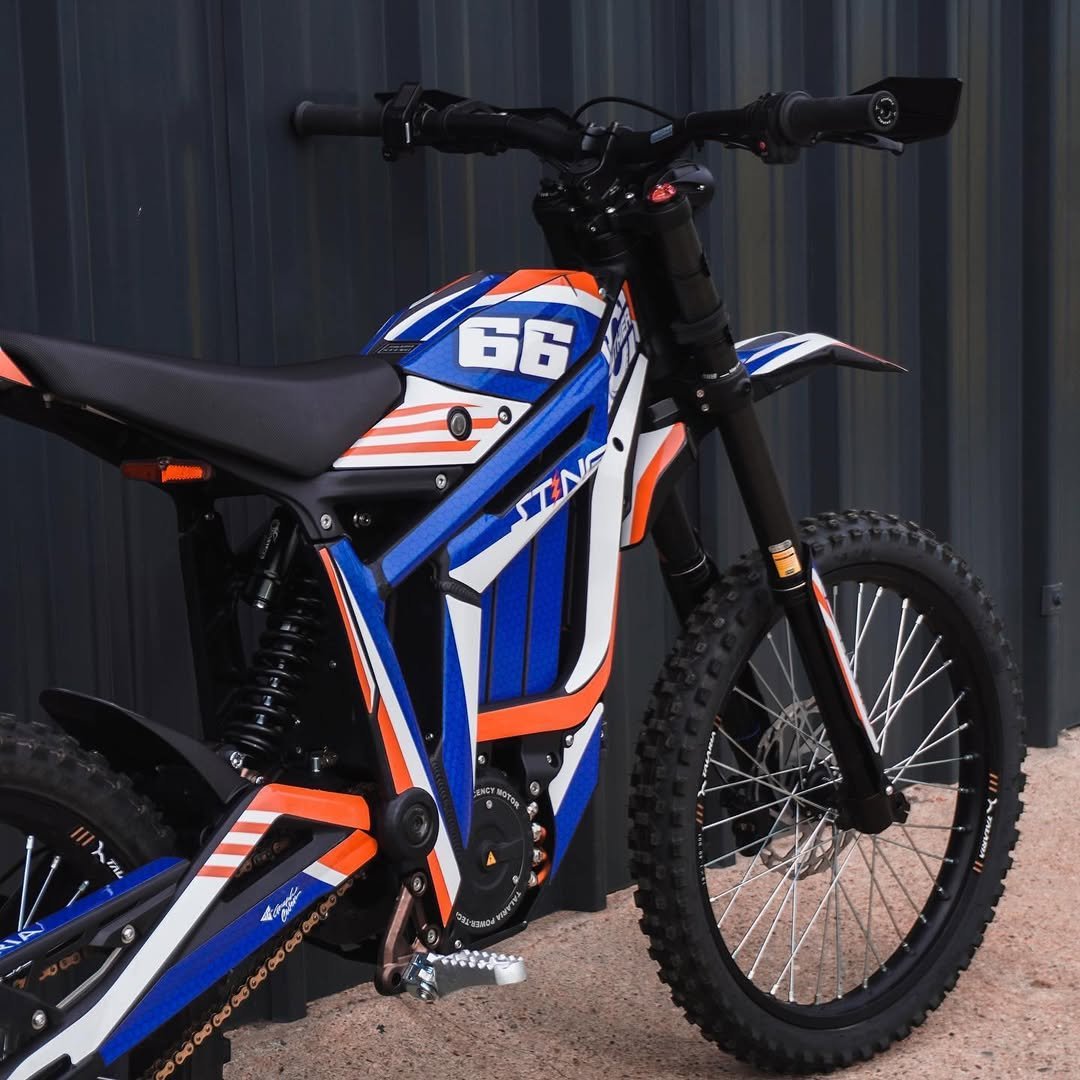
Talaria builds two electric dirt bike families. The lightweight bikes, the Sting and XXX lines, run 60V or 72V systems with 19 inch or 17 inch wheels and are the bikes most UK adults start on. The midweight bikes, the Komodo and Dragon, run higher voltage systems with 21 inch front and 18 inch rear wheels and are aimed at riders who want something closer to a conventional enduro machine.
Talaria Sting MX3
The Sting MX3 is the entry point. It runs a 60V 38.4Ah battery built from LG 21700 cells, a permanent magnet synchronous motor with 3000W nominal and 6000W peak output, and a gearbox primary drive instead of a belt. Four levels of regenerative braking are adjusted on the display, and the bike is rated for a maximum speed of 75 km/h. It is the electric dirt bike to choose if you want the Talaria gearbox platform at the lowest cost.
Talaria Sting R MX4
The Sting R MX4 moves to an interior permanent magnet motor with 4000W continuous and 8000W peak output, a 60V 45Ah battery, 220mm brake rotors with four piston calipers, and a maximum speed of 85 km/h. At 66 kg with the battery fitted it is still a light bike, and the 300mm ground clearance and 840mm seat height suit most adult riders. For many UK buyers this is the sweet spot of the electric dirt bike range.
Talaria Sting MX5 Pro
The MX5 Pro raises the system voltage to 72V with a 40Ah pack of Samsung 50S cells, giving 2880Wh of stored energy and an unrestricted peak of 13.4 kW. It adds a third riding mode, Hyper, above Eco and Sport, an adjustable air and spring fork with 220mm of travel, a regenerative brake lever and a colour TFT display. It weighs 76 kg with the battery and is the most powerful electric dirt bike in the lightweight Sting family.
Talaria XXX
The XXX takes the Sting R motor and puts it in a smaller, lower chassis with an 805mm seat height and a 60V 40Ah battery built into the frame. It uses a belt primary drive rather than the Sting gearbox, 17 inch supermoto style wheels, four piston brakes on 220mm rotors and four levels of regen. Riders who want a low, nimble electric dirt bike for tight woodland tend to pick the XXX over the taller Sting.
Talaria XXX Pro 2025
The XXX Pro is the off road development of the XXX. It swaps to a 19 inch front and 17 inch rear wheel with knobbly tyres, gains an all new rear linkage with 160mm of travel, a 200mm travel fork, a triple LED headlight and the MX5 style colour TFT display. At 53 kg with the 40Ah battery it is the lightest bike in the range, rated for 75 km/h and up to 100 km of range at 25 km/h.
Talaria Komodo 2025
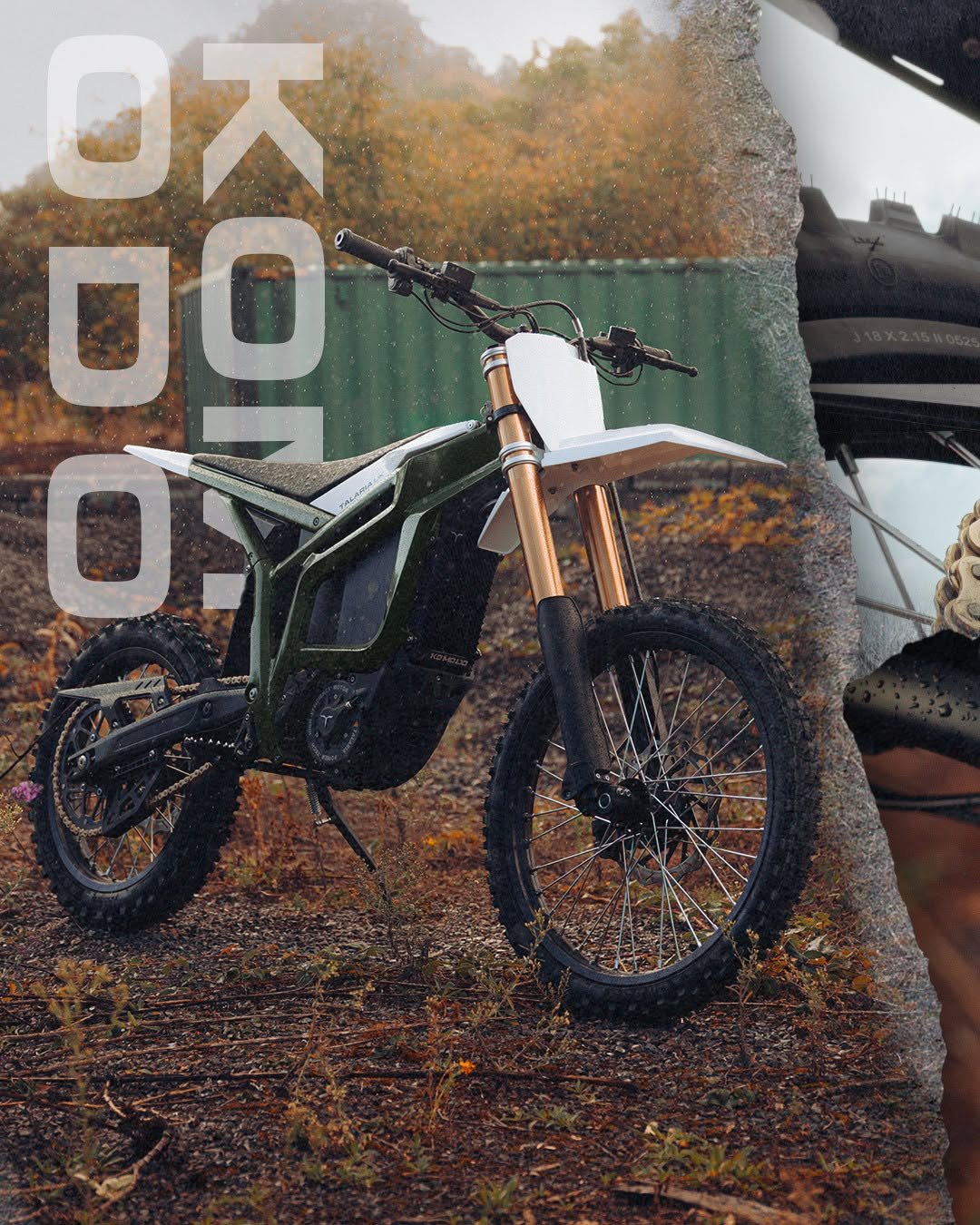
The Komodo is the most powerful Talaria built to date. A 96V 45Ah battery feeds a motor with 8.6 kW rated and 32 kW peak output and 754 Nm of peak torque at the rear wheel, with a rated maximum speed of 105 km/h. It rides on 21 inch and 18 inch wheels and a dual chamber air fork with 250mm of travel, and it offers Eco, Sport, Hyper and Reverse modes. At 98 kg with a 910mm seat height it is a full size machine for experienced riders.
Talaria Dragon 2025
The Dragon sits alongside the Komodo with a 5.2 kWh battery, 10 kW nominal and 28 kW peak output, 630 Nm of rear wheel torque and a rated top speed of 110 km/h. It shares the 21 inch front and 18 inch rear wheel format, uses an adjustable air and spring fork, and is offered both as an off road version and as an L1e road legal version with indicators and a horn. Range is rated at 150 km at a steady 25 km/h, the longest in the range.
Talaria electric dirt bike comparison table
The figures below are the manufacturer specifications for each electric dirt bike in the range. Range figures are measured at low steady speeds and will fall sharply with aggressive riding, hills, cold weather and rider weight, so treat them as a way to rank the bikes rather than a promise of what you will see on a track.
| Model | Battery | Peak power | Rated max speed | Wheels | Weight with battery | Seat height |
|---|---|---|---|---|---|---|
| Sting MX3 | 60V 38.4Ah | 6000W | 75 km/h | 19 in front and rear | Not listed by the factory | 840mm |
| Sting R MX4 | 60V 45Ah | 8000W | 85 km/h | 19 in front and rear | 66 kg | 840mm |
| Sting MX5 Pro | 72V 40Ah | 13.4 kW | Factory limited, see product page | 19 in front and rear | 76 kg | 840mm |
| XXX | 60V 40Ah | 6000W | 75 km/h | 17 in supermoto | Approximately 57 kg | 805mm |
| XXX Pro 2025 | 60V 40Ah | 6 kW | 75 km/h | 19 in front, 17 in rear | 53 kg | 810mm |
| Komodo 2025 | 96V 45Ah | 32 kW | 105 km/h | 21 in front, 18 in rear | 98 kg | 910mm |
| Dragon 2025 | 5.2 kWh (88V 58.5Ah) | 28 kW | 110 km/h | 21 in front, 18 in rear | 100 kg | Approximately 880mm |
Where you can legally ride an electric dirt bike in the UK
This is the part of the guide that matters most, because the electric dirt bike UK law recognises as an off road vehicle is not a road vehicle at all. The Sting MX models, Sting R, MX5 Pro, XXX, XXX Pro, the off road Komodo and the off road Dragon are not type approved, not registered and not insured for the road. They cannot be ridden on public roads, byways, bridleways, footpaths, pavements, parks or beaches in the UK, and riding one there is treated as using an unregistered, uninsured motor vehicle. The only exceptions are the road legal L1e and L3e models, which are covered in our road legal Talaria category.
Private land with the landowner’s permission
Private land is where most UK electric dirt bike riding happens. Farmland, woodland, quarries and disused industrial sites are all used with the written or verbal permission of whoever owns or controls the land. Permission is the whole point. Riding on private land without it is trespass, and repeated trespass with a motor vehicle can bring police involvement. Because an electric bike is quiet, landowners who have said no to petrol machines for years are often willing to reconsider.
Motocross and enduro tracks
Commercial practice tracks and enduro parks around the UK run open days where any suitable bike can ride for a fee. Most now welcome electric bikes and some run dedicated electric sessions. Check the track’s rules on minimum wheel size, on sound testing, which does not apply to electric bikes, and on whether they classify lightweight machines separately from full size motocross bikes.
Organised competition
The Auto Cycle Union governs off road motorcycle sport in Britain and its clubs run trials, enduros, hare and hounds and motocross events. Electric classes are increasingly common, and an ACU licence and club membership are the route into organised racing. For riders interested in lawful green lanes, the Trail Riders Fellowship explains which routes carry vehicular rights, but remember that even a lawful byway is a public road in law and requires a registered, insured, road legal machine.
Electric versus a petrol 125 or 250 dirt bike
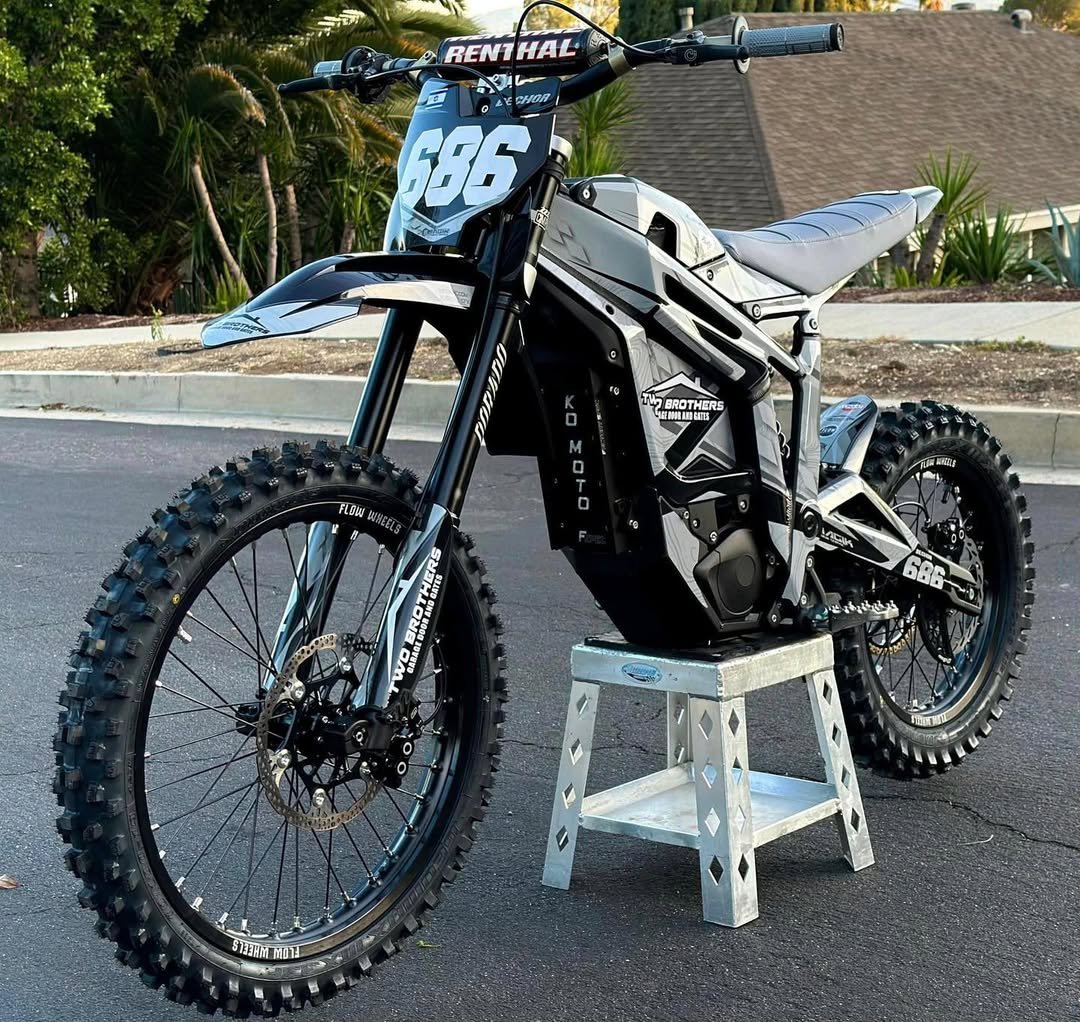
Riders moving from petrol want to know where an electric dirt bike lands on the scale. The honest answer is that the lightweight Stings and XXX models compete with a petrol 125 in outright pace but feel very different, while the Komodo and Dragon are closer to a petrol 250 or 350 in weight and power. A Komodo’s 32 kW peak is more than a typical 250 four stroke produces, though it delivers that power in short bursts rather than continuously.
Where electric wins
Noise, as covered above, is the decisive advantage for access to land. Torque from zero makes technical sections easier. There is no clutch, no gearbox to shift, no cold start ritual and no fuel to carry. Regenerative braking, adjustable through four levels on every Talaria, recovers energy on descents and reduces brake wear. Running an electric mx bike near housing without complaint is possible in a way it never was with petrol.
Where petrol still has the edge
A petrol bike refuels in two minutes. A Talaria battery takes hours to charge, so a full day of hard riding needs a spare pack or access to mains power. Sustained high speed riding drains a battery faster than the rated range suggests. And a petrol 250 with a proper gearbox can hold high speed on long open tracks in a way the lightweight electric bikes cannot. For most UK riders on typical private land and practice tracks these electric dirt bike limits matter far less than the advantages.
Running costs, charging and range in practice
The running cost story is straightforward. A full charge of a 60V 45Ah Sting R pack stores around 2.7 kWh, and even the 5.2 kWh Dragon pack holds less energy than many household appliances use in a day. Charged from a standard socket at domestic electricity prices, a full charge costs a small fraction of a tank of petrol and premix. There is no oil, no filter, no spark plug and no exhaust packing to replace, and e bike dirt riding on a Sunday does not end with a trip to the garage forecourt.
Charging an electric dirt bike is done from the supplied charger on a normal UK socket. The Sting models are rated for roughly 3 to 3.5 hours from empty, and the XXX Pro and Dragon for around 4 hours. The Sting battery is designed to be swapped in seconds, so a second pack effectively doubles your day. The XXX battery is built in and removable in a few minutes after taking the rear wheel out. Our Talaria battery guide explains capacity, voltage and pack care in more depth.
Battery care
Lithium packs last longest when stored partly charged in a cool, dry place and never left flat over winter. Charge indoors where you can supervise the first few cycles, use only the supplied charger, and treat a damaged pack as unusable. When a pack eventually reaches the end of its life it must be recycled rather than binned. The UK government’s batteries and accumulators guidance covers disposal obligations.
Maintenance on an electric off road bike
With no engine to service, electric dirt bike maintenance comes down to the chassis and the drive. The Sting gearbox needs an oil change at the intervals set out in the manual, a job that takes minutes. The final drive chain needs cleaning, lubrication and tension checks like any dirt bike. Brake pads, wheel bearings, fork seals and tyres wear in the normal way and are all serviceable with standard motorcycle tools.
The belt drive on the XXX models should be inspected for wear and kept free of stones. Controllers and displays are sealed units. The Komodo battery is rated IP67, and the Sting road legal models carry the same rating, but pressure washing directly at connectors is still a bad idea. Keep the battery contacts clean and dry and check that the pack is fully seated before every ride. Our maintenance and oil change guide covers the gearbox procedure step by step, and the Talaria parts range stocks the consumables.
Choosing the right electric dirt bike for you
For a first electric dirt bike, or for a rider who values low weight and easy handling above outright speed, the Sting MX3 or the XXX are the right places to start. Riders who already have petrol experience and want the strongest all rounder usually land on the Sting R MX4. The MX5 Pro is for those who want the most power available in the lightweight chassis. The Komodo and Dragon suit taller, heavier or more experienced riders who want a machine that behaves like a full size enduro bike and are happy with the extra weight that comes with it.
If any of your riding will be on the road, none of the bikes above will do. Look at the road legal Sting L1e or L3e instead, or the L1e version of the Dragon, and read our guide to whether Talarias are legal in the UK before you buy. Our round up of the best electric dirt bike UK riders can buy ranks the models by use case if you want a shorter answer.
Frequently asked questions
Can I ride an electric dirt bike on the road in the UK?
Not unless it is a road legal model. The off road Talaria bikes are not type approved, registered or insured, so they cannot be used on any public road, byway, bridleway, footpath or pavement. The Sting L1e, Sting L3e and the L1e Dragon are the road legal options, and each needs registration, insurance, a plate and the correct licence.
What licence do I need for an off road electric dirt bike?
No licence is required to ride on private land with the landowner’s permission, because licensing applies to public roads. That does not make the bike legal anywhere else. For the road legal models you need at least a provisional licence with CBT, and for the L3e model you must be 17 or over.
Which electric dirt bikes for adults suit a complete beginner?
The Sting MX3 and the XXX are the most approachable, with lower seat heights and manageable power. Both use the same 60V platform and four level regen. Riders over about six feet tall or with prior petrol experience often prefer the Sting R MX4, which has more power and a stronger brake package.
How far will a Talaria go on a charge?
Rated electric dirt bike figures are measured at a steady low speed, for example 120 km at 25 km/h for the Sting R MX4 and 150 km at 25 km/h for the Dragon. Real off road riding uses far more energy, so plan on a fraction of the rated figure and carry a spare pack on the Sting if you want a full day out.
Is an electric mx bike quieter than petrol?
Yes, by a wide margin. The only sounds are the tyres, the chain and a faint whine from the motor and gearbox. This is why many landowners and tracks that restrict petrol bikes will accept electric ones, and why electric sessions are becoming common at UK practice tracks.
Can a 16 year old ride an electric dirt bike?
On private land with permission there is no legal minimum age, so the decision is a matter of size, experience and supervision. A 16 year old who wants to ride on the road needs the Sting L1e, a CBT and a provisional licence. Our guide to Talaria for 16 year olds and CBT explains the route.
Next steps
Browse the full Talaria Sting range to compare the MX3, MX4 and MX5 Pro, or go straight to the Komodo and Dragon categories for the midweight bikes. Every electric dirt bike is delivered to the UK mainland with timescales confirmed at checkout, and if you would rather spread the cost, our Talaria finance page explains how retail finance works.