
Electric Bike Law Checker: What You Can Legally Ride in the UK
This electric bike law checker settles three things in about twenty seconds: which class of machine you may ride, what paperwork that class demands, and where the law lets you take it. UK rules on electric motorcycles are reported as a grey area and are nothing of the kind. They are written around vehicle approval categories, which is why a motocrosser lookalike can be a moped in law.
Check what you can legally ride
Answer three questions and this tells you which class of electric bike you can ride in the UK, what paperwork you need, and where you are allowed to ride it. Built from the rules in Regulation 168/2013 and the GOV.UK licence categories, not from sales copy.
This tool explains the rules as they apply to electric motorcycles and mopeds in Great Britain. It is general information, not legal advice, and Northern Ireland licence rules differ in places. Check GOV.UK riding a motorcycle or moped and GOV.UK compulsory basic training before you buy.
How the electric bike law checker works
An electric bike law checker is worth using only if you can see its reasoning. This one takes your age, the licence you hold today, and whether the bike will see public roads, private land or both. It matches those answers against the approval category the machine sits in and the entitlement your licence carries.
The electric bike law checker asks about location separately because two tests run in parallel and both must pass. One asks whether the vehicle may be there, settled by type approval and registration; the other whether you may ride it, settled by age and licence.
One boundary matters before you act on a result. This electric bike law checker covers Great Britain. Northern Ireland licenses riders through the DVA, newly qualified riders there carry R plates for a year and some training rules differ, so confirm a Northern Ireland answer locally. Entitlements are listed on the GOV.UK riding a motorcycle or moped pages.
The three categories UK law puts an electric bike in
Most arguments about these machines come from riders comparing bikes in different legal boxes. There are three, and every answer the electric bike law checker gives sorts you into one of them.
L1e, the moped class
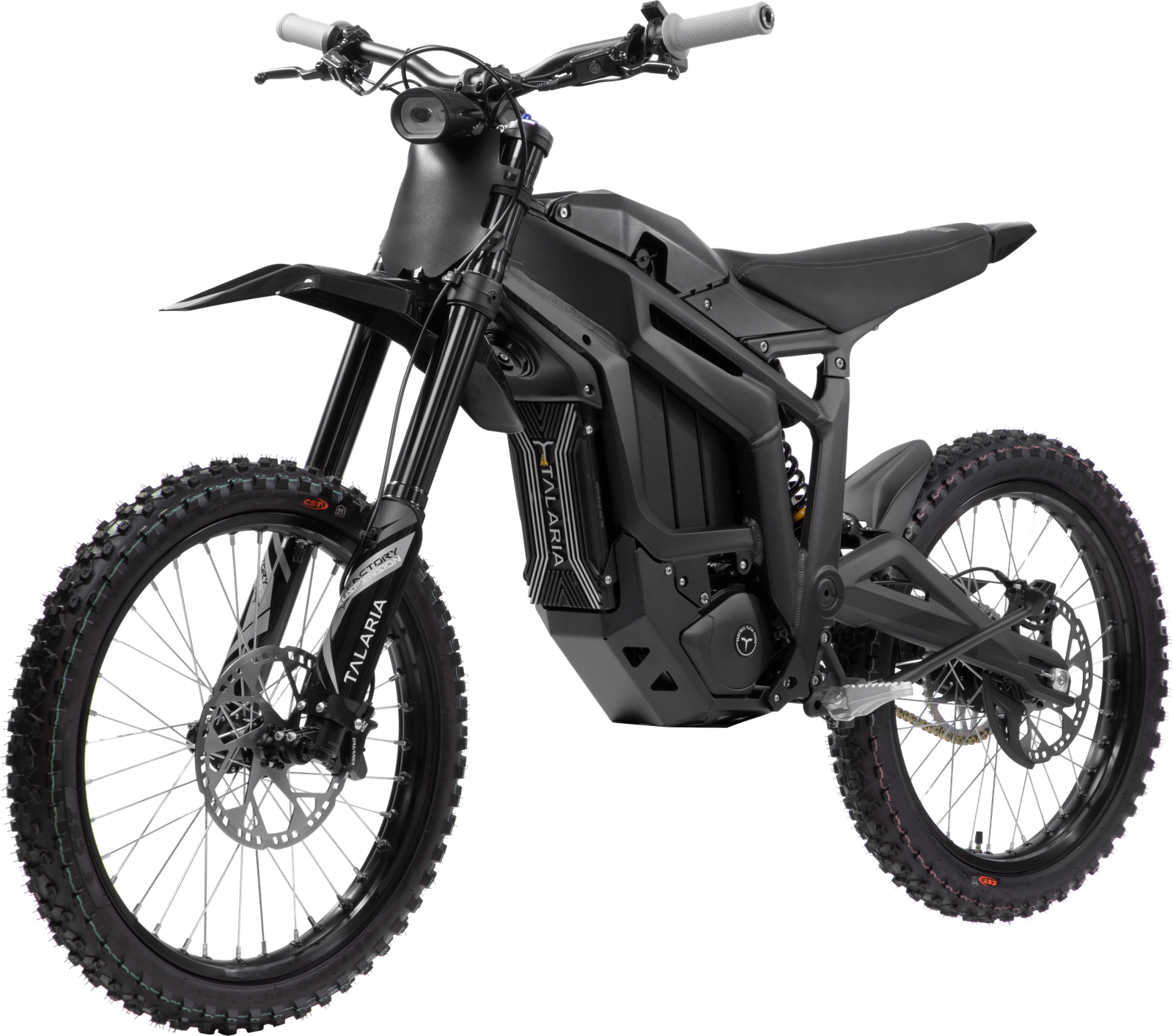
L1e B is the two wheel moped category set out in Regulation 168/2013, the framework the UK retained. Its ceilings are a design speed of 45 km/h, a fraction under 28 mph, and continuous rated power of no more than 4 kW. A bike approved into it is a moped to the DVLA and to an insurer, whatever its bodywork suggests, and the electric bike law checker names it first for any rider of 16. The Talaria Sting Road Legal L1e is homologated to it.
L3e A1, the 125 equivalent
L3e A1 is the light motorcycle class, the electric counterpart of a petrol 125. The limits are 11 kW of continuous rated power and a power to weight ratio no greater than 0.1 kW per kilogram, with no speed cap. The Talaria Sting L3e sits here on a 3500W rated motor, which is why it holds A road speeds a moped cannot.
Off road only, with no approval
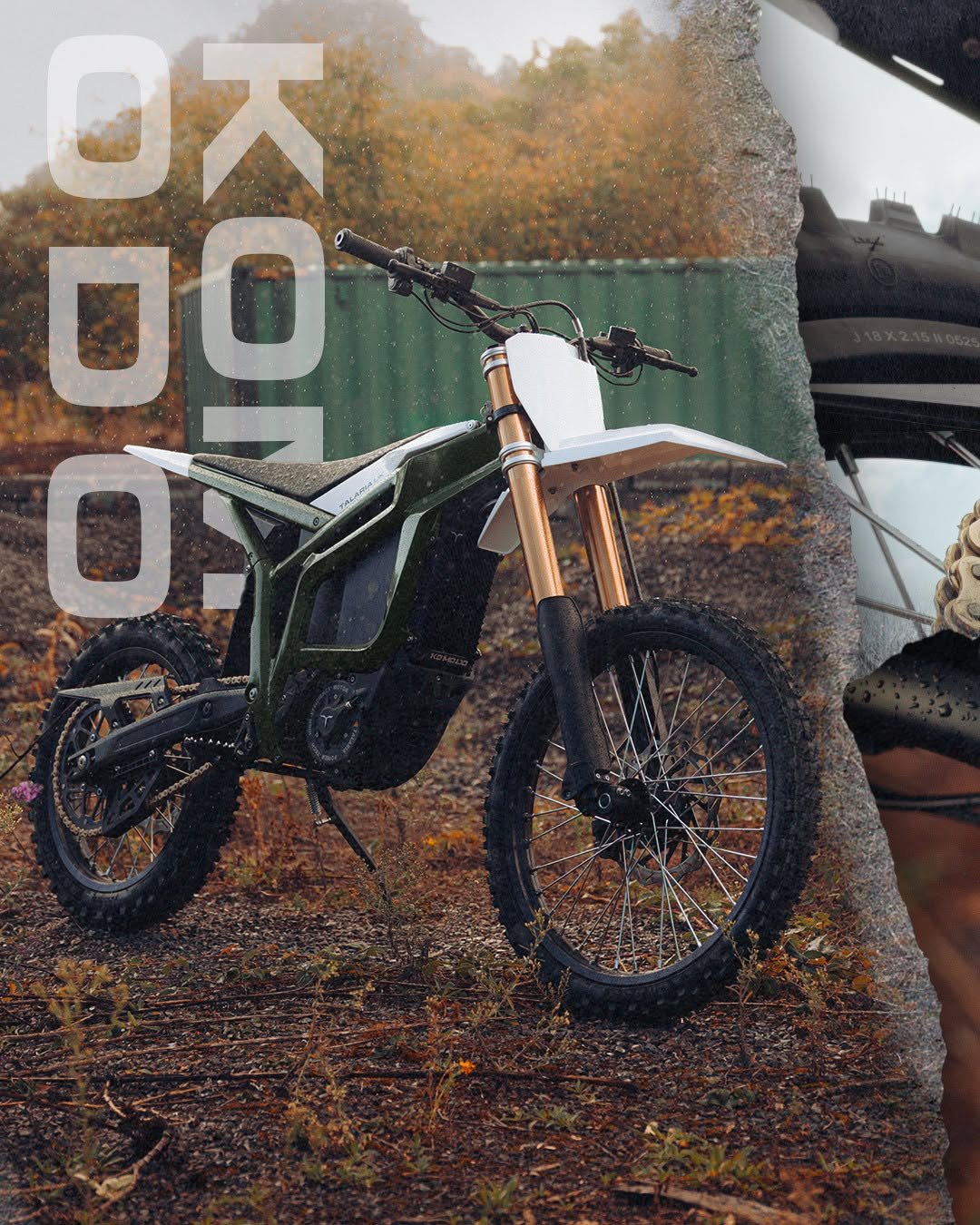
The third box is the biggest by sales and least understood. Machines such as the Sting R MX4, MX5 Pro, XXX, Komodo and Dragon carry no type approval, because none was sought. No certificate of conformity, no approved lighting package, no route onto the DVLA register. The electric bike law checker marks them private land only, ridden with the owner’s permission, and our guide to where you can ride an electric dirt bike maps that ground.
Power and speed replace engine size
Petrol classes are measured in cubic centimetres and electric ones are not, which is the confusion the electric bike law checker exists to clear. A machine is placed by rated power and design speed, so peak output in a listing decides nothing: a 3000W motor peaking at 6000W is still a 3 kW machine.
| Category | Rated power | Design speed | Minimum age | Licence route | Public roads |
|---|---|---|---|---|---|
| L1e moped class | Up to 4 kW | Limited to 45 km/h | 16 | Provisional plus CBT, or full AM | Yes, if registered and insured |
| L3e A1 light motorcycle | Up to 11 kW | No category cap | 17 | Provisional plus CBT, or A1, A2 or A | Yes, if registered and insured |
| Off road only, not homologated | Not regulated | Not regulated | Set by the venue | None required | No, private land only |
The electric bike law checker treats those rows as three products, not three settings of one. A bike cannot move between them later, because approval is granted as a vehicle is built.
The age and licence gates at 16, 17 and 24
Three birthdays change what the electric bike law checker can offer a rider.
Sixteen
Sixteen is the earliest age for any motor vehicle on a public road in Great Britain, and the only class open is L1e. You need a provisional licence, a valid CBT certificate, L plates front and rear, and you ride solo. Our page on the Talaria CBT route for 16 year olds covers the process.
Seventeen
At 17 the L3e A1 class opens, which is where the electric bike law checker sends most buyers. A provisional licence plus CBT puts you on a 125 equivalent with L plates, no passenger and no motorways. Passing the A1 test removes the plates and makes the entitlement permanent. The A2 test follows at 19.
Twenty four
Twenty four is the direct access age for a full category A licence with no power limit. Below it the same licence comes by progressive access: hold A2 for two years, then take a further test. No Talaria approaches the A2 ceiling, so the gates that matter here are 16 and 17.
CBT, what it involves and who is exempt
Compulsory Basic Training is the item the electric bike law checker turns on most often, and it is widely misdescribed. It is not a test and there is no pass mark, but a day with an approved training body that ends when the instructor is satisfied you can ride safely.
The five elements
Training runs in a fixed order: an introduction and eyesight check, on site training, on site riding, on road theory, then two hours minimum of road riding with radio contact. The GOV.UK compulsory basic training page lists the content in full.
How long it lasts
The certificate, a DL196, is valid for two years from issue. After that you pass the full motorcycle test or retake the training, with no limit on retakes. Riding on an expired certificate leaves you with no entitlement, which normally voids insurance too.
Who is exempt
Holders of a full A1, A2 or A licence are exempt for the categories that licence covers, and a car test passed before 1 February 2001 carries moped entitlement with no CBT and no L plates. A car licence issued later does not, which is why the electric bike law checker asks about it. Everyone else on a provisional licence needs a current certificate before the wheels turn on a road, at 16 on a moped or at 40 on a 125.
Why fitting lights does not make a bike road legal
This belief costs owners more money than any other, so the electric bike law checker is blunt about it. Bolting a headlight, indicators, mirrors and a plate to an off road machine produces a bike that looks road legal and is not. Road legality is a status granted before a vehicle is sold, not a list of parts added later.
What registration requires
To register a machine the DVLA needs evidence that the exact vehicle meets an approval standard. For a production bike that is a certificate of conformity showing whole vehicle type approval in a named L category. For one off builds there is a single vehicle approval inspection against construction, lighting, braking, noise and electromagnetic standards a competition chassis was never documented to satisfy. No document, no registration, and with no registration no plate and no insurer willing to quote.
Lighting is worth having for dusk riding on private land, but legally it changes nothing, and the offences are identical whether the lights are on or off. The honest route onto the road is the road legal Talaria range, where approval arrived with the bike.
Registration, plates, insurance, helmets and MOT
Once the electric bike law checker points you at a road class, five obligations follow and none is optional.
Registration and the number plate
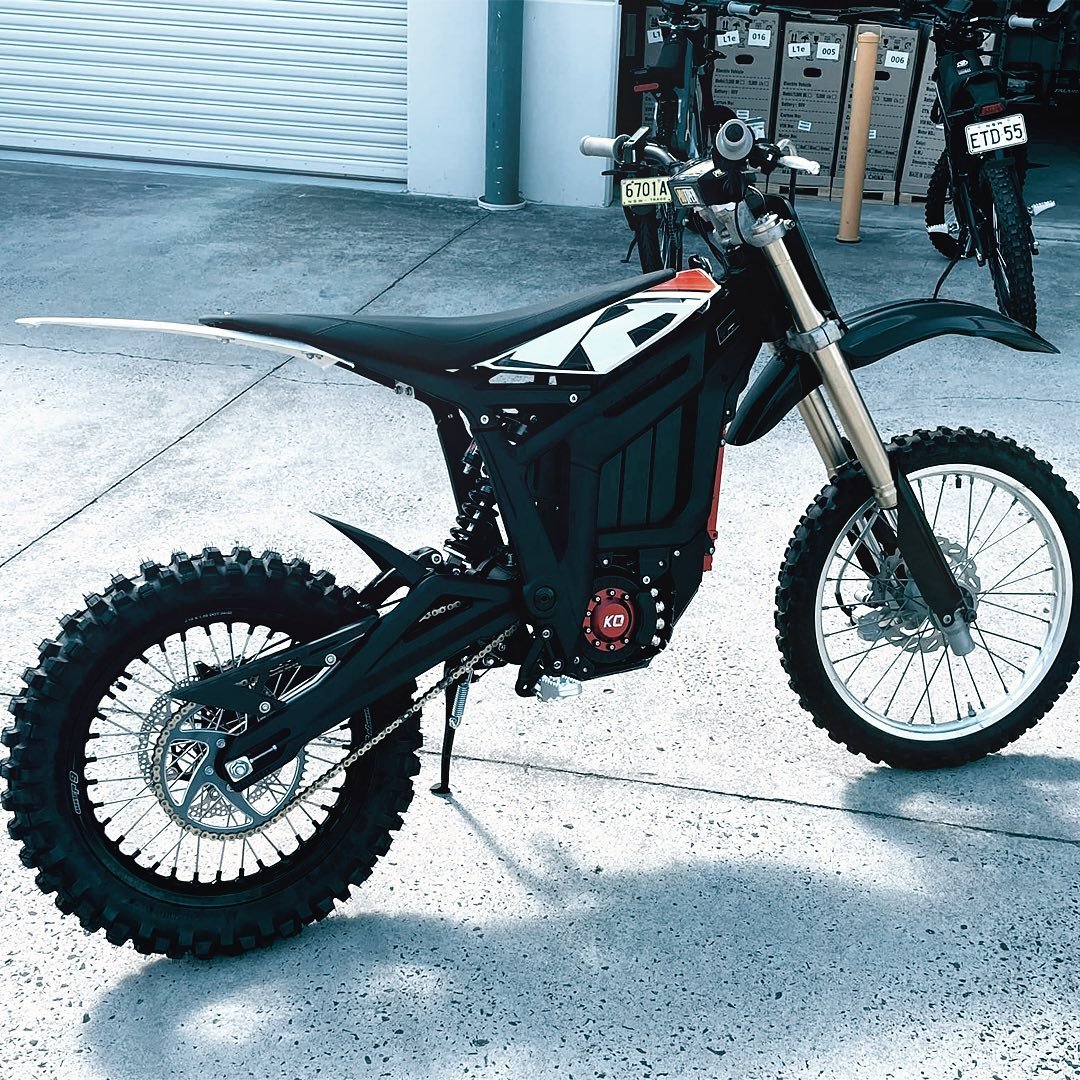
A new machine is registered with the DVLA, which issues a registration mark and a V5C. The rear plate must meet the current British Standard for font, spacing and colour, and be lit at night. Vehicle excise duty is payable, and since April 2025 electric vehicles are no longer exempt.
Insurance
Third party cover is the legal minimum and must be in force before the machine is used on a road or public place. Underwriters rate an electric motorcycle on power, value and where it sleeps, and ask about security more closely than car insurers. Our notes on Talaria insurance in the UK set out what tends to be excluded.
Helmets and MOT
An approved helmet is compulsory for rider and pillion, carrying a UN ECE marking or a British Standard with the BSI kitemark. The first MOT falls due at three years old and then annually, and with no emissions element it concentrates on lighting, brakes, tyres, steering and structure.
What counts as a public place
The phrase that decides most cases is road or other public place. The electric bike law checker asks where you will ride because people call somewhere private when the law does not.
The test that applies
A place is public if the public, or a section of it, has access in practice, by right or by tolerance, with or without a fee. That takes in supermarket and pub car parks, industrial estate roads at the weekend, beaches and waste ground with a gap in the fence.
Rights of way are highways
Footpaths, bridleways, restricted byways and byways open to all traffic all form part of the highway network. Only the last carries a public right for mechanically propelled vehicles, and using one needs a registered, insured machine and a licensed rider. Canal towpaths are closed to motor vehicles outright.
What private actually means
Private land has no general public access and is ridden with the permission of whoever owns it. A commercial track or pay and ride venue qualifies too, because access is controlled. If you cannot name the person who gave permission, read the electric bike law checker as telling you no.
Penalties and seizure
The sanctions behind the electric bike law checker are heavier than the fixed penalty most riders picture. No proof of bad riding is needed: the absence of insurance or entitlement is the offence.
Seizure under section 165A
Section 165A of the Road Traffic Act 1988 lets a constable seize a motor vehicle used on a road or public place with no insurance or no licence entitlement. The bike goes onto a recovery truck, storage charges run daily, and release depends on producing the documents you lacked at the roadside. For a machine that can never be registered those documents do not exist, so seized bikes are often disposed of rather than returned.
Points and fines
Riding uninsured attracts six to eight penalty points and a fine, with disqualification available at court. No licence, no helmet and riding on a footpath each add an offence. Points land on the same counter as any car licence you hold, so the electric bike law checker is also protecting the licence you drive on.
Frequently asked questions
Is the electric bike law checker accurate for Northern Ireland?
Partly. Vehicle approval categories are UK wide, so the L1e and L3e A1 definitions hold. Licensing and testing are administered separately in Northern Ireland by the DVA, including R plates in the first year, so confirm the licence detail there.
Can a 16 year old ride a 125 equivalent electric bike?
No, and the electric bike law checker rules it out. At 16 the only road class is L1e, limited by design to 45 km/h, with a provisional licence, a valid CBT certificate and L plates. The L3e A1 class stays closed until the rider turns 17. An off road machine may be ridden at any age on private land with permission.
Does the electric bike law checker cover second hand bikes?
Yes, with one extra step. Ask for the V5C and check it names the same vehicle identification number as the frame. A used bike advertised as road legal with no V5C is an off road machine wearing accessories, and buying it creates no approval.
How long does CBT last, and can I ride while it is arranged?
A certificate is valid for two years, after which you retake the training or pass the full motorcycle test. There is no allowance for road riding before it is completed, not even to reach a trail. Until then, private land with the landowner’s permission is the only lawful option.
Is a supermarket car park private land at night?
No, and the electric bike law checker treats it as public. Access by the public, even when the shop is shut and a barrier is down, keeps a car park inside the phrase road or other public place. Insurance and licence rules apply in full, so an unregistered machine can be seized there as readily as on the high street.
If a bike is limited to 45 km/h, is it automatically legal?
No, and the electric bike law checker is asked this more than anything else. A speed limit is one condition of the L1e class, not the whole of it. The vehicle also needs approval in that category, registration, a plate, insurance and a helmet on the rider.
Next steps
Run the electric bike law checker at the top of this page, note the class it gives you, then shop inside that class rather than hoping to convert a bike later. For a road class, the road legal Talaria category holds every homologated model, with more on L1e in our electric mopeds guide. For private land, compare the electric dirt bikes guide with are Talarias legal in the UK.