
Uncategorized
Talaria Battery Guide: Every Pack, Cell Type and Voltage Explained
Mar
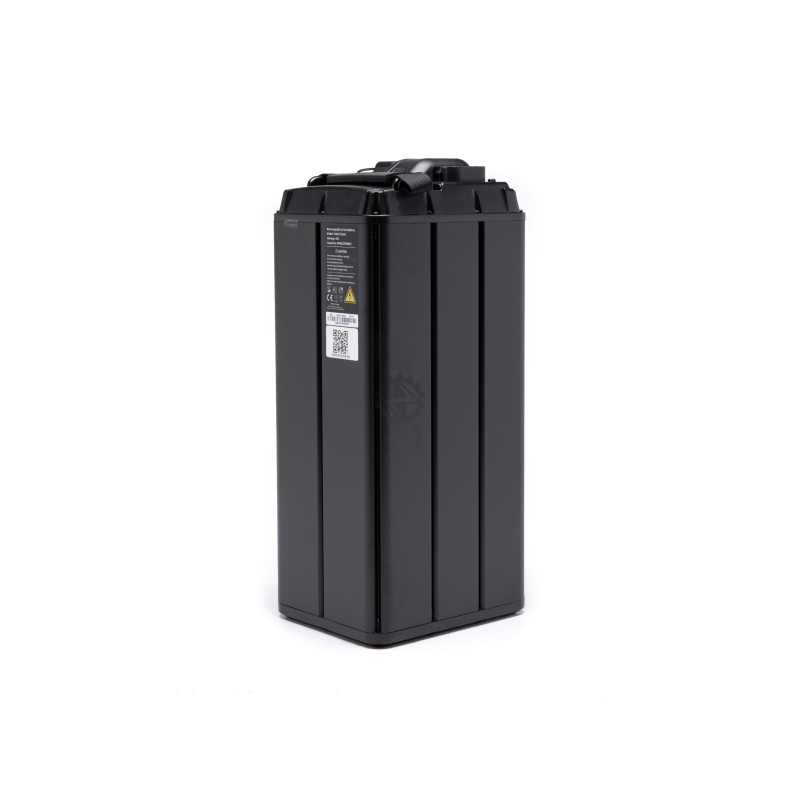
A Talaria battery is the most expensive component on the bike and the one that decides how far you ride, how hard the motor pulls and how many seasons the machine stays useful. This guide walks through every pack fitted to the current range and every pack sold separately at The Talaria UK, explains what the cell and voltage figures mean, and sets out how to charge, store, transport and eventually dispose of a lithium pack in the UK without shortening its life or breaking the rules.
What is inside a Talaria battery
Open any factory Talaria battery and you find rows of cylindrical 21700 lithium ion cells, each 21 mm across and 70 mm long. The Sting family uses LG cells rated at 5000 mAh apiece; the MX5 Pro moves to Samsung 50S cells of the same format; the Komodo sheet lists Samsung 50S or LG H51 depending on the batch. The cell is the same basic building block that electric cars use, which is why Talaria describes it as automotive grade.
Series and parallel: the 16s8p shorthand
Cells are wired in series to build voltage and in parallel to build capacity. The XXX and X3 Talaria battery is a clear example: 128 LG M50 cells in a 16s8p layout, meaning 16 groups in series (16 times the 3.6V nominal cell voltage gives the 60V class figure) and 8 cells in parallel per group (8 times 5000 mAh gives the 40Ah maximum). The Competizione builds go to 22 series groups, which is where the 81.4V figure comes from.
The BMS is the quiet guardian
Every Talaria battery carries a battery management system. It measures each series group, cuts power if a group runs too low or too high, watches temperature, and balances the groups so one weak set cannot drag the rest down. The road legal Sting models and the Komodo seal the pack to IP67. On the Competizione bikes the BMS is Bluetooth enabled with peak current set at 400A or 450A depending on the cell. Treat those settings as fixed.
Every pack in the range and what it feeds
Every Talaria battery falls into one of two groups: packs that arrive inside a bike and packs you buy on their own. The batteries and chargers category lists the standalone options. The table below pulls both together using only figures from the factory sheets we hold.
| Pack | Nominal voltage | Capacity | Cells | Weight | Fitted to or fits |
|---|---|---|---|---|---|
| Sting MX3 and Sting L1e pack | 60V | 38.4Ah (2280Wh) | LG 21700, 5000 mAh | 12.85 kg | Sting MX3, Sting Road Legal L1e |
| Sting R MX4 pack | 60V | 45Ah (2700Wh) | LG 21700, 5000 mAh | 12.85 kg | Sting R MX4, MX4 Expert, Sting R Off Road |
| Sting L3e pack | 60V | 45Ah | LG 21700 | 14 kg | Sting L3e Road Legal |
| Replacement Sting MX4 pack | 60V | 43.2Ah | Lithium ion | Not stated | Sold separately for the Sting R MX4 |
| EBMX 60V 65Ah | 60V | 65Ah | Lithium ion | Not stated | Sold separately, fits the OEM Sting compartment |
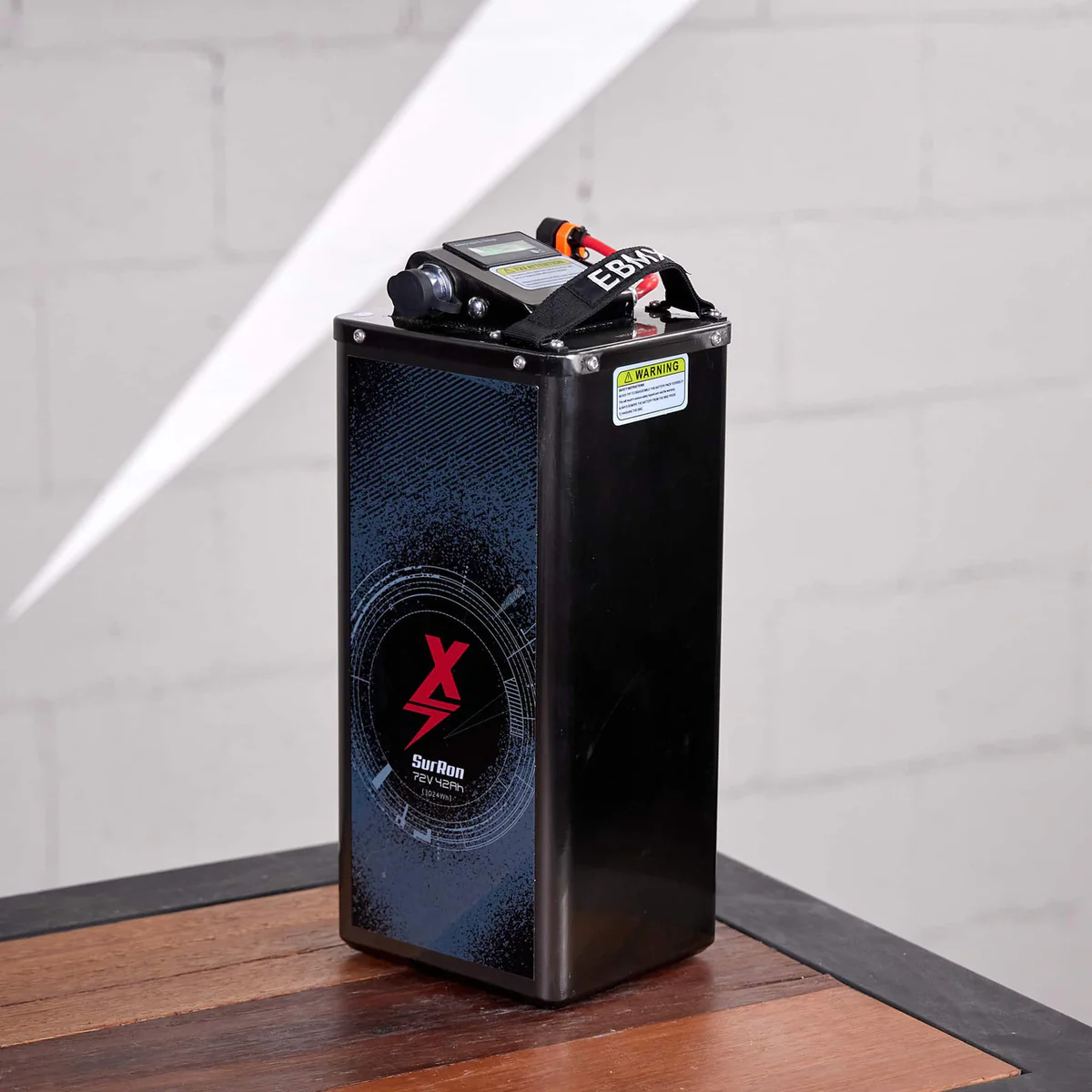
| EBMX 72V 42Ah | 72V | 42Ah | Lithium ion | Not stated | Sold separately for the SurRon Light Bee slot |
| XXX, XXX Pro and X3 pack | 60V | 38.4Ah nominal, 40Ah max (2400Wh) | 128 LG M50 21700, 16s8p | Not stated | XXX, XXX Black Edition, XXX Pro, X3 Concept |
| MX5 Pro pack | 72V | 40Ah (2880Wh) | Samsung 50S 21700 | Not stated | Sting MX5 Pro |
| Competizione 50s pack | 81.4V (22s) | 4060Wh | 220 Samsung 50S 21700 | 19.2 kg | MX5 Pro Competizione 50s |
| Competizione 45B pack | 81.4V (22s) | About 10 percent less than the 50s | 220 Molicel P45B 21700 | 19.2 kg | MX5 Pro Competizione 45B |
| Komodo pack | 97.2V | 45Ah (4.4kWh) | Samsung 50S or LG H51 21700 | 24.5 kg | Komodo 2025 |
| Dragon pack | 88V | 58.5Ah (about 5200Wh) | Lithium ion | 25 kg | Dragon 2025 |
The three standalone packs in detail
The 60V 43.2Ah replacement is the like for like Talaria battery for a Sting R owner whose original pack has aged or been damaged. Confirm the charger it ships with before ordering, because the listing flags that not every replacement pack shares a charger with the original 60V unit. The EBMX 60V 65Ah pack is the range play: the maker states nearly double the range of the stock 60V battery at the same power on the stock controller, still fitting the original compartment. The EBMX 72V 42Ah unit is built for the SurRon Light Bee slot and needs an EBMX controller and a 72V charger; it will not run on a stock 60V controller.
Capacity versus range: reading the Ah and Wh figures
Amp hours tell you how much current a pack can supply for how long. Watt hours multiply that by voltage and give the true energy store, which is why two packs with the same Ah figure at different voltages are not equal. The Sting R pack at 60V and 45Ah holds 2700Wh; the MX5 Pro pack at 72V and 40Ah holds 2880Wh despite the smaller Ah number. When comparing a Talaria battery, always convert to watt hours first.
Why the factory range figure has a speed attached
Every factory sheet quotes Talaria battery range at a fixed speed: 120 km at 25 km/h for the Sting R MX4, 100 km at 32 km/h for the Sting MX3, 115 km at 45 km/h for the Komodo. Those are steady speed figures on flat ground. Real riding on UK trails, with mud, climbs, a heavy rider and cold cells, uses far more energy per mile, so treat the sheet figure as a ceiling rather than a promise.
60V versus 72V and higher: what a voltage upgrade demands
The 60v vs 72v talaria question comes up constantly, and the honest answer is that voltage on its own does nothing. Power is voltage multiplied by current, and the controller sets the current. Raising voltage lets the motor spin faster and lets the same power flow at lower current, with less heat in the wiring. That is why the factory moved the MX5 Pro to 72V and the Komodo to 97.2V rather than adding amps on a 60V platform.
What the controller must tolerate
Every controller has a voltage ceiling, and it has to sit above the Talaria battery you intend to feed it. The stock Sting controller is built around a 60V pack, and the EBMX 72V battery listing is blunt about it: the pack will not run on the stock 60V controller. The EBMX X9000 by contrast accepts an input range of 40V to 100V and a working range of 48V to 93V, which is why it is the controller behind the 81.4V Competizione builds. Our controller upgrade guide compares the options tier by tier.
What the motor must tolerate
The IPM motor fitted to the Sting R, XXX and MX5 Pro is the reason higher voltage builds are possible at all. Talaria states that the magnetic encoder removes the hall sensors that used to work loose, and that the motor tolerates higher rpm and more power than the earlier PMSM unit in the Sting MX3. Even so, more voltage means more heat, and the EBMX pack listing warns against wide open throttle for longer than 10 to 15 seconds on a high power tune. A Talaria MX3 72V battery conversion therefore usually involves the motor as well as the pack: the IPM Sting R motor is the sensible partner.
The wiring, the 125A circuit breaker on the Sting R and the charge port are also sized for the original Talaria battery current, and a 72V pack needs a 72V charger. The charger guide explains the voltage matching.
Talaria battery weight and how it changes the ride
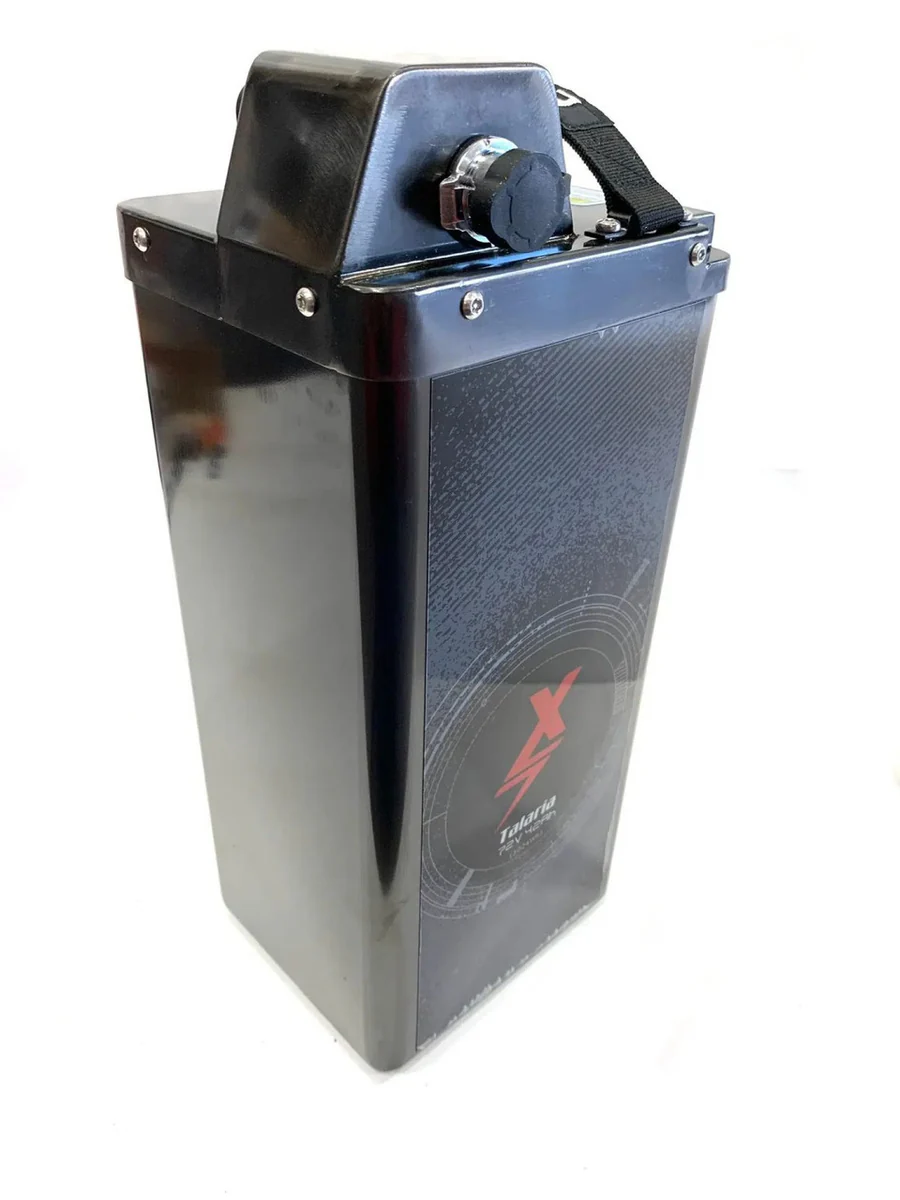
Talaria battery weight ranges from 12.85 kg for the 60V Sting packs, through 14 kg for the Sting L3e pack and 19.2 kg for the Competizione 22s packs, to 24.5 kg on the Komodo and 25 kg on the Dragon. On a 66 kg Sting R that pack is close to a fifth of the whole machine. On the 98 kg Komodo it is a quarter. Where that mass sits matters as much as how much there is.
Swappable packs versus built in packs
The Sting pack lifts straight out of the frame, which is why a spare Talaria Sting R battery is the quickest route to a full day on the trail: swap in seconds, charge the first one at the van. The XXX and X3 pack is built in along the frame, which lowers the centre of gravity, but the factory notes removal takes about five minutes and means taking off the rear wheel. A 12.85 kg Talaria battery is a one person lift; the 19.2 kg Competizione packs include a handle for good reason, and the 24.5 kg Komodo pack deserves a second pair of hands.
Day to day care that protects the cells
Lithium cells age with every cycle, with time and with heat. You control the third and how deep each cycle goes, and the habits below make a measurable difference over a few years of Talaria battery ownership.
Charging habits
- Let a hot pack cool before plugging in; charging warm cells accelerates ageing.
- Avoid running the pack flat as a routine; repeated deep discharge shortens life.
- For a bike used most days a charge to full is fine.
- Use the charger supplied with the Talaria battery or one confirmed for its voltage and connector.
Physical care
Keep the Talaria battery connector clean and dry and inspect the pins after wet rides. Check the casing for cracks after a crash, because a dented pack is a reason to stop and have it inspected. Wash with a hose and brush, never a pressure washer aimed at the pack bay, even on IP67 rated models.
Winter storage in a UK garage
Most owners ride far less between November and February, and a Talaria battery left for three months needs a plan. Lithium ion cells are happiest stored partially charged, cool, dry and checked occasionally. A garage that drops below freezing is acceptable for storage but not for charging: lithium cells should be charged above zero degrees, so bring the pack indoors to warm before the first charge of spring.
A simple storage routine
- Clean the pack and the connector and let everything dry.
- Charge or discharge to a middle state of charge rather than full or empty.
- Remove the Talaria battery from the bike if it is a swappable type, and store it off the concrete floor.
- Check the state of charge once a month and top up briefly if it has dropped a long way.
- Before the first ride, charge fully at room temperature and run a short shakedown loop.
Transport, fire safety and disposal
A Talaria Sting battery in a van or car should be secured so it cannot slide, terminals covered, nothing metallic loose nearby. Never carry a crash damaged Talaria battery inside a passenger vehicle; have it inspected first.
Lithium fires are rare but serious. Charge on a hard surface away from escape routes, with a smoke alarm nearby. If a pack swells, hisses or smells, move it outdoors if safe and never charge it again.
Disposal and recycling
A Talaria battery must never go in household waste. The UK treats lithium packs as industrial batteries, and the producer responsibility regime covered in the GOV.UK batteries and accumulators guidance sets out how they should be collected and recycled. In practice that means returning a dead pack through a retailer or a licensed battery recycler; local council recycling centres often accept them too. The Motorcycle Industry Association publishes wider guidance for powered two wheeler owners on end of life handling.
Frequently asked questions
Which Talaria battery has the most capacity?
The Dragon leads at 88V and 58.5Ah, roughly 5200Wh, followed by the Komodo at 97.2V 45Ah, around 4.4kWh. In the Sting family the Competizione 50s pack holds 4060Wh, the MX5 Pro 2880Wh and the Sting R 2700Wh. Among standalone packs the EBMX 60V 65Ah unit offers the most range for a stock Sting.
Can I fit a 72V battery to my Sting MX3 or MX4?
Not on the stock controller. A 72V Talaria battery needs a controller rated for it, a 72V charger and ideally the IPM motor, since the higher rpm and current put more heat through the motor. The EBMX 72V listing states plainly that the pack will not run on the stock 60V controller, and the Nucular kit quotes its largest gains on a 72V pack for the same reason.
How heavy is the Talaria Sting R battery?
The factory sheet lists the Sting R MX4 pack at 12.85 kg, the same as the Sting MX3 38.4Ah pack because both use the same 170 mm by 140 mm by 380 mm case. The Sting L3e pack is listed at 14 kg. Larger packs climb quickly: 19.2 kg for the Competizione packs, 24.5 kg for the Komodo and 25 kg for the Dragon.
Is it safe to leave a Talaria battery on charge overnight?
The BMS and the charger are designed to stop at full, but we still recommend charging while you are awake and nearby, on a hard surface away from exits, with a smoke alarm in the room. If you must charge overnight, do it in a garage rather than a hallway and never with a pack that has been damaged.
What state of charge should I store the pack at over winter?
A middle state of charge, neither full nor empty. Check it monthly and add a short charge if it has fallen a long way. Store it cool and dry, off the floor, and warm it to room temperature before charging in spring. Cells should not be charged below freezing.
How do I dispose of a dead Talaria battery in the UK?
Return it through a retailer, a licensed battery recycler or a council recycling centre that accepts industrial lithium batteries. It must never go into general waste or kerbside recycling. Tape the terminals before transport and keep the pack in a rigid container if the case is damaged.
Next steps
If your pack is tired, the 60V 43.2Ah replacement pack restores a Sting R to factory range. If you want a full day on one charge, look at the EBMX 60V 65Ah battery. For a whole bike built around a bigger pack, the Sting MX5 Pro and the Komodo are the two to compare. Every Talaria battery we sell is covered by our UK warranty, full terms on the warranty page, with UK mainland delivery, timescales confirmed at checkout.
